Toxic pollution at beauty spot, tests suggest

 BBC
BBCEvidence of toxic pollution at a protected beauty spot has been found by a BBC investigation.
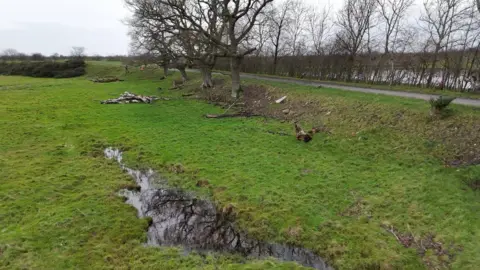
Demesne Marsh, on the banks of the River Eden in Cumbria, is popular with walkers and is part of a Site of Special Scientific Interest (SSSI).
A materials expert who visited the site said there was untreated construction waste in an embankment there, while tests he carried out on soil samples suggested high levels of lead.
Castletown Estate, which owns the land, said material used for works carried out on the embankment in recent years was "inert" and items identified as construction waste would "have been there for years".
Treasured by locals, Demesne Marsh lies north of Carlisle within the Solway Coast National Landscape and is part of the Upper Solway Flats and Marshes SSSI, protected for its important bird life.
At the edge of the marsh is an earth embankment, along which the King Charles III England Coastal Path runs.
The BBC visited the site with Dr Muhammad Ali, associate professor of materials and environmental innovation at the University of Portsmouth.
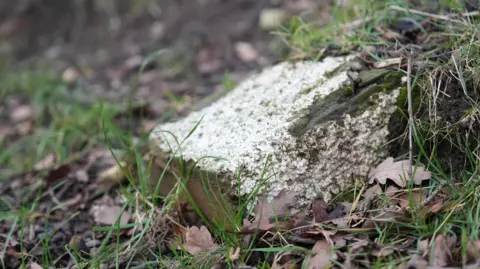
He identified asphalt, painted masonry and plastics in and around the bank, some of it firmly embedded in the soil.
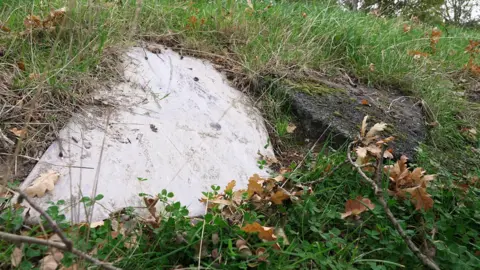
Ali said he thought it was untreated construction and demolition waste.
"It seems, if this is exposed, maybe there's a lot more inside," he said.
He told the BBC he was concerned toxic chemicals could be leaching into the surrounding environment and humans could be indirectly affected if fish or farm animals consumed them.
Ali analysed soil samples from the embankment in his laboratory at the University of Portsmouth.
He compared concentrations of different chemicals with regulatory limits for "inert" waste, meaning waste that will not significantly pollute the environment.
All four samples suggested higher concentrations of lead, with two results more than 20 times the limit.
Lead is a toxic metal with no safe level, according to the UK Health Security Agency, and used to be a common component in paint.
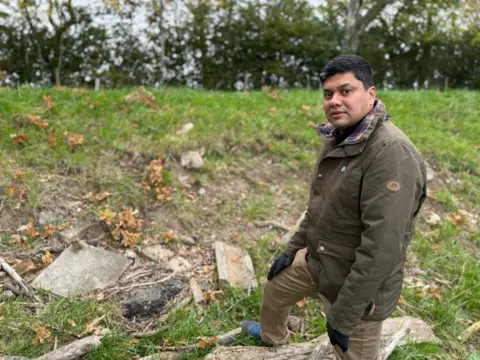
Ali said the chemical could have come from the painted bricks and concrete seen in and around the embankment.
He also found raised levels of nickel and evidence of plastic pollution.
He warned the small sample size and the fact his lab is not accredited for testing by the government-backed body UKAS meant his results were only indicative.
Ali said it needed to be investigated further and a "large number of samples need to be collected to be able to get a clear picture of what's really happening".
Previous convictions
Toby Mounsey-Heysham, from Castletown Estate which owns the land, told the BBC last year local waste firm North West Recycling raised the height of the bank and laid a new path on top of it sometime in the last 10 years.
Three environmental law experts, including one who has advised clients opposing North West Recycling in relation to a separate planning application, told the BBC a crime could have been committed if the waste at Demesne Marsh was put there deliberately.
But Mounsey-Heysham insisted the waste found by the BBC was "nothing to do with either [him] or North West Recycling" and the material used for works on the embankment was "inert".
He said the material we found "will have been there for years" and there was "similar material in a number of places" in the nearby area.
He said "tidal action and wind" often deposited debris in the marsh.
He added he did not "accept that the presence of such materials in the embankment could be attributed to recent works, nor that it supported an allegation of unlawful waste deposition".
North West Recycling and sister company Brampton Skip Hire were convicted in 2013 for unauthorised waste dumping at several agricultural sites.
At the time, the court heard the firms avoided landfill charges as a result.
North West Recycling did not comment on what the BBC found at Demesne Marsh.
The Environment Agency (EA) said it was investigating the site after reports from the public.
The BBC has also heard concerns about a different site, owned by North West Recycling's director and owner Rick Allan.
A permit issued by the EA allows him to use waste, including soil, stones and concrete, to restore an embankment at Cargo Hill Farm, near Carlisle.
But photographs of the site taken in 2022 and seen by the BBC appear to show a mixture of small fragments of waste, including glass and plastic, not allowed by the permit.
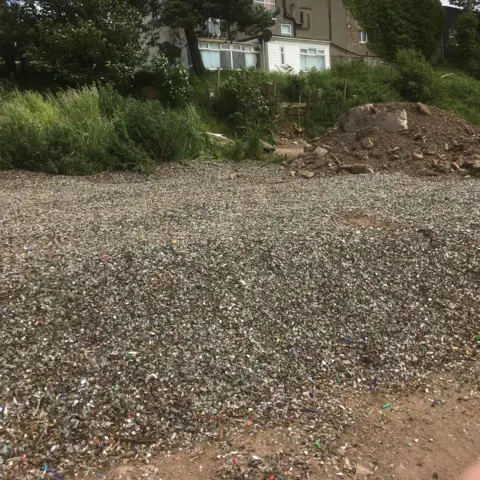 Supplied
The EA said a recent inspection of the site had identified "compliance issues" that were not "significant" but posed a "potential environmental risk".
It added it had "pressed the operator to take action".
The BBC sent the images we were shown to Allan and asked him about the apparent inconsistency with the permit.
In response, a spokesperson for North West Recycling said it was investigating the "historical" photographs.
The company added the works there used "soils and processed aggregate from permitted facilities", which are documented and "classified in line with guidance".
It told us it "takes compliance seriously and will cooperate with any regulatory inquiries".
Regarding the "compliance issues" raised by the EA, the spokesperson said there was "clear regulation that must be adhered to" and maintained there was "no environmental risk" in how the site had been managed.
They said the company would continue to work closely with the EA.
