Dog licences explored to tackle ownership issues

 BBC
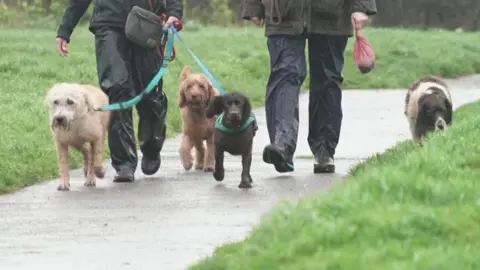
BBCDog owners in south-west England have given a mixed response to the idea of the reintroduction of dog licences in a bid to tackle pet ownership concerns.
The RSPCA, in collaboration with Dogs Trust, has funded the York Health Economics Consortium to look at costs associated with dog control across the UK and explore the potential reintroduction of licences.
A number of dog owners in Devon and Cornwall told the BBC they would like to see licences brought back to encourage good behaviour from owners and dogs, but others said it was a "poor idea" which would not work.
The BBC has asked the government if it would consider bringing back licences, in addition to its requirement to have dogs chipped.
'Tragic fatalities'
There are an estimated 15.5m pet dogs across the UK, according to UK Pet Food.
Currently, it is a legal requirement to have any dog aged over the age of eight weeks microchipped in England and Wales, which the RSPCA said usually cost about £15.
Dog licences were abolished in England, Scotland and Wales in 1987, when fewer than 50% of owners were buying them.
Dr Samantha Gaines, RSPCA head of companion animals, said the consultation explored whether the reintroduction of a dog licence would "offset" dog control costs.
Speaking to BBC Radio Cornwall, Gaines said cases of dog bites had been of particular concern to the charity for a "very long time".
She said there had been some "horrific injuries" caused by dog bites in recent years, as well as "some really tragic fatalities".
"We've looked into alternative solutions to actually reducing dog bites," Gaines said.
"Dog licensing has the potential to actually help us solve some of the challenges around dog ownership."
She said research had been commissioned to understand the public's "support and appetite" for a licence scheme.
"We don't just want a rehash of what we had in the 80s," she said.
"That was seen to be a tax on responsible dog owners, we don't want that to be the case this time round, but it's got to be effective."
She said it would also explore if the licence fee could be ring-fenced to "provide what is a much, much needed cost to tackle the issues".
Belinda Phillips, from Torquay, said she was in favour of bringing back the licence if was "at a fair price".
"It would make dog owners more accountable for their pets," she said.
Amanda Savidge, from St Ives, said a proportion of dog owners were "not respectful": "I believe the re-introduction of dog licensing would be a positive move and instill a sense of responsibility.
"I don't think the caring and responsible owners would object to an annual licence fee that could go some way to clearing the related refuse bins."
But Honiton resident Ian Pemberton said a return to dog licences shouldn't be considered.
"The dog licence was a poor idea when it existed, do not bring it back," Pemberton said.
Braunton's Clive White agreed as he did not think it would make a difference.
White added: "Dogs are already chipped at owners' cost and responsible owners train their pets and clean up after them.
"Irresponsible owners do neither of these, so why is it thought they will bother applying for a dog licence."
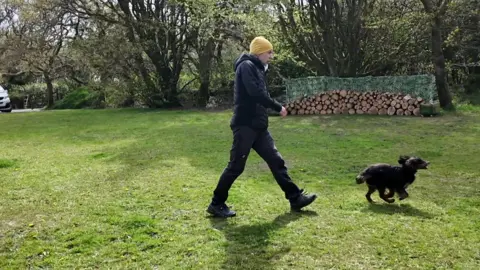
Roy Young, a dog behaviourist from Constantine in Cornwall is launching an advanced dog ownership initiative, which he said was "like a driving test for owners to help them better understand and handle their pets."
"If you ever have a dog that's a bit anxious about another dog coming into its space, then you realise they don't all want to play," Young added.
"They've got to be under control at all times."
 Esta Lippiatt
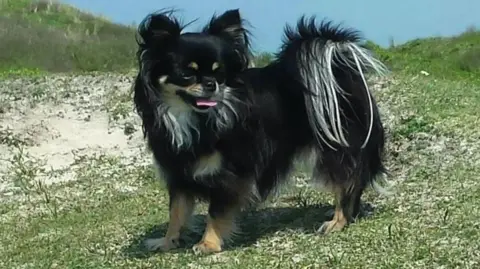
A couple from Cornwall said they would like to have tighter controls introduced after their pet chihuahua died following an attack by another dog.
Kevin Morgan and Esta Lippiatt, who live in Camborne, said they would never get over the trauma of losing their beloved Chloe, who suffered a fractured spine and broken neck when she was attacked during a walk at Rosewarne Downs.
Morgan said Chloe was grabbed by a lurcher and shaken "like a rabbit" on Easter Sunday.
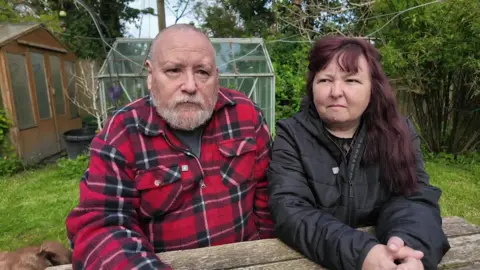
It led to the couple having to make the "heart-wrenching" decision to put down their dog, which came with a vets bill of £800.
"It's the worst thing ever - it's like seeing a child being beaten up by a bunch of blokes," Morgan added.
Devon and Cornwall Police said it had been made aware of a report of a dog attack in the Rosewarne Downs area of Camborne on 4 April and inquiries were ongoing.
The RSPCA consultation has now closed with the results being analysed by researchers.
Follow BBC Devon on X, Facebook and Instagram. Send your story ideas to spotlight@bbc.co.uk.
