Strangled patient's sisters say unsafe care risks 'more deaths'
The sisters of a man strangled to death on a mental health ward by another patient have described the healthcare system for people with severe psychotic illness as "inadequate, misguided and plain wrong".
An inquest into the death of Richard Laversuch, 63, found on Wednesday he wasunlawfully killed by Owen Herbert, then aged 18, at Parklands Hospital, Basingstoke, in 2021. Multiple "failures" by heath staff were identified by the inquest jury.
"They just don't recognise how serious psychotic illness is," Richard's sister, Bridget Ryan, told the BBC.
Hampshire and Isle of Wight Healthcare NHS Foundation Trust apologised to the men's families and accepted responsibility for its failures.

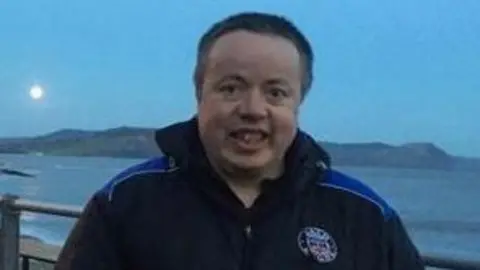 Family photo
Hampshire coroner Nicholas Walker said Richard's death was "utterly avoidable".
"It has to change," her sister Cathy Laversuch agreed, "otherwise there will be more deaths, more terrible things happening and more heartbreak for more families."
She added: "Something went wrong at every single stage, so it's not a safe system and can lead to catastrophic consequences."
The sisters' analysis is informed not only by their experience of Richard's own increasingly frequent episodes of psychosis, but by decades spent working in NHS urgent care as medics themselves.
They have read reams of official documentation, attended criminal hearings and listened to days of evidence at Winchester Coroner's Court.
In the days before Richard's killing, records show Herbert's "psychotic symptoms" involved him believing he was in a game and must "complete a massacre" to avoid being tortured.
On 26 November 2021, his parents had to wrestle weapons from him and told his NHS community mental health team they could no longer support him at home for fear he might "harm or kill" someone.
When a Hampshire County Council approved mental health professional arranged an urgent Mental Health Act Assessment, psychiatrists recorded that he was a "high" risk to others.
The NHS trust accepted Herbert should have been admitted to the psychiatric intensive care unit (PICU), for higher-risk patients at Parklands Hospital in Basingstoke.
Instead, he was put on the same "unsafe and under-staffed" ward as Richard.
Within hours, he had attacked another patient before walking into Richard's room, climbing onto his bed and strangling him.
Cathy and Bridget said finding out their brother had been killed by another patient was "massively shocking" and they are angry that it has taken years for the details of what happened to be fully disclosed.
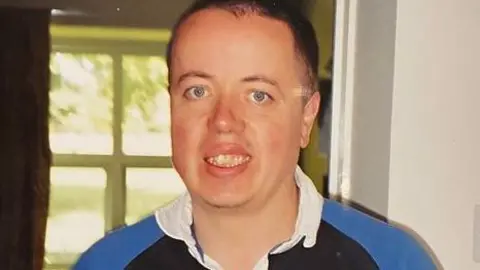 Family photo
Bridget, a retired senior nurse, called for psychotic illness to be treated as seriously as strokes, heart attacks and cancer.
She said: "It leads to suicide and it leads to murder, so it's as deadly.
"The people who were failed were Richard, clearly, Owen Herbert and Owen's family, the patients who were on the ward - Richard said that he was frightened of other patients."
Cathy, a retired hospital consultant, added: "The staff were failed as well, because of the system they're working in, that's what makes us cross."
She believes the way services for people in mental health crisis are structured is overly complicated and there is an over-reliance on community care and families.
"It's not a safe system, community care for people with severe psychotic illness is inappropriate and inadequate and we need to fund inpatient beds.
"We experienced it ourselves, dealing with Richard," she said, describing how police were sometimes left to look after him at times of crisis after their family's pleas to admit him to hospital were rejected by mental health services.
'Not monsters'
Cathy argued for a "simple, robust admission procedure", both during the day and out of hours that does not involve "complex acronyms for all the various multiple teams" involved and their differing roles.
"It's too easy just to say, 'oh, but that's not my role'," she said, "that term comes up a lot, nobody seemed to know what they should be doing, nobody seems to be able to take responsibility."
She recalled her "heartbreak" at hearing how Herbert's parents had encouraged him into the ambulance, believing he would get the help he needed in hospital, unaware of the tragedy to come.
In an appeal for greater compassion for people with psychosis, Cathy stressed: "They're not monsters, they didn't ask to get ill and they could easily be your brother or sister, your son or daughter.
"Richard was a gentle character, but so was Owen before he got ill."
Bridget added: "He just needed treatment."

Owen's parents, David and Rachel Herbert, visit him every week at Broadmoor hospital, Crowthorne, Berkshire, where he is detained indefinitely after pleading guilty in 2023 to manslaughter on the grounds of diminished responsibility.
They expressed their "profound regret, sorrow and anger" over what happened, as they had believed their son "would be safe" in hospital, they said In a statement read to the jury.
"Not a day passes without us thinking about Richard Laversuch," they said.
"It is deeply painful to reflect on what occurred and on the suffering it has caused both families.
"Owen is a kind, gentle and caring person and we do not believe that he would ever have harmed anyone had he been well.
"The loss of his future, and the consequences for everyone affected, is a source of heartbreak from which we do not believe we will ever fully recover."
'Many changes'
Some of the failings identified in Owen's care echo those exposed in the aftermath of the Nottingham attacks in 2023 when three people were killed by Valdo Calocane, who had paranoid schizophrenia.
Last month, a public inquiry heard evidence that repeated opportunities to respond to Calocane's persistent psychosis symptoms and escalating risks were missed.
When NHS England (Midlands) published its independent mental health homicide report, it admitted "the system got it wrong", and the NHS trust responsible for Calocane's care is now being investigated for corporate manslaughter.
Following the inquest into Richard Laversuch's death, the NHS healthcare trust that accepted responsibility for the failures said it had made many changes as a result of his death and apologised to both Richard and Owen's families.
Drawing on their decades of NHS clinical experience, Cathy and Bridget have agreed to work with the trust to identify further improvements.
The coroner at Richard's jury inquest, which concluded on Wednesday, commended their determination to "effect change" and their generosity of spirit, given they had learned Richard's death had been avoidable.
The sisters' civil liberties lawyer, Brid Doherty, of Hodge Jones & Allen, called on the government to take urgent action to protect vulnerable people.
"I dream of the day I don't have these cases on my books," she said, "where brave people who sought help when they were so unwell were not failed by a system which frequently isn't fit for purpose."
The Department of Health and Social Care said, following Wednesday's inquest conclusion, that while there was "more to do" it would outline how its mental health strategy would build a system that "responds earlier and reduces waiting times for support" later in the year.
