Police carrying out random roadside eyesight checks

 Getty Images
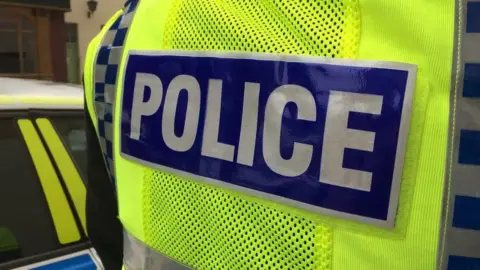
Police are carrying out random stops on drivers in Cheshire to check their eyesight meets the legal standard.
Cheshire Police is taking part in Operation Insight, a national road safety initiative to improve road safety through raising awareness of vulnerable road users and the importance of being fit to drive.
Roadside vision screenings on motorists of all ages began on Monday and will continue until 8 November.
Ch Insp Cameron Taylor, Cheshire Police's head of roads and crime, said: "Our message is simple: if you drive, make sure your eyesight is checked regularly and that you wear any corrective lenses you need."
A Cheshire Police spokesperson said around 3,000 people across the country were seriously injured each year in crashes involving drivers or riders with uncorrected or defective eyesight.
In 2025, 18 people lost their lives on UK roads as a result of vision-related factors, they added.
During roadside screenings, officers will ask drivers to read a vehicle registration plate from the legally required distance of 66ft (20m), under appropriate daylight conditions and while wearing any corrective lenses they normally use for driving.
Taylor said: "Good eyesight is one of the most important requirements for safe driving yet changes in vision can happen so gradually that people may not realise their sight has deteriorated."
He said Operation Insight is "about encouraging all motorists to take responsibility for checking that their eyesight meets the legal standard required for driving".
"While some changes in eyesight become more common as we age, vision can change at any stage of life. That's why this campaign is aimed at all drivers," he added.
Rise in 70+ drivers
A force spokesperson said that over the past 20 years, the proportion of people aged 70 and over holding a driving licence had risen significantly, reflecting both an ageing population and the fact that many people were remaining active and mobile for longer.
They said research also suggested that when drivers aged 70 and over were involved in an injury collision, they were more likely to be killed or seriously injured than younger drivers.
What is the legal standard for driver eyesight?
The law requires motorists to be able to read a vehicle number plate from 20m (66ft) away, which is equivalent to around five car lengths, and to meet the minimum visual standards for driving.
Drivers who require glasses or contact lenses must wear them whenever driving.
What happens if I fail the eyesight check?
Under legislation known as Cassie's Law, drivers who fail a roadside eyesight test and are deemed unsafe to continue driving may have their licence revoked through referring the circumstances to the DVLA, Cheshire Police said.
Motorists are encouraged to have their eyesight tested at least every two years, even if they believe their vision is unaffected.
Read more stories from Cheshire on the BBC, watch BBC North West Tonight on BBC iPlayer and follow BBC North West on X. You can also send story ideas via Whatsapp to 0808 100 2230.
