Lockerbie bombing trial date set as judge warns against further delay

 Reuters
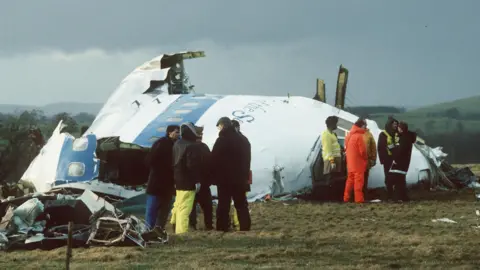
A date has been set for the trial of a Libyan man accused of making the bomb that blew up a passenger plane over Lockerbie almost 40 years ago.
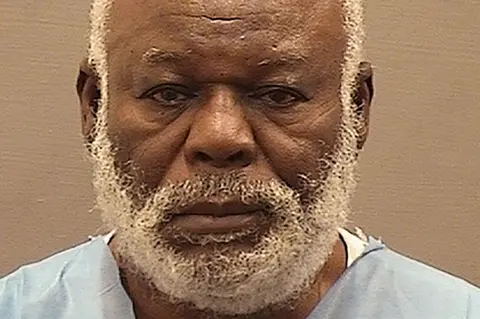
Judge Dabney Friedrich said the federal prosecution of Abu Agila Mas'ud Kheir Al-Marimi over the deadliest terrorist attack in UK history would finally get under way on 19 January.
Jury selection was due to start in Washington DC in August but it was postponed after new evidence on the case came to light.
Al-Marimi has denied building the bomb that destroyed Pan Am Flight 103 on 21 December 1988, killing 270 people.
The judge warned she would not tolerate further delays to proceedings, which have previously been postponed several times.
 Reuters
The most recent delay caused concern among victims' representatives given the elderly age of many bereaved relatives.
The nature of the fresh material has not been revealed, but the court heard it involved just one new witness.
Masud, now in his mid-70s, who was in court dressed in a green prison jumpsuit, listened to the proceedings through an interpreter.
He is charged with two counts of destruction of an aircraft resulting in death.
If convicted he faces a maximum penalty of life in prison.
Prosecutors claim he once confessed to his role, although this has been challenged by his lawyers.
Masud, who was extradited from Libya to the US in 2022, has denied the charges.
Signalling she would not put up with further delays in the case, Judge Friedrich told the court: "The defendant and the public and the victims have waited a long time for this trial."
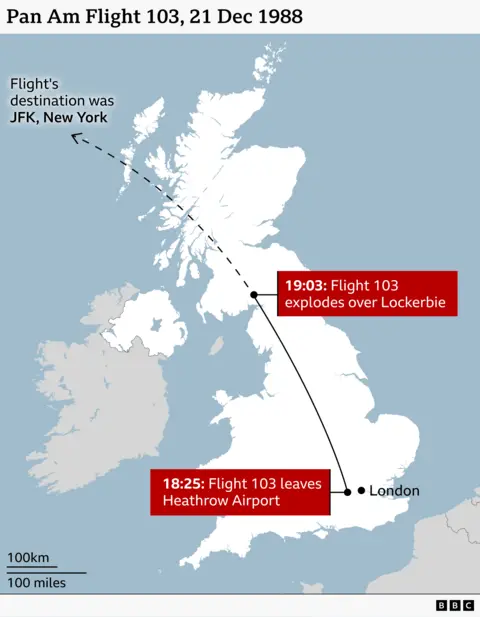
Pan Am 103 was flying from Heathrow to New York when the bomb exploded in its forward hold, breaking the plane apart at 31,000 feet.
All 259 passengers and crew on board were killed. Another 11 people died in Lockerbie when the wreckage fell on their homes.
Of the victims, 190 were American and 43 from the UK.
Nearly four decades later, the bombing remains the worst terror attack and mass murder in British history.
A grandfather in his 70s, Al-Marimi has been accused of carrying out the attack along with two Libyans who faced a Scottish court in May 2000.
Three judges heard the case at Camp Zeist, a former US air force base in the Netherlands.
After eight months, they ruled the atrocity was an act of state sponsored terrorism carried out by members of the Libyan intelligence service.
 Getty Images
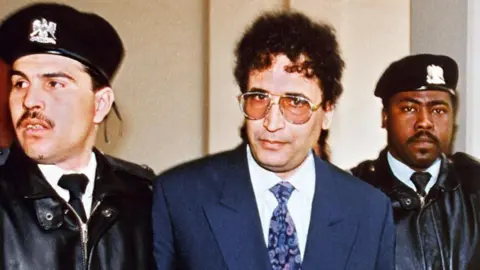
The judges convicted one of the Libyans, Abdulbasset Al-Megrahi, of mass murder and jailed him for life.
He died from cancer in 2012, after being freed on compassionate grounds by the Scottish government.
The Scottish Criminal Cases Review Commission twice referred Megrahi's case to the appeal court but the conviction was upheld.
The second Libyan, Al Amin Khalifah Fhimah was acquitted and returned home to a hero's welcome in Tripoli.
The US government says Al-Marimi admitted bombing the plane along with Megrahi and Fhimah when he was questioned in a Libyan detention facility in 2012.
The alleged confession was handed to Scottish investigators in 2017 and is now central to the prosecution case.
Al-Marimi has claimed the confession is false and was made under duress, but judge Friedrich ruled it could be admitted as evidence at the trial.
