Stamp-sized sensor could make planes safer

 University of Surrey
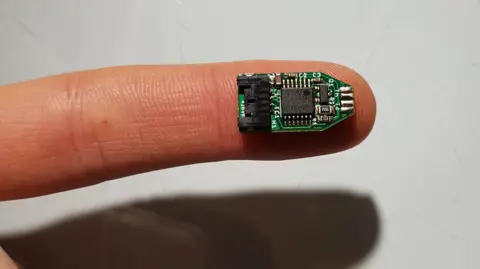
New aircraft sensors the size of postage stamps could help pilots make safer decisions in real time, their creators say.
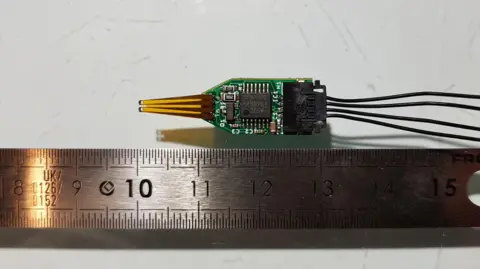
The sensors created by a University of Surrey start-up, which are about 3cm (1.2 inches) long, will be able to detect the build up of ice and how this would affect an aircraft's performance.
Scientists working on the project say the system will help pilots determine what is happening to the wings mid-flight, while the size of the sensors will allow them to be mounted on smaller surfaces such as helicopter blades.
Dr David Birch, of the Surrey Sensors start-up, said: "What's important is not just detecting ice, but understanding how it is affecting the aircraft's performance."
He added: "Combining different sensing approaches will help to make these measurements far more robust – particularly in the harsh conditions where current systems are most vulnerable.
 University of Surrey
"This technology is about giving aircraft a much clearer picture of what's happening to their wings in real time."
A university spokesperson said the sensors, created in collaboration with the Canadian Flight Test Centre of Excellence, combined two different technologies to help warn pilots.
The sensors could continue to work in extreme conditions and could also lead to improved fuel consumption due to less reliance on anti-icing systems, the university said.
Follow BBC Surrey on Facebook, on X, and on Instagram. Send your story ideas to southeasttoday@bbc.co.uk or WhatsApp us on 08081 002250.
