Air ambulances in South hit by rising fuel costs

 Getty Images
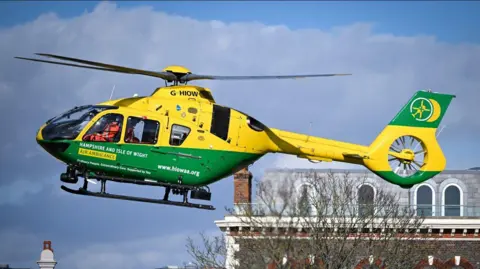
Air ambulance charities across the south of England have warned that rising fuel costs are putting pressure on their services.
The price of aviation fuel has risen sharply since the start of the current conflict in the Middle East, increasing the cost of running helicopters and response vehicles.
Services in Hampshire, the Thames Valley and Dorset say they are facing rising costs and potential supply concerns.
The government said the UK remained "well stocked for all fuel types" and it was continuing to work with suppliers while the conflict continues.
Hampshire and Isle of Wight Air Ambulance said its fuel costs had risen by about 50%, adding around £10,000 a month to its bills.
Chief executive Richard Corbett said the charity had so far been able to absorb the increase using reserves, but warned that it could not continue indefinitely.
He said the organisation was also concerned about fuel supply.
Corbett said air ambulance charities were not currently treated in the same way as police or fire services when it came to supply - which he would like to see change.
He added that the charity would "do everything" it could to avoid cutting services, but that supply shortages would present a significant challenge.
The service is preparing to move to its new base at Southampton Airport, which he said should reduce flying and driving times and help lower costs.
 Getty Images
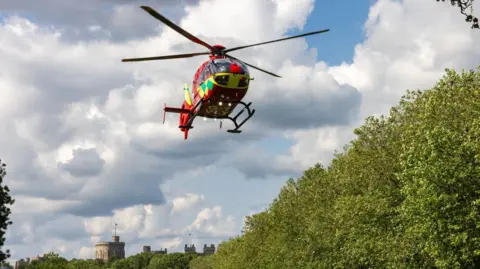
Thames Valley Air Ambulance said it had secured a fixed annual fuel price for its helicopter, protecting it from immediate price increases.
However, it said fuel costs for its critical care response vehicles were rising, with an increase of £152 a week.
A spokesperson said the vehicles were called out around seven times a day, meaning the additional cost was significant.
"To put that in context, a drugs bag full of advanced medications costs £135, so this money is vital to our work saving real lives in the community," they said.
 Getty Images
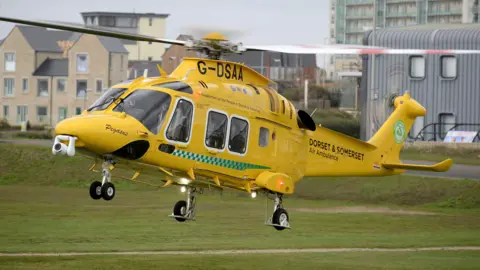
Dorset and Somerset Air Ambulance said the current fuel situation was a concern, as reliable and affordable access was essential to maintaining operations.
The charity said any sustained rise in fuel costs, or disruption to supply, would place additional pressure on charitable funds and service delivery.
Air Ambulances UK, which represents the country's 21 air ambulance charities, is in discussions with the government about fuel resilience and prioritisation.
A government spokesperson said: "Air Ambulance charities are a lifeline to thousands in communities across the country and we thank and celebrate the extraordinary volunteers that keep these essential services flying every day.
"The UK remains well stocked for all fuel types. We continue to work with suppliers to make sure people keep moving and businesses are supported while the conflict is ongoing."
 Peter Burch / Wiltshire and Bath Air Ambulance Charity
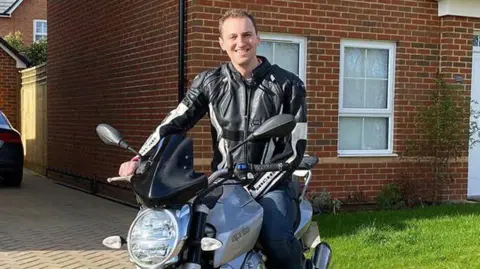
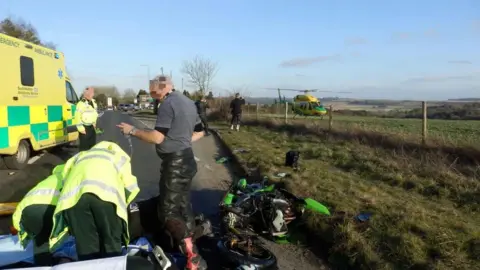
Peter Burch, from Hampshire, is just one example of the lifesaving work carried out by air ambulance charities.
A crew from Wiltshire and Bath Air Ambulance came to his aid when he was seriously injured in a motorbike crash near Salisbury in 2015.
Burch suffered a partially severed left arm, 26 broken bones, a collapsed lung, and extensive bruising and bleeding.
 Peter Burch / Wiltshire and Bath Air Ambulance Charity
He was flown to Southampton General Hospital in six minutes - a journey that would have taken about an hour by road.
"The six-minute flight is the only reason I am alive," he said.
Burch now works as a fundraiser for the same charity that saved him.
He said: "You don't know when you walk out your front door that morning exactly what is going to happen. It could be something as simple as tripping over... it could be a car accident...
"That is why supporting air ambulances across the UK is vitally important."
