WW1 loco to illustrate life on the battlefields

 Lincolnshire Coast Light Railway
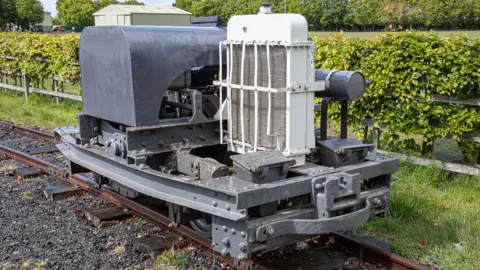
A historic locomotive that served the battlefields of World War One will go on display in a seaside town.
The engine, which was previously housed at the Imperial War Museum at Duxford, will now be housed at the Lincolnshire Coast Light Railway (LCLR) in Skegness.
It was built in 1918 to serve the front lines by transporting supplies and troops on special narrow gauges.
Richard Shepherd, chairman of the LCLR's Historic Vehicles Trust, said the acquisition was the "most significant addition to our collection".
He said narrow gauge railways "made possible the Allied victory in World War One" as well as helping to develop agriculture in Lincolnshire by moving produce across the Fens.
The engine will be placed on the attraction's demonstration line, where visitors can see it at work.
Shepherd said the locomotive would have some missing components added before it went on display but it would hopefully be included on the railway's Narrow Gauge at Work event on 19 and 20 June.
Listen to highlights fromLincolnshire on BBC Sounds, watch thelatest episode of Look North.
Download the BBC News app from the App Storefor iPhone and iPad orGoogle Play for Android devices
