'My grandmother subjected my baby to female genital mutilation behind my back'

 AFP via Getty Images
Warning: This story contains descriptions of the practices involved in female genital mutilation
In what activists are calling a milestone, Colombia last week became the first country in Latin America where female genital mutilation (FGM) is now illegal.
As José Carlos Cueto reports, while the bill was passed unanimously in Colombia's Congress, it follows a long battle to eradicate the dangerous and often secretive procedure.
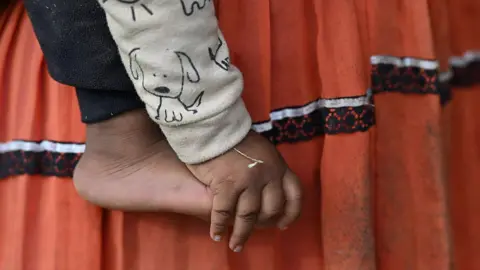
Carla Quiñonez's daughter was just six months old when the baby's great-grandmother subjected her to female genital mutilation (FGM).
Quiñonez (not her real name) says when her grandmother returned the baby to her, she had a fever and was swollen and bleeding. She cried constantly.
"I confronted my grandmother, but she said it was normal and that I could not tell anyone."
The nearest health centre was a long journey away, so Quiñonez's mother, a midwife, tried to ease the baby's pain with medicinal plants. She also challenged Quiñonez's grandmother. But the older woman would not listen.
"She said that men make fun of women who have a clitoris."
FGM in Colombia
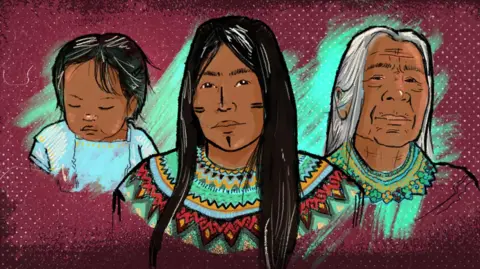
FGM involves the partial or total removal of the external female genitalia, as well as other injuries inflicted on those organs for non-medical reasons.
It can cause medical complications, including haemorrhaging and infection, as well as complications later in life with periods and during childbirth. It can also make it difficult for a woman to experience sexual pleasure.
The World Health Organization says that around the world more than 230 million girls and women alive today have been cut, predominantly in Africa.
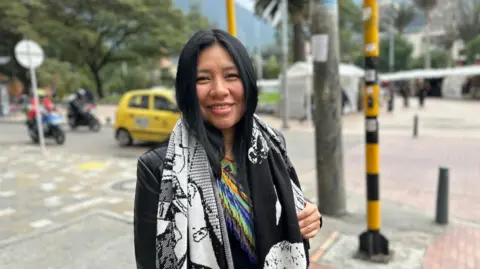
Quiñonez, 30, has been campaigning to eradicate the practice in Colombia - where it is still practised by members of her Emberá Indigenous community.
Along with fellow activists and members of Colombia's Congress, she played a key role in the campaign which led to the ban.
She says it was only as she grew up that she realised what was secretly happening within her community.
"I always wondered why more girls than boys seemed to die shortly after birth.
"I remember a young cousin of mine whose birth was attended by my mother. She was born healthy, but died three days later.
"I asked my mother about it, and she told me the baby had died from 'jai', an ancestral illness."
Quiñonez now believes that girls who supposedly died from "jai" actually died from complications related to FGM.
A paediatrician's perspective
 Courtesy of Diana Ramos / Photo by David Jiménez
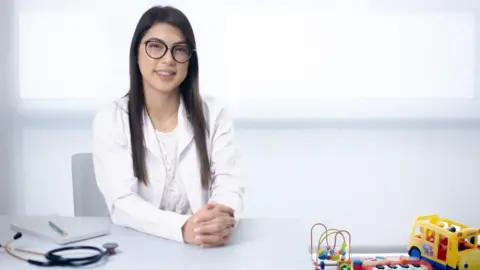
Between 2020 and June 2026, 240 cases of FGM were recorded in Colombia. In the vast majority of instances, the girls were younger than six years old. But paediatrician Diana Ramos Mosquera says she believes this is just "the tip of the iceberg".
Working at San Jorge University Hospital in Pereira, a city in Colombia's north-west coffee-growing region, she says she's seen signs of scarring, burning and mutilation when examining girls who have come in with other medical conditions.
She recalls one girl who arrived with her vaginal opening sealed shut, meaning she probably would not have been able to menstruate or have sexual intercourse when she reached adulthood.
"She had to undergo reconstructive surgery," Dr Ramos says.
She regards FGM as a form of sexual and gender-based violence with lifelong consequences, but says this must be addressed through education, and not just punishment.
"Some members of these communities genuinely believe they are doing no harm," she says.
'Culture does not kill'
 José Carlos Cueto / BBC Mundo
With around 300,000 members, the Great Emberá Nation is one of Colombia's largest Indigenous communities, with populations also living in Ecuador and Panama.
One theory about why members of the community practise FGM, when it's rarely seen elsewhere in Latin America, is that the practice arrived with enslaved people from African countries.
This could help explain its prevalence in Risaralda, Chocó and Valle del Cauca, neighbouring departments that either are home to, or border, large Afro-Colombian populations.
Another theory is that the birth of an intersex child, hundreds of years ago, left the community with a fear of the clitoris - with many older women believing that it will grow into a penis if not cut.
Others think that it stems from the patriarchal belief that a woman with an organ associated with sexual pleasure is more likely to be promiscuous.
Whatever its origin, Juliana Domico, the legal representative and chief Indigenous councillor to the National Confederation of the Peoples of the Great Emberá Nation of Colombia, rejects the idea that the practice is cultural.
"Our culture is our clothing, our crafts, our dances and our language, not a practice that kills. Culture does not kill."
She says the new law follows years of advocacy work within the community: "We hope the law is translated into public policy, with sufficient resources to implement it."
Threats and hostility
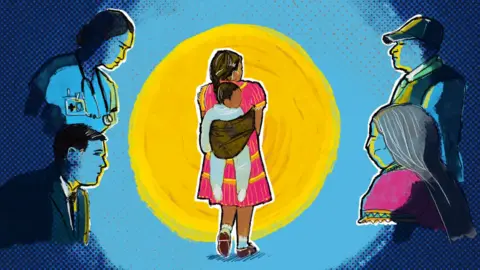
Quiñonez is one of those who have advocated for change, but says she has received threats because of this - especially from men.
While, traditionally, men are not meant to know about the ritual, conversations about abolishing the practice often only take place with male leaders because many Emberá women speak an indigenous language - also called Emberá - and have not necessarily learned Spanish.
This can also prevent women from accessing help from doctors for their babies, a problem which Quiñonez says is compounded when they're faced by sometimes ill-informed and judgmental health staff.
She says when she took her daughter to hospital with a fever caused by a urinary tract infection, the nurse berated her for "being a savage" and told her that she had got what she deserved.
"I was even threatened with having my daughter taken away and placed in the care of the child welfare authorities.
"Since then, I prefer not to take my daughter to hospital. I treat her with medicinal plants and medication. I never leave her side."
'Conversation cannot be avoided'
 AFP via Getty Images
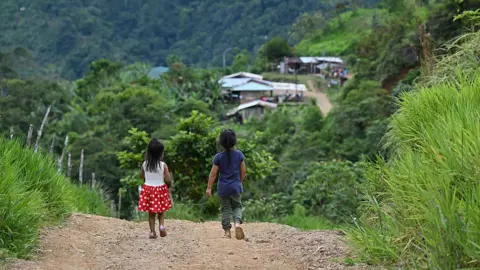
Quiñonez says that there is change under way within the Emberá community, with women now discussing among themselves whether FGM should happen.
She says she was moved when one grandmother reflected on carrying out FGM on her granddaughters. "She said she had never acted out of malice and had only wanted to prevent men from criticising her granddaughters."
Having conversations about a different way of life can be painful, she says. "Women who have grown up without a clitoris cannot imagine a different body."
It will also be difficult to speak to her own daughter about it, one day in the future, "but it is a conversation that cannot be avoided," she says.
"All of us deserve to understand our bodies and to talk about them without shame."
Illustrations by Daniel Arce, from BBC Mundo's Visual Journalism Team.
