Teen's traumatic treatment contributed to death

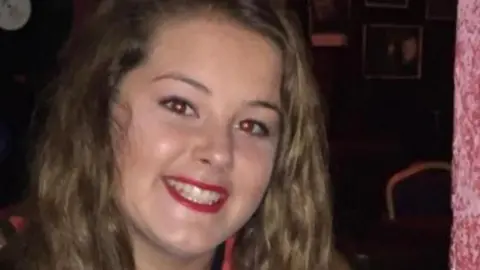 Family handout
This article contains details of suicide and self-harm
A teenager took her own life in part because of treatment and trauma caused by her mental health care, a jury has found.
Emily Moore, from Shildon, fatally injured herself at Lanchester Road Hospital in Durham days after her 18th birthday in February 2020.
Concluding a four-week inquest, jurors said failings by Tees, Esk and Wear Valleys NHS Foundation Trust (TEWV) included Emily's traumatic experiences at West Lane Hospital in Middlesbrough, which was "chaotic and unsafe".
County Durham and Darlington Coroner Crispin Oliver said some of the problems were being dealt with and a public inquiry would delve further into the issues. Emily's father David said TEWV "let everyone down".
The inquest had heard Emily was detained at TEWV's West Lane Hospital in Middlesbrough in March 2019, two years after she first began having mental health problems.
She was diagnosed with emerging emotionally unstable personality disorder (EUPD) and needed consistency in her care to reduce her risk of self-harming, the inquest heard.
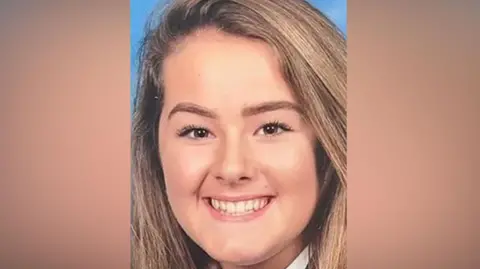 Family handout
After four months at West Lane, which her father said was a "hell-hole" and where she complained of being treated "like dirt", she was moved to Ferndene in Prudhoe, run by Cumbria, Northumberland, Tyne and Wear NHS Foundation Trust (CNTW).
She improved over the following seven months, but in February 2020 she was moved back into TEWV's care at Lanchester Road two days after turning 18.
Emily was found unconscious in her room on 13 February 2020, hours after her father David called the ward to express his fears for her, and died two days later.
Jurors found there were multiple "contributing factors to her death", including:
- Emily's mental ill health and EUPD
- Her "treatment and trauma throughout interactions and admissions within mental health services"
- The "everlasting impact" of losing her support network, including the death of a close friend
- Deviations from agreed engagement plans in hospital
- Being left to ruminate on the day of her fatal injury
- Availability of self-harm methods in her room
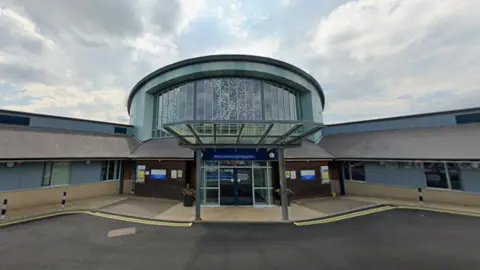 Google
They said West Lane was "chaotic and unsafe" and her care was "incomplete, fragmented and not structured" for her needs.
"Staff with the right skill sets weren't always on shift and were often under ratio", the jurors said.
The failure to replace a psychologist who left on maternity leave also caused a "severe impact", with the inquest having heard therapies which might have helped Emily were unavailable.
The jurors noted "many staff were relieved" when the hospital was ordered to close by the Care Quality Commission in August 2019, following the deaths of two 17-year-old girls that summer.
Jurors said her move from child services to the adult ward at Lanchester Road Hospital was only confirmed days before the move.
Due to the "late decision" on her placement, there was "no opportunity for Emily to develop therapeutic relationships which were essential for her recovery".
After about 16 hours of deliberations, they concluded she did the act that ended her life but could not say if she intended to die.
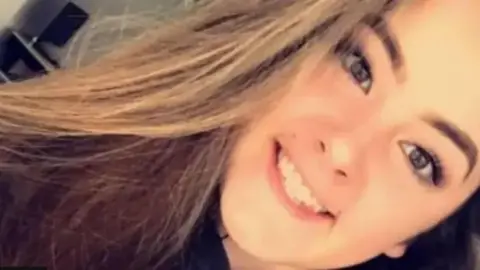 Supplied
She spent most of her last day alone in her room, in contravention of her care plan which said she should be in communal areas mixing with others, the jury said.
They said the concerns raised by Emily's father that morning were "not communicated to all those relevant to her care or recorded sufficiently", as shown by the "minimal response by staff" and the lack of further welfare checks.
Emily was last seen alive in her room at about 14:10 GMT, the inquest heard.
A staff member looked through the window of her bedroom door about 10 minutes later but could not see her, the jury said.
Instead of going into the room then, a search was conducted in the communal areas before she was eventually found back in her ensuite.
That delay "significantly increased the risk of fatality", the jury said.
 BBC/Stuart Whincup
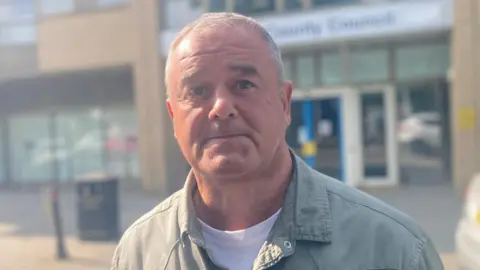
Speaking outside Crook Coroner's Court afterwards, Emily's father David Moore said the truth had come out, adding: "Emily deserves that."
He said: "I just don't know what I feel apart from anger at the trust, I just hope they have learned their lessons and changed things.
"Really, they have let everyone down."
After thanking the jury for their "exemplary" service, Oliver said he had considered whether he needed to write a Preventing Future Deaths report.
He said TEWV had made several changes since Emily's death and had adopted new national guidance around the transfer of children to adult services which had to some extent assuaged his concerns.
He also said a public inquiry into TEWV, which the government promised in December 2025 and is in the process of being set up, would deal with the "overarching matters".
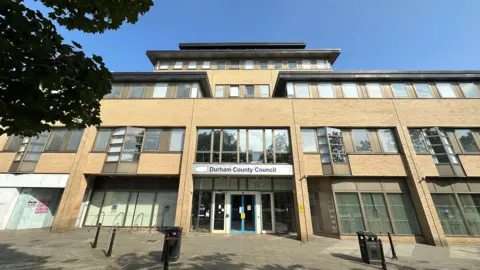
On behalf of the trust, chief nurse Beverley Murphy said: "We would like to express how deeply sorry we are and recognise the impact this has had on all who knew and loved Emily.
"Our thoughts remain with them.
"We thank the coroner and the jury for their thoroughness and fully accept their findings and recommendations."
- If you are affected by any issues raised in this article, support can be found at BBC Action Line
