'We're farming with the weather - always have done'

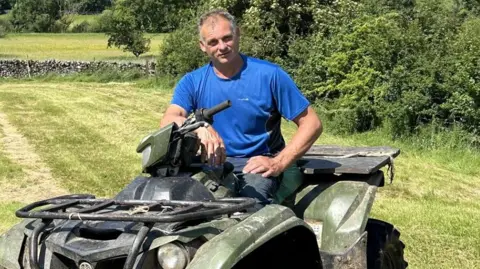 Garry Schofield
Across the UK, it's been a record-breaking week for heat, with red weather warnings issued in certain areas, and temperatures climbing to more than 36C (97F).
For some, the unbroken sunshine meant working from an air-conditioned office or staying home with the curtains drawn - but what happens when your livelihood is dependent on the weather, and your job requires you to be outdoors, come rain or shine?
Steven Crabtree, a farmer from the Bolton Abbey estate near Skipton, says there are "advantages" to dry spells, including building up silage and hay stores for winter.
However, this week's heatwave has fallen right in the middle of sheep shearing season, he explains, meaning half the flock are yet to be freed of their winter coats.
"The hill sheep have a double whammy of heat and their coats so it's not good for them," he says.
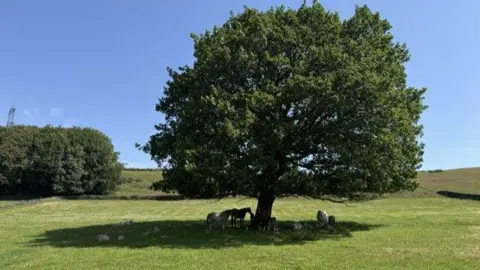
"They can't put sun cream on, but they can head to the shade."
Providing clean, accessible water troughs is also a must, he adds, as well as turning them out in areas with more shade, such as fields with trees or stone walls.
"They're not as stupid as we like to think, sheep or cattle, when it comes to dealing with the weather," Steven adds.
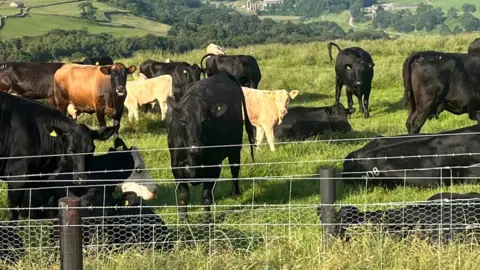 Steven Crabtree
While livestock are good at adapting to look after themselves, farmers are putting thought into what a future with unpredictable weather patterns may look like.
Last year the region saw the driest start to a year in almost a century, resulting in a drought across Yorkshire, the North West and the East and West Midlands
Some farmers reported yield of certain crop being down as much as 25%, with others saying harvest had come much earlier due to the dry spell.
"A lot of farmers lived in fear of another dry summer, but nature has a wonderful way of levelling up," Steven says.
"We probably have to adapt to this climate change - one minute we're complaining about the wettest winter, the next minute it's the driest summer and temperatures are soaring."
For Garry Schofield, a tenant farmer in upper Wharfedale, the wet start to the year delayed dry weather jobs, such as repairing walls and collecting hay and silage.
 Joe Payne
"We work for six or seven months of the year for a dry spell, to get about six weeks work done in three days of heat - and then find it very frustrating it's too hot," he says.
Attempting to work through could cause animals heat stress which could be fatal, the Wharfdale Farmer Network chair explains, as well as being risky for people too.
"It all compounds to make it very difficult, so we end up working very early hours in the morning or very late hours at night to find the cooler temperatures," he adds.
The climate in the hills where his farm is located has always been "more extreme", according to him, but he thinks the periods of wet or dry weather now last longer.
National Farming Union (NFU) West Riding vice county chair Joe Payne has a farm in Penistone, South Yorkshire.
This week, he noticed the "extra degrees heat takes it out of you a bit more than you'd expect it to".
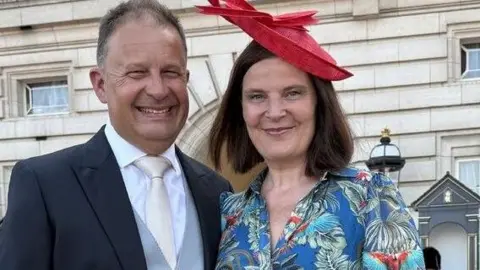 Joe Payne
He is mindful that working outside in the sun can bring an increased risk of skin cancer, he explains, something that can be often overlooked.
"Livestock farmers particularly because they're out, not just outside in a tractor, where they're a bit shaded, but under direct sunlight," he says.
"[It's] one thing people do forget, and becomes even more important when you're hitting extremes, and harvest time, there's naturally longer hours anyway."
Despite this week's heat, all three men remain stoic about the future.
"We are farming with the weather - always have done," Garry says.
"We really do need the heat to grow the grass and the crops, and we need the dry spells to get through our workload in the summer.
"It's just a matter of managing those longer periods or those extremities."
"You've got to work with Mother Nature," Joe adds.
Listen to highlights from North Yorkshire on BBC Sounds, catch up with the latest episode of Look North.
