Teachers defend Higher Maths exam as pupils criticise questions

 BBC
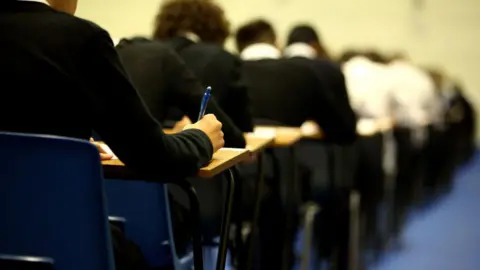
BBCTeachers have defended a controversial Higher Maths paper after pupils told the BBC it was "unrecognisable" from the paper they had prepared for in class.
More than 14,000 people have signed a petition calling for a review of the paper, which states it was "poorly worded, inconsistently structured, and out of step with every previous paper".
Pupils told BBC Scotland News that the wording of the questions was confusing so they did not know what was being asked, but teachers have said it was fair and not unlike previous exams.
Newly created exam body Qualifications Scotland said all papers were checked to make sure they were "clear, fair and suitable".
It is the first year of exams under Qualifications Scotland, which replaced the controversial Scottish Qualifications Authority (SQA) earlier this year.
The SQA was disbanded following criticism from teachers and politicians, partly for how it handled exam grading during the Covid pandemic and partly for its handling of the 2024 Higher history exam paper.
The Higher Maths exam is split into two papers and both have caused problems for pupils - though the petition only complains about paper one.
Andrew Moulden, a qualified maths teacher who runs a maths resource website, said the paper was fair and not unlike previous exams.
"I run Maths.scot and I'm very, very close to all of these questions," he said.
"I have a good idea of what's come up back to the year 2000. This was nothing special."
He said he had compared the command words - the words that indicate how you should answer the question - with previous papers, and they had all appeared before.
"There was no phraseology at all that was out of the ordinary," he added.
"It's a bit of a mystery to me really. The experience of the students is, of course, undeniable, it's clear that a lot of them were thrown sideways. But we don't know why."
Moulden also said it was not unusual for questions to straddle two different subjects, or for the exam to focus more on particular course material.
He added that some questions were intended to "separate those who have a really deep, solid understanding of the intricacies of a topic, and those who don't".
David Clelland, a maths teacher who runs YouTube channel Clelland Maths, said it was "quite a high pressure paper and hard in places".
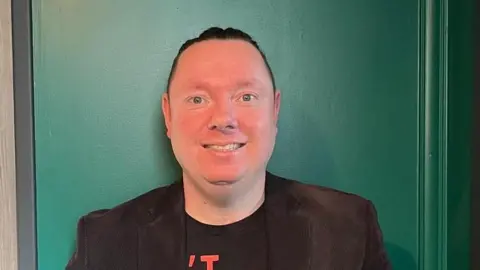 David Clelland
Clelland, who has nearly 20,000 subscribers on YouTube, said the command words used in the paper were not unusual, but certain questions were "quite abstract" and "different to what pupils were expecting".
But he added: "I run a last-minute livestream the night before the exam, and a lot of the questions I went through were pretty much in the exam.
"Obviously things were different, but in terms of the style and words - and I made that up based on previous exam papers."
He stressed that grade boundaries were flexible each year when the exam was marked.
"I feel bad for the pupils that feel really bad about it," he said.
"But at the same time, although the paper might have been a bit more challenging than last year's paper, it isn't beyond the realms of what we'd expect."
About 20,000 pupils sat the Higher Maths exam last year.
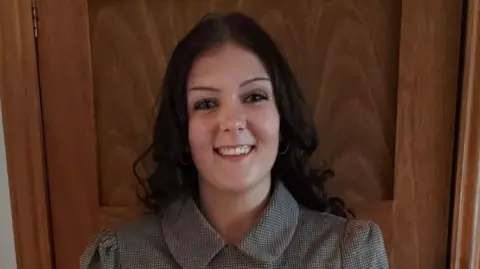 Darcy Ford
Darcy Ford, from Renfrewshire, told the BBC she had been predicted to get an A in maths all year.
The 16-year-old said she had completed the last 10 years of past papers in the week leading up to the exam.
"When I was working through them, I found that the question wording and formatting is actually very consistent," she said.
"But compared to the questions in our exam this year, they were unrecognisable.
"I spoke to a lot of people that sat the exam as well, and people are under a huge amount of pressure now because they feel that the effort they put into the exam will not be reflected in their final grade. And they think this could seriously impact their future."
Darcy is hoping to go into engineering.
"Obviously maths is one of the main subjects required for that and it's a very competitive field," she added.
"But now I am concerned that my maths grade is going to hold me back."
She has since complained to Qualifications Scotland about the exam and said that the cut-off marks should be changed to reflect the issues people had.
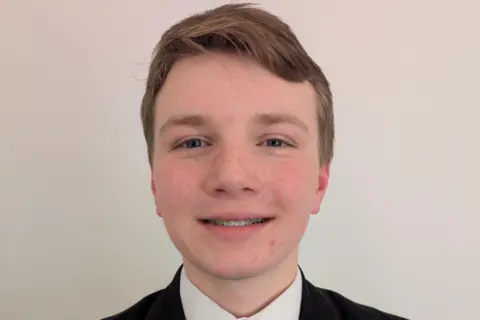 Arran Bauer
Arran Bauer, from Stirling, said the last question was a "total curveball".
"It was very weird language, and there were quite a few questions within there that were not standard practice and I had to stare at the question for a while to figure out what was going on."
The 16-year-old said the language was similar to past papers in the 2000s, but it was "not routine to the modern day higher".
He added: "There were definitely a few spread throughout the paper where it was different wording that they hadn't used before, but I kind of recognised the question type, which helped me answer the question."
A Qualifications Scotland spokesperson said: "We welcome all feedback. We know sitting exams can be a stressful and challenging time and learners will feel differently about how each exam has gone for them.
"We also receive feedback from teachers and the maths community, who have said that while challenging, they found the exam to be fair.
"Exam papers can vary in difficulty year by year and this is taken into account during our normal marking and grading process so learners can be assured that their final grades fairly reflect their achievements and maintain standards."
