'I feel the lasting impacts of conversion therapy'

 BBC
BBCGuernsey has to strengthen its discrimination laws before a conversion therapy ban is introduced, a politician and prominent campaigner has said.
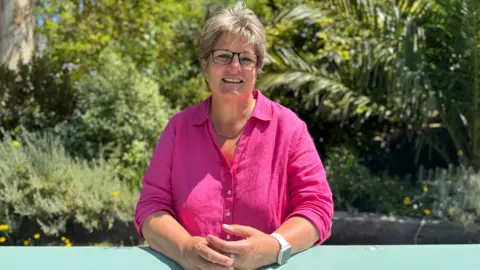
Deputy Jayne Ozanne experienced conversion therapy - whereby processes are used to try to change someone's sexual orientation or gender identity. She said she would "love to see a ban" in Guernsey, but the right discrimination laws needed to be in place first, including on hate speech.
On Thursday, the UK government published its draft bill which, if passed, would punish "abusive acts" with an unlimited fine and up to five years in prison.
The BBC has approached the Home Affairs Committee for comment.
Ozanne has campaigned for a ban on conversion therapy in the UK for eight years.
When she was younger, she experienced religious conversion therapy - dubbed "praying the gay away".
She said: "I went round the world asking people to pray for me to find a way out of this horrendous dilemma that I longed to be loved and cherished, I longed for a family.
"Yet, within the world I was within, that was the evangelical church, that love for a woman was a complete and utter no-no. But, more importantly to that, it was something that God, I was taught, actively disapproved of.
"The stress of 20 years of prayer, of going through all sorts of exorcisms, of, frankly, trying hypnosis for everything I could. But each time it failed the response was: 'Well, that's your fault, Jayne. You're not trying hard enough.'
"The weight of that and the self-hatred and the harm and the shame, frankly, was way too much to bear and I ended up in hospital literally fighting for my life a couple of times... Others, sadly, don't even make it."
'Devastating impacts'
Ozanne said she was "glad" the UK government was "very clear" that people could both willingly have conversion therapy and others could be "forced".
"I mean, people who have been raped, who are forcibly raped, in order to try and make them straight. So, this bill will cover both and that's been incredibly important too."
She said she believed that the bill, if approved by MPs, would draw a "clear line" to society harm conversion practices are "not acceptable".
"I had no idea what I was opening myself up to and, sadly, the impact on on myself and my life has been quite devastating in many ways - you know
"I don't have a family, I don't have children, I would have loved to have children. But, also, the people going offering me my that help would have probably thought twice."
- If you have been affected by any of the issues raised in this story, information and support can be found at the BBC's Action Line.
The UK's proposals will go out to consultation and then need to be voted on in Parliament before they become law.
Ellie Jones, CEO of LGBTQ+ charity Liberate, said she was hopeful the bill would pass.
She said: "I can't see how anyone can really stand up and say that conversion therapy shouldn't be banned.
"It's hugely harmful, it sends a message of people being wrong or incorrect of who they are or something about them is wrong or shameful or should be changed.
"I think the concerns previously have been that people could be maybe criminalised for just talking to somebody and trying to help them if they're struggling with their sexuality or their gender identity.
"I think that's where the sticking points in the consultation will be, just making sure that people can still access therapy if they want, but, as long as the aim of that therapy is to help people with who they are, rather than change who they are, then it shouldn't be an issue."
Follow BBC Guernsey on X and Facebook and Instagram. Send your story ideas to channel.islands@bbc.co.uk.
