Disabled candidates on the barriers they face standing for election
 Disability Wales
Steep hills, low letter boxes and common misconceptions - these are just some of the barriers that disabled candidates have said they face ahead of the Senedd election.
Disability Wales said barriers, whether organisation, environmental or attitudinal, were "ingrained in politics".
It added that disabled people make up over 20% of the population, which means the next Welsh Parliament would need to have 19 disabled people to be representative, as the number of Members of the Senedd (MSs) increases from 60 to 96.
BBC Wales spoke to candidates from the political parties about their own personal experiences of disability and politics.
Voters head to the polls on Thursday.
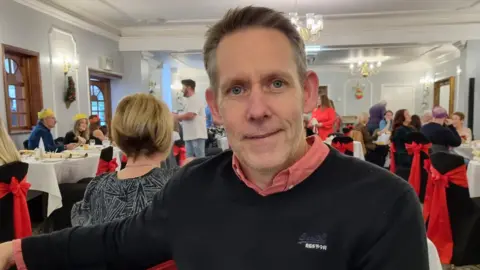
Dr Gareth Thomas was discharged from the army with a spinal cord injury and is a full-time wheelchair user.
"If I got elected, I'd be the first full-time wheelchair user in the Senedd.
"For me, that's shocking," the Reform candidate said.
The 52-year-old is standing in the Pen-y-Bont Bro Morgannwg constituency and said it could be a struggle to campaign in the usual way.
"I can't just go down people's paths and knock doors, because there's steps, there's all kinds of barriers... springs on gates.
"So I can't campaign in the normal way you would see somebody door knocking," he said.
 Tina Thomas
"When I've done it, I've gone out with a team, I've been on the kerbside.
"If somebody wants to come talk to me, they can."
Thomas said he felt disability was not really a priority in politics.
"I think it really takes somebody with a disability to understand people with a disability to make that change, so that was why I got into politics, purely for disabled veterans and mental health," he added.
- A list of all the candidates in this constituency is available here.
'I'm being loud and proud as someone with a disability'
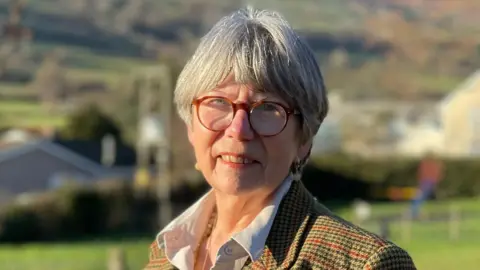
Welsh Liberal Democrat candidate for Brycheiniog Tawe Nedd Jackie Charlton decided she would make it very clear on her leaflets that she was deaf.
"I think there is something quite powerful if you can be open about it," she said.
The county councillor had a cochlear implant eight years ago and has a hearing dog called Juno, who she said acted as a visual clue that she was disabled.
"It's a bit like having that lip speaker, something very visual people can link into and it makes overcoming barriers a lot, lot easier," she added.
 Welsh Liberal Democrats
Charlton said she felt she had to do "a better job than anybody else" because people would ultimately blame her disability if she did not.
"Being visible as a disabled woman is incredibly important and I've always been loud and proud of being a woman, but have carried that forward in being loud and proud as somebody with a disability."
- A list of all the candidates in this constituency is available here.
 Plaid Cymru
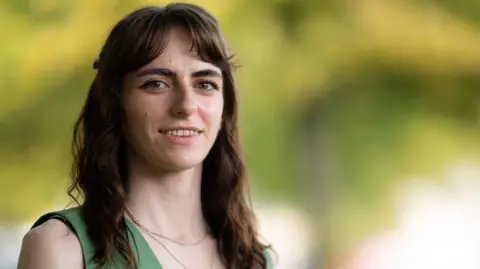
Kayleigh Unitt has been visible and open about her disability online as a content creator for years.
"I couldn't find anybody with my condition making content and I just wanted to feel less alone.
"I thought if I was that person for somebody else, then that's one less person who had to feel like me," she said.
The 26-year-old, who has Ehlers Danlos Syndrome, is a Plaid Cymru candidate for Fflint Wrecsam.
The advocate, who uses a walking stick and mobility scooter, said she avoided door knocking particularly in hilly areas for too long and focused on social media instead.
"A lot of people think if you're young you can't be disabled.
"There's a certain age requirement before it's socially acceptable to need all of these things," Unitt added.
"Being that representation for younger people in general, even if they don't want to get into politics, but just to see somebody like them existing out there having a somewhat stable career and just living their life... knowing they can literally do anything."
- A list of candidates in this constituency is available here.
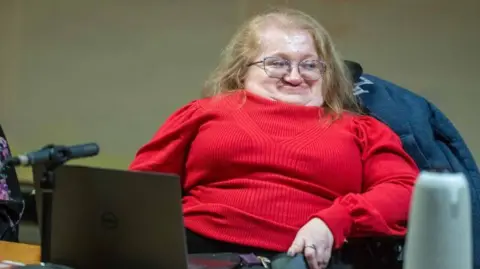
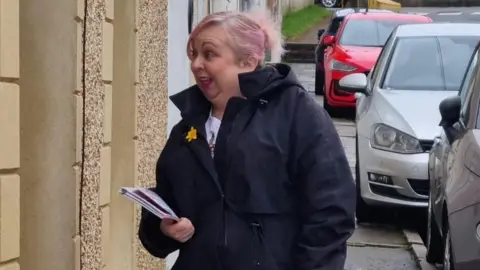
Lisa Pritchard is standing in Afan Ogwr Rhondda for Welsh Labour.
The 44-year-old has torticollis since birth and rheumatoid arthritis for most of her life, and said campaigning can be hard - struggling to reach low-level letter boxes or inaccessible homes.
She said she would like to show others what can be achieved.
"I think a lot of disabled people don't feel confident enough.
"I didn't, I never dreamt that I could represent anyone, so I think confidence is a massive barrier," Pritchard added.
 Lisa Pritchard
The candidate said that one of her greatest fears was online trolling, but felt disability representation was ultimately more important.
"It's very hard isn't it? When you look a little bit different and you're putting yourself forward, you can't really fade into the background.
"So I think we have a thicker skin as disabled people anyway, because of barriers that we felt through most of our lives."
- A list of all the candidates in this constituency is available here.
'Campaigning is hard'
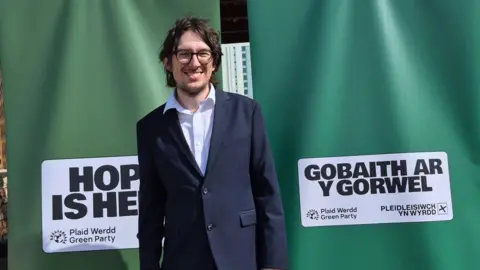
James Bennett, is neurodivergent and is standing for Wales Greens in Pontypridd Cynon Merthyr.
"I think one of the big challenges I found is campaigning is hard.
"It's tiring, and spending a lot of time out of the house, a lot of time on training sessions. It's been quite intense."
The 35-year-old said there was a "neurotypical idealised vision of a politician" that people expect to meet.
"There is an expectation to perform in a certain way, to present yourself in a certain way - and that's quite hard.
"I don't want to be blaming the electorate for that," Bennett said.
"Their perceptions have been shaped by the media and the way other politicians have presented themselves."
 Angela Karadog
The candidate said he hoped the increase in Senedd members was an opportunity for change.
"That's a lot of people. That should encompass a whole range of different backgrounds.
"Neurodivergent people should absolutely be a part of that," he added.
- A list of all the candidates in this constituency is available here.
 Welsh Conservatives
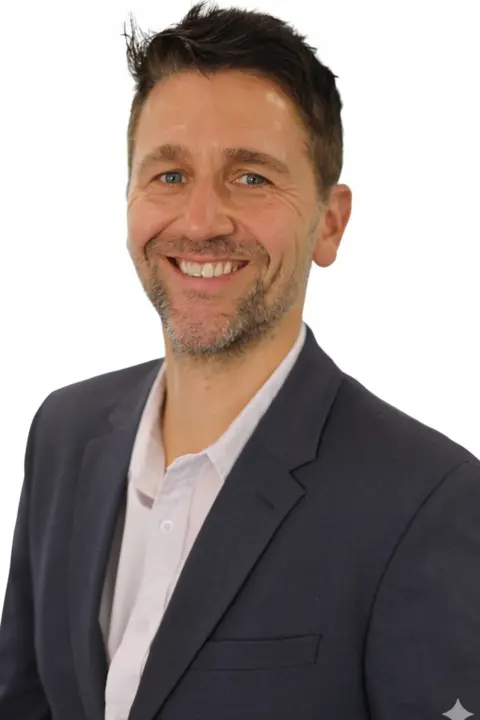
Toby Jones is the Welsh Conservative candidate for Casnewydd Islwyn, and the father of a disabled child, who is a full-time wheelchair user.
"Ultimately the reason I wanted to be in elected politics is because of the lack of inclusion and how I feel that disabled people are sidelined a lot of the time," he said.
The 44-year-old said since becoming a father he had realised the "unfairness" of accessing support.
"Until you live it, you don't truly get it.
"And that's not to sound condescending to those who don't, and there's a lot of very well-intended legislation, policy and people work in these areas but you do need that lived experience to truly get it," he added.
The former political adviser said while he did not want to predict the results, he hoped to see greater representation after 7 May.
"We need to embrace some of the great mentoring schemes that are out there for disabled people to enter politics, but we need to break down the barriers to initially get disabled to even be candidates."
- A list of all the candidates in this constituency is available here.
Disability Wales said for too long "those with lived experience of having an impairment" had been left out.
"Politics has not evolved to accommodate everyone on an equitable basis," politics project officer Kat Watkins said.
She helps run a network aiming to make the system more accessible for disabled people and has produced a charter to advise political parties.
"Politics is for everyone, representation is vital.
"Let's change the system and make Wales a more equitable country," she added.

