The friction-free design principles at the heart of Japan's busiest cities

 Getty Images
From neighbourhood shopping streets to accessible transport, Japan's most liveable cities remove the everyday frustrations of urban life.
What makes a city genuinely easy to live in? It's not necessarily gleaming skyscrapers or world-famous attractions, but whether you can get to work without a car, do your shopping on foot, navigate a train station in a wheelchair or push a pram safely down the pavement.
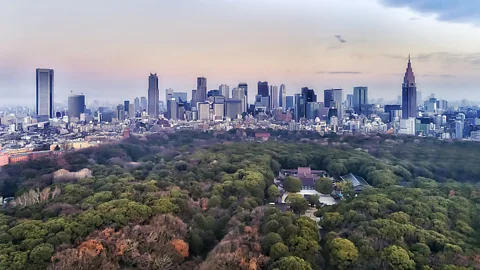
Japan's cities are especially good at this. In the Economist Intelligence Unit's 2026 Global Liveability Index, Osaka ranked seventh and Tokyo rose three places to 10th, making Japan the only Asian country with two cities in the top 10.
This rise reflects perfect scores in the index for stability, healthcare and education, as well as strong infrastructure. But residents say the real difference is in the intentional and accessible design choices that make life run smoothly.
"Japan is built to work for everyone," says Josh Grisdale, a power wheelchair user who runs Accessible Japan and has lived in Tokyo for 18 years. "The same ramps, elevators and space I use as a wheelchair user help a parent with a stroller, an older person or someone lugging a suitcase in from the airport."
For architect Francis Aguillard, who has studied Japan's urban design, the simple daily details often have the biggest impact. "Liveability often comes down to reducing the friction of ordinary life," he said. "Can someone reach work, school, groceries, a park, a doctor and friends without structuring the entire day around a car?"
For many Japanese residents, the answer is yes. We spoke with them and urban planning experts to learn how the country designs cities that work well, and the rules that make them feel so easy.
1. Build cities around everyday life
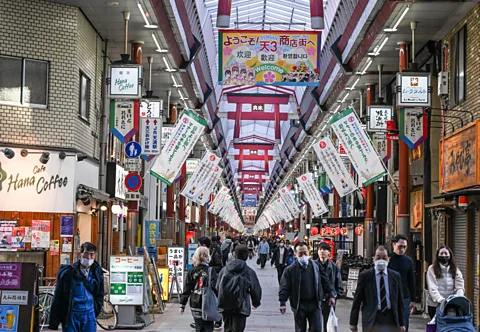
Much of daily life in Japan plays out in the shotengai (covered shopping streets lined with independent businesses whose owners often live above their own shops). "A greengrocer, old coffee shop, clinic, 100-yen shop and dinner [options] all sit within a few flat, covered blocks," says Grisdale.
Grocery shopping was a chore that American Patrick Lydon dreaded when he lived in the United States. After moving to a modern Osaka neighbourhood, he and his wife traded their cars for bicycles, while a smaller house and a tiny refrigerator meant shopping more frequently.
 Getty Images
"Somehow, the experience is really pleasant," says Lydon, who writes The Possible City, an illustrated essay series examining life in Japan and Korea. "Grocery shopping can be transformed from an errand into a daily social experience that connects you to a neighbourhood. Everyone from kids to the elderly move through that street on foot every day."
It's a concept that's difficult to replicate elsewhere, but Lydon compares it to what made old Main Street America so special. Designing at a people-first scale pays off. "The smell of fried croquettes drifting onto the streets, small shops run by the building owners, easy public transit access, a feeling of safety and community for all ages… it's hard to overstate how well this all works."
Japanese cities are also designed so that vehicles fit the streets rather than the other way around, with compact delivery vans and tiny kei trucks navigating lanes built to a human scale. "City streets in Japan often function as shared spaces where pedestrians, bikes, and vehicles can coexist," says Aguillard. "Rather than creating chaos, it creates a beautiful dance of activity."
2. Design transport for everyone
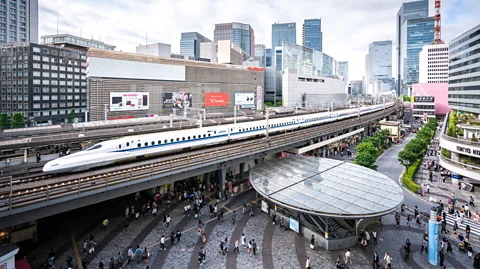
Japan's transit systems are renowned for their reliability, safety and cleanliness. "The amazing public transportation network can take you everywhere," says Keiko Ota, regional operations manager at G Adventures, who has lived in Tokyo for more than a decade. "I don't have a driver's licence, but I still feel complete freedom to go anywhere."
 Getty Images
Grisdale likes that in Japan, public transit is accommodating and he doesn't have to plan ahead when travelling as he does in other countries. "Coming from Canada, I still find it strange that I can show up at almost any station [in Japan] and get where I'm going by rail or bus, on time, without reservations," he said. "Elevators are very rarely out of service, and when one is down there's a plan B; staff will bring a portable stair climber rather than tell me it can't be done."
His experience reflects a two-decade national retrofit following Japan's 2006 "Barrier-Free" law. By 2020, more than nine in 10 highly trafficked stations had eliminated the need to climb steps, with lifts installed at thousands of stations across the country.
In Tokyo, Grisdale finds that the city is still responsive to active and ongoing feedback. When flower planters in his local park sat too close together for his wheelchair to pass, Grisdale mentioned it to the parks department. Within days, stickers reminded staff to leave enough room for wheelchair users to pass through.
Japan's approach to accessibility has shaped cities far beyond its borders. The yellow raised paving used by visually impaired pedestrians worldwide was invented by Japanese engineer Seiichi Miyake in 1967 to help a friend who was losing his sight. Within a decade, it had become mandatory at the country's national rail stations. "Japan gave those to everyone," says Grisdale.
3. Preserve a sense of place
Despite its famous bullet trains and busy urban hubs, Japan also values patience, continuity and a respect for tradition.
When Lydon registered his residence in Osaka, the district office worker pulled out a giant map book, erased the previous occupant's name and pencilled his in. "As a guy who grew up working at Silicon Valley tech firms, that blew my mind," he said. "Japan often doesn't replace systems simply because newer technology exists. If something still works reliably, there's less pressure to reinvent it.
 Getty Images
That patience shows up in the landscape too, where centuries-old trees survive in ordinary neighbourhoods and even train stations, like the 700-year-old camphor growing straight through the roof of Kayashima Station near Osaka.
"Living in Japan made me notice how often old trees are treated as something worth accommodating rather than removing," Lydon said. "Whether that's because of Shinto tradition or simply people's affection, the result is striking. There's a difference between building infrastructure on top of a place and building it with a place.
More like this:
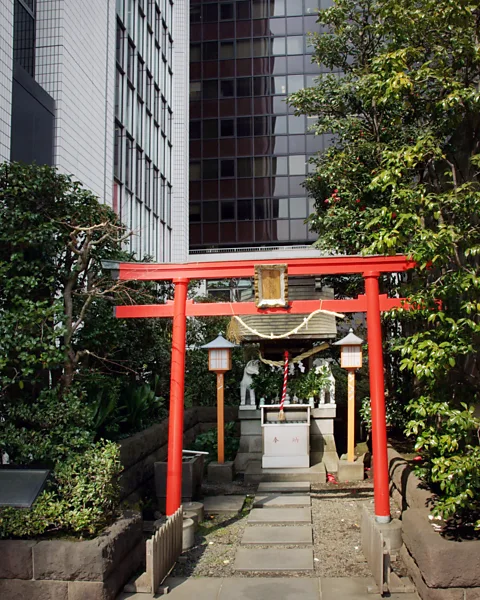
Even in the busiest business districts, everyday life is woven into the city. "You'll see people rushing to meetings, then turn a corner and find a small shrine that's been there for generations, or a tiny restaurant where the owner seems to know every regular by name," says Masato Kominami, general manager of 1 Hotel Tokyo, who walks through the Akasaka district most days. "In the middle of a busy workday, you hear birds, notice how the light changes through the trees or catch the scent of the season."
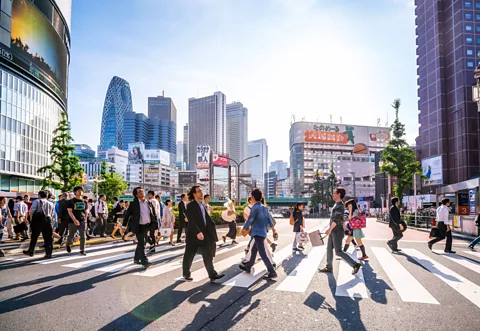
Human-scaled infrastructure only tells part of the story; the people who live in Japan's cities also create the conditions for thriving. "Tokyo is incredibly busy, but people instinctively think about how their actions affect others," said Kominami. "It's not something people talk about much; it's simply part of everyday life."
 Getty Images
Grisdale depends on that cooperation, and after nearly two decades living here, he ranks it alongside anything a government can build. "The manners matter as much as the hardware," he said. "People queue on the platform marks, keep the trains quiet and give up priority seats and space without being asked. In a city this size, that keeps daily life calm for everyone."
In Osaka, Lydon found himself changed by the way Japan operates with awareness and consideration for others. "Whether it's lining up for trains, speaking quietly in public, not littering, separating recycling or saying 'itadakimasu' ("I humbly receive") before a meal, many daily habits remind you that you're part of something larger than yourself," he said. "Maybe that's not a magic spell to fix the ills of the world, but personally it did help me lean towards kindness, beauty and peace."
--
If you liked this story, sign up for The Essential List newsletter – a handpicked selection of features, videos and can't-miss news, delivered to your inbox twice a week.
