Why people are being asked to rip up invasive plant

 BBC
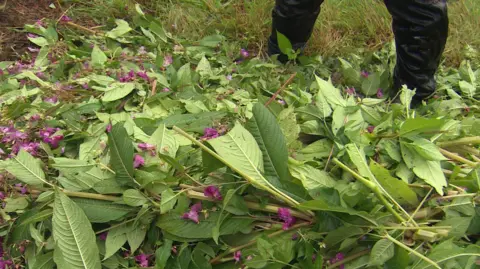
BBCResidents are being invited to help remove a plant from a local park that can cause floods and threaten wildlife.
It follows a similar event last year to uproot the Himalayan balsam at Burrs Country Park in Bury.
Volunteers are sought to remove the plant, which mainly grows along river banks and wet woodland, on 23 May during the school half-term holiday.
Bury Council said people of all ages, including those with no prior experience, were invited to take part "as it's very easy to pick up".
What is Himalayan balsam?
The Himalayan balsam plant is a large annual plant native to the Himalayas and was introduced as an ornamental garden plant to the UK in 1839.
The fragrant pink and purple plant grows fast and flowers between July and November.
A single plant can produce hundreds of seeds, with pods propelling seeds up to 7m (23 ft) - with the seeds floating down water and surviving for two years.
It can block waterways, increasing the risk of floods.
Why are the plants being removed?
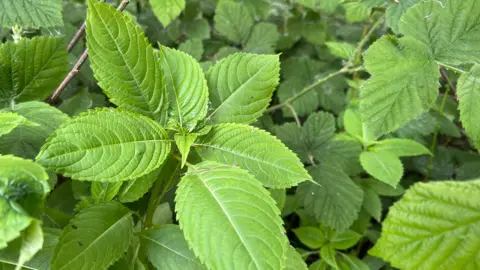
Rapid growth leads to tall balsam plants that crowd out native species, preventing their access to light, moisture and nutrients.
Himalayan balsam can also take over the banks of rivers, streams and ditches.
With shallow roots, the plants erode soil stability, however the nectar-rich flowers are popular with bees and beekeepers.
Events have been taking place nationwide to remove the balsam, because of its threat to native wildlife and habitats.
Is it an offence to grow them?
The Royal Horticultural Society (RHS) says it is not an offence to have the plant growing in your garden or land – if you're not intentionally keeping, cultivating or spreading it.
Environmental authorities can order control measures if they think it necessary.
How can I remove them?
It is possible to remove Himalayan balsam by using a hoe to root out seedlings and young plants on a warm or windy day, when exposed roots dry out quickly and die.
You can also trim it with a secateur or mower, ideally below the first node on the stem to reduce regrowth.
Another option is pulling out the whole plant along with the root system during spring and early summer, when plants are still relatively short.
If none of the above is possible, the RHS recommends hiring a specialist weed control contractor.
How do I dispose of it?
Destroy them on site but do not put Himalayan balsam in waste bins.
If removal is necessary, the Environment Agency needs to be informed and you must use a registered waste carrier and an authorised disposal site.
Contact the Environment Agency or your council for details of authorised sites.
Listen to the best of BBC Radio Manchester on Sounds and follow BBC Manchester on Facebook, X, and Instagram. You can also send story ideas via Whatsapp to 0808 100 2230.
