Why is Lidl opening a pub?

 BBC
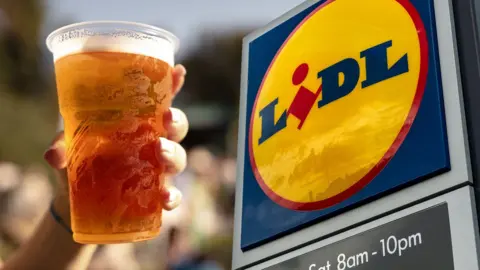
BBCIt really has been a big talking point and we have almost reached the main event as Lidl is set to open a pub in the coming weeks.
There has been much debate about what seems like a bizarre idea of having a cold pint after exploring the store's well-known middle aisle.
It may sound like a gimmick but the supermarket chain's venture into the world of hospitality shines a light on something more complex.
'Surrender principle'
Northern Ireland has one of the strictest alcohol licensing systems in Europe -anyone wanting to open a pub or off-sales must buy an existing licence from another business which has closed.
This 'surrender principle' has shaped the pub trade in Northern Ireland for the best part of the last century, limiting new venues and driving licence prices into the hundreds of thousands.
This £500,000 Lidl pub, which is to be called The Middle Ale, is raising new questions about whether licensing laws in Northern Ireland should be reformed.
The new pub in Dundonald, east Belfast, will open next month and will accommodate up to 60 customers. It will not operate in the store itself but in separate premises next door.
It is Lidl's first-ever pub - but it hasn't been a simple process to get here.
Lidl's situation boils down to two rules: a fixed number of alcohol licences in existence and an 'inadequacy test'.
In the first instance, Lidl wanted to sell alcohol from its Dundonald store as normal, but the law in Northern Ireland states that you can only open a new pub or off-licence by buying an existing licence which has been 'surrendered' and then by proving an area is inadequately served.
Lidl bought a licence from a closing pub, but the court ruled there were already enough off-licences in the area, thus failing the first test.
They then switched strategy.
Instead of arguing the area lacks off-licences, they argued it lacks pubs, which lets them use the same licence to open a pub and sell alcohol to take away.
 Getty Images
A century in the making
The opening of Lidl's pub has been 100 years in the making.
In 1923 the intoxicating liquor act was brought in by the parliament in Northern Ireland, bringing more restrictive licensing laws than the Republic of Ireland - to try to curb the high levels of alcohol consumption in Northern Ireland.
This is where the 'surrender principle' came in.
Under this law, two pubs had to close for a new one to open.
That has since been softened but arguably the most controversial aspect, that 'surrender principle', has remained intact.
This sets Northern Ireland apart from the rest of the UK and Ireland, where opening a pub or off-licence is easier and less expensive.
Stirling review
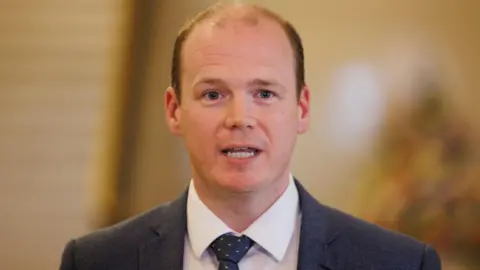
Last year, Communities Minister Gordon Lyons rejected a number of changes to the rules around alcohol licensing recommended by an independent report.
The report, led by academics at the University of Stirling, was commissioned by the Department for Communities at a cost of £478,000.
It stated that existing rules for licensing the sale of alcohol restricted competition and risked stifling innovation in Northern Ireland.
It recommended a number of changes to the existing licensing rules, most notably the reform of the surrender principle.
But Lyons said the recommendations "could have significant and unintended consequences on the economic viability of our hospitality sector at a time when many are operating below viability thresholds".
 PA Media
Why the objections?
Analysis: Patrick Fee, business correspondent, BBC News NI
Publicans who are operating currently say: 'We paid big money to get these licences, so they're worth what we paid for them".
If you bring in these changes overnight, all of the value gets wiped off of those, and they're an important part of the business ecosystem here.
If you have a pub, you can borrow against the value of your licence. It can be part of your business plan.
You can go to the bank, raise money that way. Also, it can be kind of a pension for some publicans.
They can say: "When my time here is done, I might not be earning a lot of money, but I can ultimately sell this licence on, and I'll be able to retire with that."
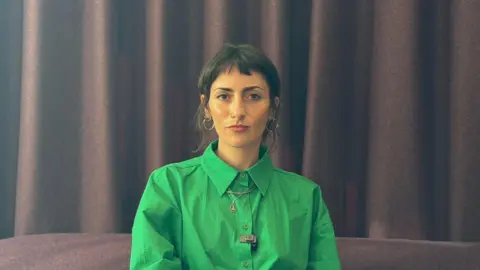
DJ and nightlife charity founder Holly Lester has begun a legal challenge to the minister for communities' response to the Stirling review.
She said: "We now find ourselves taking the Department for Communities to court this summer because they have outright rejected nearly all of the recommendations laid out in this review by Stirling University, which could have totally transformed nightlife.
"It's increasingly impossible to open new spaces and new venues, and this is, in part, due to the one-out, one-in system of the 'surrender principle', but also due to the prohibitive cost of obtaining a licence and all the barriers that surround the process."
A Department for Communities spokesperson said: "As legal proceedings are ongoing it would be inappropriate for the department to comment."
Lidl's pub isn't just a novelty, it's a case study in how Northern Ireland's unusual licensing rules shape who can open venues.
Whether the system needs protecting or modernising remains contested, but what is clear is this supermarket‑pub only exists because of a framework unlike anywhere else in the UK or Ireland.
