Famous Whale Bone Arch to be replaced by replica

 Steve Jones/BBC
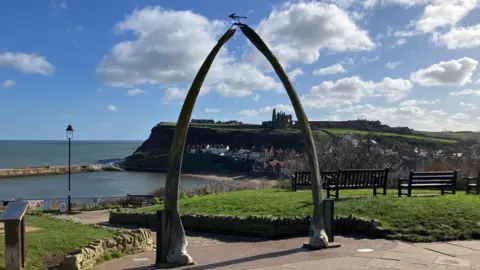
Whitby's famous Whale Bone Arch will be replaced by a bronze replica, it has been confirmed.
The clifftop structure, described as one of the town's "most recognisable and significant landmarks", is in need of replacement due to deterioration.
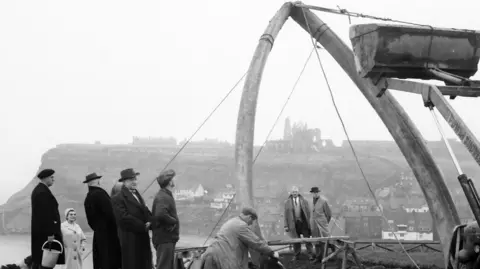
Real jawbones of dead whales were first raised on top of West Cliff in 1964 as a symbol of Whitby's maritime heritage. They were replaced with another genuine pair in 2002, but the new set will be more durable and less controversial.
Whitby's mayor Sandra Turner said: "Nobody wants to think a whale has been killed in this day and age, but at the same time it's Whitby's heritage. It's important we still have something up there which represents that."
North Yorkshire Council, which owns and maintains the 19ft (5.8m) tall arch, said it would be taken down in September to allow a replica of the same size to be moulded from the existing bones.
The new structure is expected to be installed early next year, according to the authority.
"Years of exposure to the weather on the coast has led to significant deterioration in the arch's condition, meaning the bones now need to be replaced," a spokesperson said.
Council executive member Mark Crane, whose responsibilities include harbours, said: "The new bronze arch will stand for generations, providing a lasting symbol of the town's unique maritime heritage and ensuring this iconic feature continues to inspire residents and visitors long into the future."
A statue of Captain Cooke, which stands just a few feet away from the current whale bones, is also made from bronze.
At an estimated £70,000, the bronze replica was the most expensive option put forward by the council, which will cover its cost.
"Given the feelings with people in this modern-day era perhaps it's probably the best route to go," said Turner.
"The council did try to get a genuine set of jaw bones, but there's so much legislation to bring them out of one country to another.
"The biggest problem was locating a pair of jaw bones that were of the size and condition that was suitable."
 Whitby Museum Collection
A report prepared for Whitby councillors ahead of a debate on the issue in March cited "ethical and legal challenges" of procuring a new set of real whale bones.
The current pair were sourced from Whitby's twin town of Barrow in Alaska after a worldwide appeal.
They came from a whale that was killed legally by native Inuit in 1996, according to the Local Democracy Reporting Service.
North Yorkshire Council said the existing bones would be gifted to the University of York to support academic and educational research.
The authority said a section would also remain in Whitby, where it will be displayed at Whitby Museum alongside bones from the original arch.
According to a newspaper report from 1964, the original bones, donated by a Norwegian whaling company, were those of a whale killed in Antarctic waters.
Whitby began a long and profitable history with whaling during the 18th Century and despite the controversial practice being outlawed in 1986 to protect the species, the arch remains popular with both visitors and locals.
It is used heavily to market the town, which is better known today as a popular seaside destination.
Listen to highlights from North Yorkshire on BBC Sounds, catch up with the latest episode of Look North.
