Woman with Alzheimer's supports blood test trials

 Mark Norman BBC
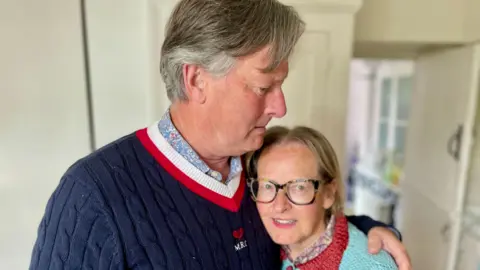
A Kent woman with early onset Alzheimer's disease is supporting a research project being run by her local mental health trust.
Maureen Royston-Lee's diagnosis took more than a year-and-a-half, which her family described as frightening.
Kent and Medway Mental Health NHS Trust (KMMHT) is contributing to a major national dementia research study (ADAPT) and is introducing blood testing for Alzheimer's disease in local memory clinics for the first time.
Consultant psychiatrist Dr Jo Rodda said she hopes to be able to use the information they gather to make a diagnosis of dementia "more quickly, more accurately, and in a way which is more accessiblefor patients".
Maureen's husband David believes the new blood tests will be helpful.
"To actually have a blood test that says there's these amyloids (proteins) in the brain that 95% of Alzheimer patients have - bingo!" he said.
"At least we know what we're dealing with."
The Kent trust is part of two national research projects, ADAPT and GRACE.
The ADAPT project is introducing blood testing for Alzheimer's disease for some patients in local memory clinics.
Only a limited number of people will have the test as part of the research study.
The tests look for specific proteins in the brain, one of the key indicators of Alzheimer's, and offer 90% accuracy.
If successful, the tests could replace invasive or expensive procedures like lumbar punctures and PET scans and reduce waiting times for an accurate diagnosis in many cases.
Roddasaid: "We know that the blood tests are accurate, but what we don't know is what difference they're going to make in real world care in the NHS.
"In partnership with University College Hospital London, Kent residents have shaped how the study was designed.
"I think it's fantastic that Kent's involved in this.
"We haven't had access to these blood tests in Kent before and here we are, people are coming into memory clinics and they're part of the study."
 Mark Norman / BBC
East Kent is also one of four pilot sites across the UK involved in a study focused on reducing inequalities and improving post-diagnosis support for people living with dementia.
Kent and Medway - where more than 26,000 people live with dementia - has some of the UK's highest levels of health inequality according to the NHS.
The GRACE project is funded by a £2m grant from Alzheimer's Society.
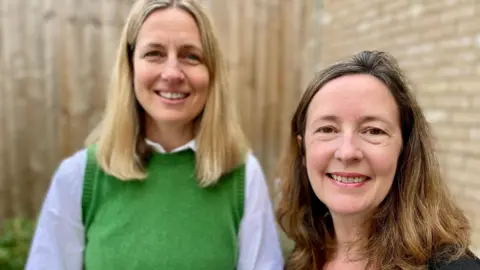
Prof Claudia Cooper from Queen Mary University of London believes there is post code lottery for dementia care and that most people living with dementia don't get the best possible post-diagnostic care.
She said the GRACE study would put patients in touch with trained facilitators who would work with people for a year after diagnosis.
"By investing in this preventative upfront care, you can bring people better quality of care, but also as well as prevention being better than cure, it's usually cheaper too.
"It can prevent care home admissions and hospital admissions, which aren't just distressing, they are expensive.
"So this really speaks to the government's 10-year health plan, which is to move care into the community and towards prevention and away from being a sickness service."
Follow BBC Kent on Facebook,X and on Instagram and listen to BBC Radio Kent on Sounds. Send your story ideas to southeasttoday@bbc.co.uk or WhatsApp us on 08081 002250.
