Throwing away batteries puts our lives at risk, binman warns

 BBC
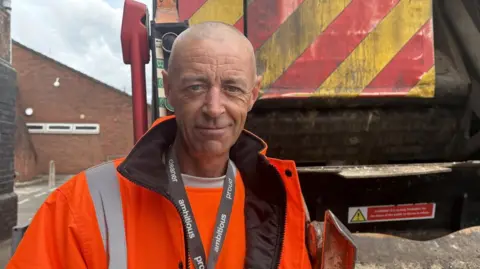
BBCWhen Jason Boulton saw smoke coming from the back of the bin lorry he was loading, he initially thought it may just have been dust.
But he soon realised what his team was facing as black smoke started to pour out of the lorry.
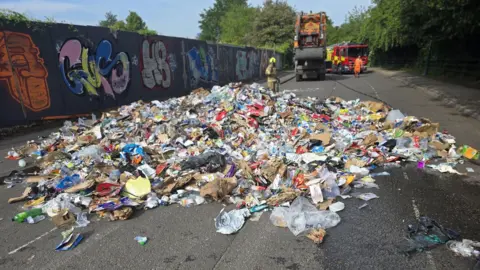
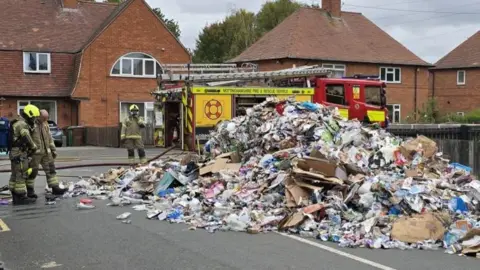
About six tonnes of waste had to be tipped into Stonebridge Road in St Ann's, Nottingham, during the fire on 22 May.
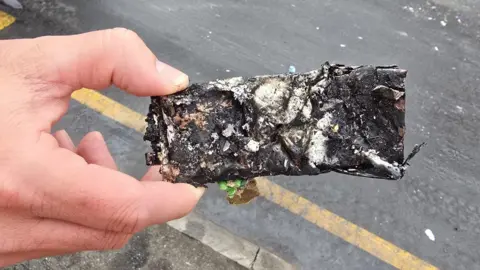
It was later found to have been caused by a solar-powered garden light that had been incorrectly placed in a recycling bin.
While it was the first time Jason had experienced a bin lorry fire in his three years working as a loader, he said the job was becoming increasingly hazardous due to people irresponsibly disposing of electrical items in household bins.
The 48-year-old said: "We are emptying people's bins and they should know what they're putting in them so they're not putting us at risk.
"But some people are just lazy.
"They put [whatever] in the bin and it's not their trouble anymore - they've passed it on to a refuse collector to deal with.
"I just want to go home every day safe and well and so I think people can play a part thinking about what they put in their bins."
 Nottingham City Council
The blaze in May was the first experienced by the city council's waste and cleansing department in 2026 - but it is unlikely to be the last.
Discarded batteries are thought to cause several fires a day at waste facilities or in rubbish trucks across the UK.
Lithium batteries, which are found in almost all rechargeable items, can combust when crushed and mixed with flammable materials such as paper inside the collection lorry, causing a fire inside the vehicle.
The latest industry-wide figures, reported in May, from the Environmental Services Association, show there were 1,200 battery-related fires in 2023-24, a 71% rise on the previous year.
The organisation said about six billion batteries were thrown away across the UK in 2024 – about 3,000 every minute.
Of those, 1.1bn were inside electrical devices such as toothbrushes, mobile phones and disposable vapes.
 Nottingham City Council
Nottingham City Council reported eight fires in the back of bin lorries in 2025 - there were just two the year before.
As a result, Jason said there were certain areas of the city where crews have learnt to be more vigilant.
He hopes residents will start to not only think more responsibly about keeping electrical items out of household bins, but also treating refuse collectors with respect.
"If we don't take a bin because it's got something contaminated in it and we drive off, they start chasing you because we're not emptying their bin," he said.
"We explain why [we won't collect it] and then they start getting aggressive with you.
"At the end of the day a bin can get emptied another day, but a life can't be replaced.
"We don't come to work to get abuse. We're here to do a job.
"There are rules and people should be sticking to the rules to make our job easier and safer."
 Nottingham City Council
Sam Lux, who is responsible for carbon reduction, leisure and culture at the city council, said no-one working in front-line services should have to face such risks.
"I like to think that if a person was fully aware that throwing their battery, vape or small electronic item away could potentially cause the loss of somebody's life, that they would think twice and do the right thing," she added.
"We do need to do more to raise public awareness of this issue."
Natasha Neale, community engagement and partnerships manager at Nottinghamshire Fire and Rescue Service, said: "Incidents like this are becoming far more frequent – but many of them are preventable.
"Batteries, especially lithium-ion ones, can cause serious fires when damaged or crushed. We're urging residents to dispose of batteries correctly to help reduce these incidents.
"Nottinghamshire Fire and Rescue Service is working closely with councils across the county and waste collection companies to spread this message and keep crews and communities safe.
"Batteries should never go in your household bins. If you're unsure how to dispose of them, please check your local council's website for guidance."
Follow BBC Nottingham on Facebook, on X, or on Instagram. Send your story ideas to eastmidsnews@bbc.co.uk or via WhatsApp on 0808 100 2210.
