'I'm the custodian of someone's future best friend'

 Lisa Burtenshaw
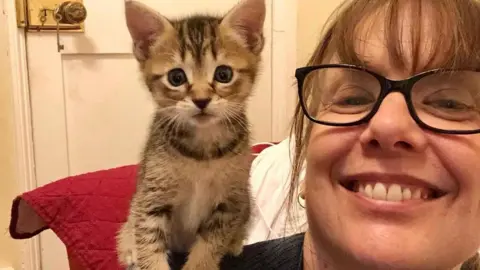
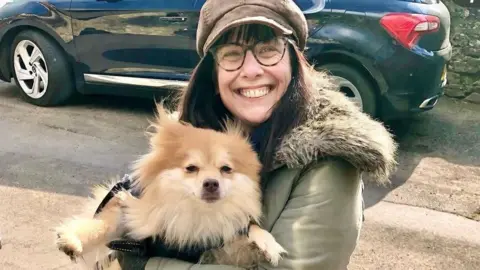
Lisa Burtenshaw has fostered more than 180 cats and dogs for rescue centres in the West of England. She explains why opening up your home can transform an animal's chances and why she calls herself "the custodian of someone's future best friend".
Burtenshaw, 56, began volunteering with Bath Cats and Dogs Home in 2016 after retiring from a career working with animals abroad.
Foster carers like her form a largely unseen part of the system that keeps rescue centres running, often from their own living rooms.
They offer a temporary home for rescued animals and can provide round-the-clock care to those with health issues, a safe space for nervous characters and patience for those with problematic behaviour.
Their help allows rescue centres to free up space and can help speed up adoption times.
"There are so many situations where fostering is imperative in helping animals," a spokesperson for Bristol Animal Rescue Centre (BARC) said.
Burtenshaw said she liked to give her time to animal charities "more than anything".
By opening up her home, she said she had been able to take some of the strain off rescue centre staff who could give more care and attention to animals who "really, really need their time".
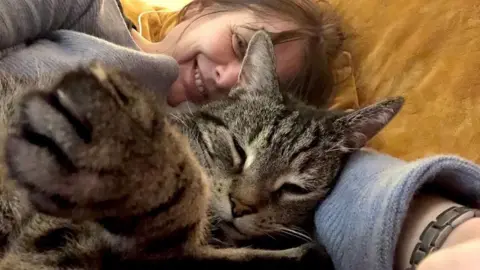
She said: "You get so many cats who become very shut down in a cattery environment so they're not really showing their true colours and that can make them more difficult to get adopted."
Animals need to be in a relaxed home environment where they can socialise with humans and show their personality and become familiar with household sounds, she said.
 Lisa Burtenshaw
Animal charities help thousands of abandoned or unwanted pets find forever home every year.
Rescue centres across the UK rely on foster carers to help animals who struggle in kennels or catteries.
Katie Scott-Dyer is a registered clinical animal behaviourist that works with pet owners to help them understand and improve their relationships with their pets.
She said the rescue process could cause some animals to behave differently until they return to a home environment.
Scott-Dyer said the changes - which may not be clear to an untrained eye - could be expressed in various ways, such as hiding from people, refusing food, barking or meowing excessively, acting aggressively, chewing objects or over-grooming.
"Being rescued can be traumatic, let alone the negative experiences they had leading up to the rescue," she said.
"They may have been seized from the only home they ever knew and transferred elsewhere, sometimes with multiple other animals for long periods, sometimes overseas."
She said a lot of work goes in to providing behavioural help to animals that have been rescued and the foster network was part of this.
 Lisa Burtenshaw
Kayleigh Larcombe, fostering coordinator at BARC, said fostering had a "significant" impact on the welfare of animals.
She said the centre had received an "incredible" response from a network of 119 volunteers since the centre launched its foster scheme in 2024.
"Fostering provides an essential second stay in between the rescue environment and a permanent home and it offers such an insight into the animal's behaviour and needs that we are not able to replicate on site," she said.
"They don't ask for much but the centre is just overwhelming for them."
'Real snuggle bug'
The centre put a male cat into foster care in November after he became "very shut down" and barely interacted with humans.
Based on his behaviour, staff initially thought he would have been better suited to a rural home but the cat changed dramatically while in foster care.
"It turns out that he's a real snuggle bug," Larcombe said.
"He's now the lap cat that none of us really anticipated because we just couldn't see it."
The cat became a "foster fail" as his foster family chose to adopt him.
Larcombe said she considered "foster fails" to be a success if it meant the animal ended up in its forever home.
"At the end of the day, what's a better home?" she said.
"They've seen that progression with him.
"He doesn't need to move on to another home and start that process all over again."
 Lisa Burtenshaw
Rescue centres like BARC provide foster carers with the essentials for their animal including food, bedding, toys and vet care.
Applicants are asked to register their interest before the rescue centre follows up for an interview, home check and references.
Foster carers may be asked to take care of a rescue animal on a short or long-term basis.
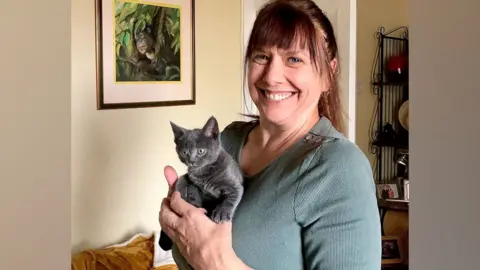
Burtenshaw admits fostering can be emotionally demanding, especially when it comes time to say goodbye.
"It can be heart-wrenching when you have to give them up... once you get out of that mindset and you start treating it like a job, then it's a big help and it's very fulfilling," she said.
Despite the challenges, she says the moment an animal leaves for its forever home makes it worthwhile.
"When you hand them over to families that are thrilled to finally take on an pet - it's so lovely to see," she said.
"As a fosterer, you are like the custodian of someone's future best friend."
Follow BBC Somerset on Facebook and X. Send your story ideas to us on email or via WhatsApp on 0800 313 4630.
