Campaigning parents call for better paternity leave
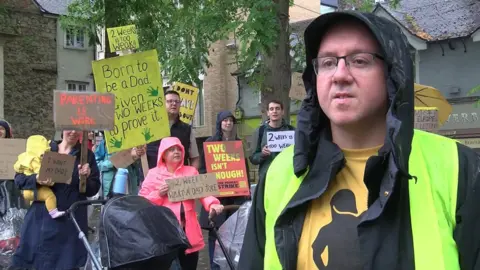
Parents and campaigners have gathered in Oxford to call for six weeks of parental leave at 90% pay for both mothers and fathers.
The demonstration in Bonn Square was one of a number of Parent Strike events held in cities across the UK.
Organisers said better paternity leave was "a simple ask" so that both parents could look after their children equally.
The government said it was reviewing parental pay and leave to "ensure we reflect the realities of modern work and childcare". The review is expected to be completed by the end of the year.

Introduced in 2014, parents can now share up to 50 weeks of leave during the first year after their baby is born.
But fathers who do not use shared leave are offered two paid weeks off work under the UK's statutory paternity leave system.
Supporters of longer leave argue it improves outcomes for children and families.
Vincent Straub, a researcher at the University of Oxford, said evidence from Norway and other Scandinavian countries showed increasing paternity leave had "many, many benefits that tend to outweigh the costs".
He said research suggested there were benefits for "the health of the father, the parental relationships and most importantly, child health".
But concerns have previously been raised that expanding paid paternity leave could increase costs for businesses, particularly smaller firms that may need to arrange temporary staff cover while employees are away.
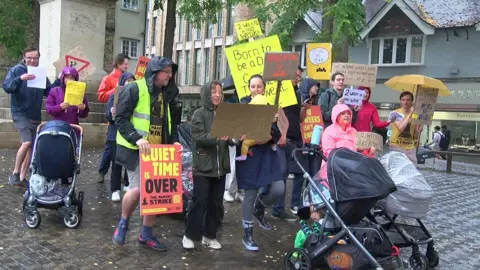
Bradley Hall-Smith, of campaign group Dad Shift and a co-organiser of the demonstration in Oxford, said employers were increasingly offering enhanced packages.
"There is hope, there is progress. Employers like mine offer more generous leave packages. The weather is changing on this," he said.
"There is sunshine ahead if the government listens to our ask, and it's a simple ask of six weeks leave at 90% pay for mums and dads so that they can equally look after their children and look after each other."
Dad Shift previously pointed to figures from the Organisation for Economic Co-operation and Development, which showed that the UK's statutory paternity leave was the worst in Europe, with fathers paid £374.36 for two weeks.

And campaigner David Harley, who suffered from paternal postpartum depression, said statutory paternity leave policy needed updating "because it hasn't been prioritised for a long time".
"I've just met a mum who's joined us with her daughter - she said that her husband is self-employed and he didn't have the choice.," he said.
"He had three days leave, because that's all he could afford to take for their first, so that's part of the picture for why we are here."
Kate Dearden, minister for the future of work, said: "The first few weeks of being a parent can be both some of the most rewarding and challenging.
"We are determined to make sure dads and partners can be there to provide support as much as possible, especially in those crucial first few weeks and months when mums are often recovering from childbirth.
"That's why we've already changed the law to give 32,000 more partners access to paternity leave, and are carrying out a full review of parental pay and leave to ensure we reflect the realities of modern work and childcare so that parents can spend as much time doing what matters most – caring for their baby."
