Fruit and vegetables are toxic to my child

 Family handout.
The mother of a young girl from Somerset who has a life threatening intolerance to some foods including fruit and vegetables is campaigning for the condition to be detected at birth.
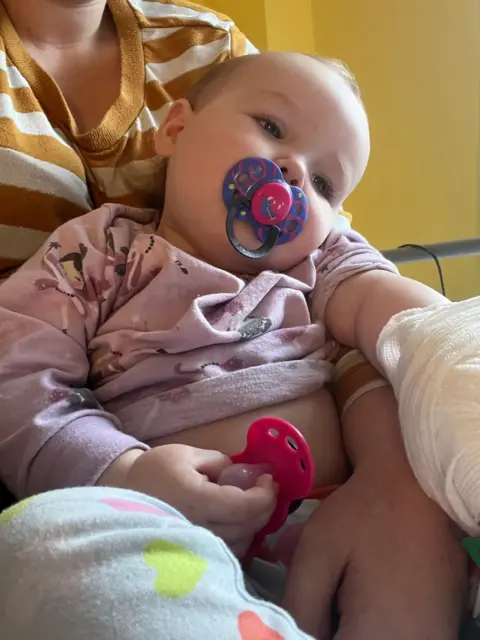
Freya screamed for 20 hours a day as a baby due to Hereditary Fructose Intolerance (HFI), a metabolic disorder that can cause liver or kidney failure.
HFI is one of 200 genetic conditions included in a newborn screening study until 2027, but Freya's mum Dannie wants the disorder to be permanently part of the national neonatal programme.
The Department of Health, which oversees the UK's National Screening Committee, said it "welcomed new evidence which suggests the case for a new or modified screening programme".
 Family handout.
Freya, who is now four, spent the first years of life unhappy according to her mum Dannie who said "she didn't sleep, didn't laugh and didn't have a solid nappy for two years".
The health issues were first identified when Freya was put onto formula as a baby due to being unable to latch to breastfeed, and Dannie noticed sickness, bloating and diarrhoea.
"I was at my wit's end. In fact through frantic Googling, I found HFI online when Freya was eight months old - but I was told it couldn't be that," Dannie said.
 Family handout.
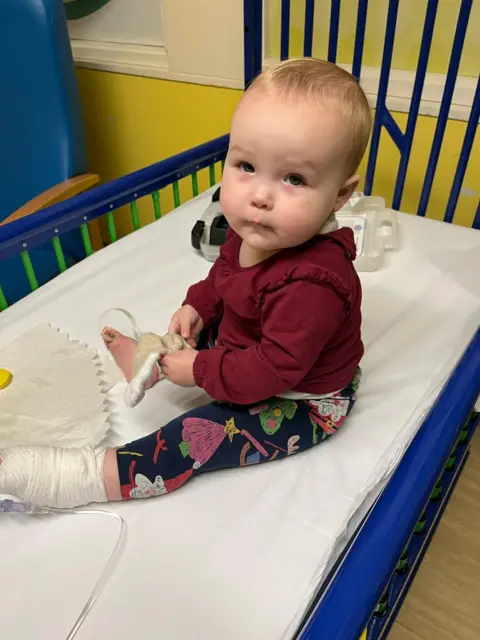
When Freya turned one, the symptoms worsened - she stopped screaming and became lethargic and heavy.
Her blood sugar levels had dropped so low she was in and out of consciousness and was rushed to hospital.
"The strange thing was the quiet - she wasn't screaming 20 hours a day," Dannie said.
"We'd been admitted several times before this point but that was the scariest."
Professionals told Dannie they suspected her of exaggerating or deliberately causing Freya's symptoms due to her puzzling and repeated presentations - something the NHS calls fabricated or induced illness.
"There was no belief something was going wrong", Dannie said and it took another four months of advocating for her daughter before a diagnosis.
"I was told it's reflux, it's colic, I was asked about my mental health - which to be honest was becoming pretty shoddy.
"But once she was diagnosed the change happened overnight."
 Family handout.
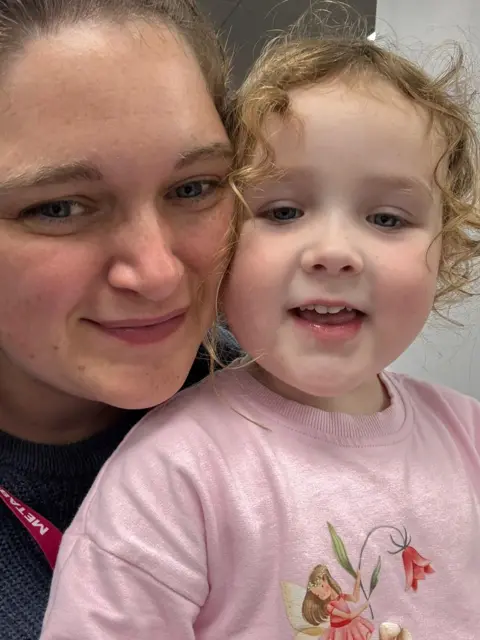
Freya was put on a new diet and immediately slept through the night.
"She was a different child," Dannie explained.
"She became more settled, more content, she laughed more, she played".
Freya was diagnosed with HFI - a metabolic disorder caused by the mutation of a gene that enables sugars to be used in the body.
Those with the condition can't tolerate fructose, sorbitol or sucrose - natural substances that are in a huge variety of different foods and drinks.
'Simple sugars'
Professor Tim Cox from the University of Cambridge is the UK's leading HFI specialist.
"HFI causes a disturbance of the body's chemistry due to the presence of just very simple sugars that are universal and ubiquitous," he explained.
"Those sugars are very toxic for those with it."
Prof Cox said it's estimated that one in every 18,000 people are born with HFI.
"In the [health] system they get lost, nobody quite believes them, and it takes a long time before eventually you can identify the substance that's causing it".
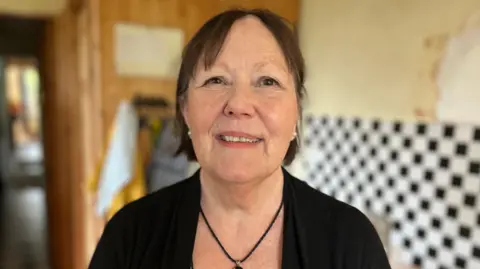
Carol Westwood from Newton Abbot in Devon has HFI but wasn't diagnosed until she was in her 20s, after being regularly ill during childhood.
Like most children, she was encouraged to eat fruit and vegetables - and she was disbelieved when she said it made her sick.
Decades on, Westwood has adapted her life, changed her diet and is helping others by setting up the UK's first HFI charity.
"I have safe foods - go to foods which I know are ok. But I still have to always check labelling because manufacturers don't have to add warning labels, unlike allergies, if they've added natural sugar," she explained.
Westwood said she eats meat, fish, cheese, home made white bread as wholemeal contains fructans and pasta.
Her charity, HFI UK, which Dannie is also part of, offers advice, support and a community to those with the condition.
It also supports research into HFI and is calling for the disorder to be detected at birth.
"It's included in the national neonatal screening programme in a trial, but lives will be saved if this becomes permanent," Westwood said.
'So simple to solve'
Prof Cox said young children have died because HFI was misdiagnosed or not detected, while some adults have been left with liver or kidney damage.
Dannie said: "I appreciate you can't screen for every condition - but this is so simple to solve if you detect it early.
"We could have avoided so much trauma."
The Department of Health (DOH) said the government is guided on screening by the UK National Screening Committee (UKNSC), an independent scientific advisory body made up of leading medical and screening experts.
The DOH said the UKNSC "welcomes any new evidence which suggests the case for a new or modified screening programme via their open call".
Follow BBC Devon on X, Facebook and Instagram. Send your story ideas to spotlight@bbc.co.uk.
