The women building boats in a male-dominated world

 Contributed
Humans have been making boats and ships for thousands of years to help them reach and explore new lands, but traditionally it has been a male-dominated industry.
Yet in the modern world, more and more women have joined the sector, with some opening their own boat-building yards.
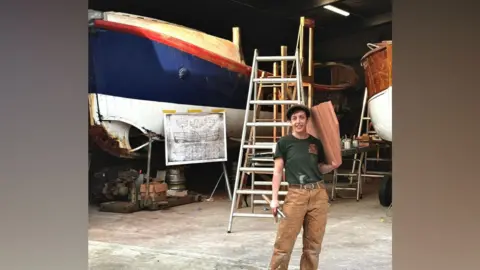
Abbey Molyneux, 35, is one of those with her own yard in Norfolk and despite admitting the industry can be lonely for women, it was something she was always "meant to do".
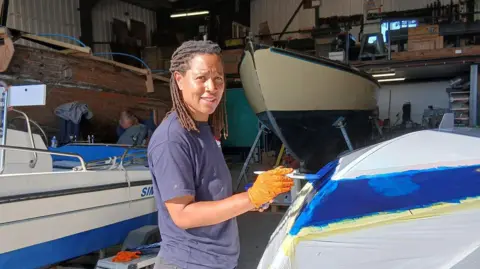
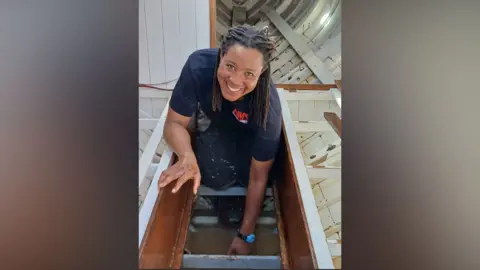
Vanessa Larmond, 44, also moved her whole family across the country to Suffolk just so she could build boats and said she loved the work.
Both have encouraged other women to "fight" and get into the industry if they have a passion for boats.
 Contributed
About 15 years ago Molyneux, who is originally from Exeter, joined an apprenticeship scheme where she could learn how to build boats.
It was the only free apprenticeship and according to Molyneux, it can cost £30,000 a year to train.
She explained the skill was "in my blood" as her ancestors had similarly built boats and had been lifeboat men on the Norfolk Broads.
"It's just where I'm meant to be and what I'm meant to do," she told BBC Radio 4's Woman's Hour.
 Contributed
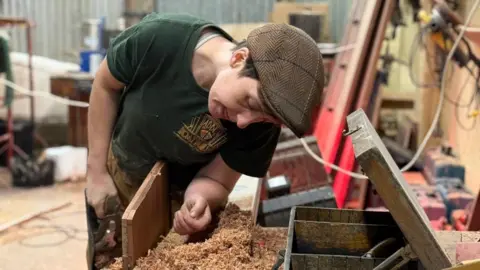
About six years ago she was able to open her own yard in Reedham, Norfolk, where she has a team to help build traditional wooden boats and she is also a director of Women in Boat Building — a community interest company that works to inspire women to enter the industry.
When asked what challenges women in boat building face today, Molyneux said: "It's obviously a male-dominated trade.
"From a business point of view, I found it really hard setting up just to be taken seriously.
"I was really lucky to have the support of the man that trained me, and the reference from him is what helped me build my business.
"Without that, I'd have struggled to get the credibility from people because I'm young, but also because I'm female.
"It can be really intimidating and it can be really lonely."
More stories from Suffolk:
 Contributed
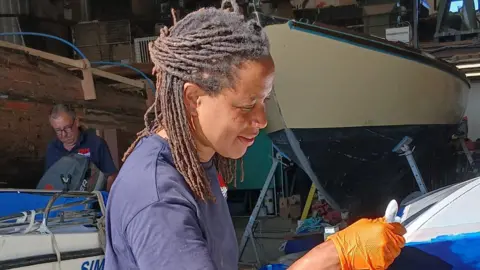
Larmond said she had always had a fascination with boats, despite not knowing where that interest came from.
She initially went to university to follow her dream of boat building, but struggled to then get into the industry.
Over the years she had other jobs, but was still keen to follow her passion.
She saved for eight years and moved her family from Derby to Lowestoft so she could attend a course at the International Boat Training College in Lowestoft just before it closed in December 2024.
Days after finishing the course, she then started working in the field in Southwold where she has been for the past two years and is the only woman working on the yard.
 Contributed
When asked what her family thought when they moved, she said: "I think my daughter probably didn't believe me... [she] never thought it was going to happen.
"And it did, so I think that was a bit of a shock, but I think they've grown a lot from it."
She said she loved that "every day is different" in her work.
Both Molyneux and Larmond said it was challenging for women to get into the industry, but it was worth fighting for.
"You can put your hands to whatever you like and there is space for you there," Molyneux said.
"Don't let anybody tell you there isn't."
 Lyndsay McClay/British Marine
Lyndsay McClay, the president of British Marine which is the trade association for the UK marine industry, said she was "proud to see talented women succeeding across the sector".
"Although comprehensive industry-wide figures on the number of women working in the UK marine sector do not currently exist, we recognise that women remain underrepresented in some practical, technical and manufacturing roles," she added.
"We also acknowledge the experiences shared by women who have not always felt taken seriously or who have found working in a predominantly male environment isolating.
"While these experiences do not define the industry as a whole, they are important and must be listened to."
She said that British Marine had seen things improving for women in the industry and it was committed to building on this momentum.
While the exact number of UK female boat builders is not known, according to the International Council of Marine Industry Associations, it is estimated that just 2-5% of people working hands on are women in boat building across the world.
As well as this, for the first time in history more women took up a flagship course at the Boat Building Academy in Dorset back in 2024.
Do you have a story suggestion for Suffolk? Contact us below.
Follow Suffolk news on BBC Sounds, Facebook, Instagram and X.
