Sheep farmer 'devastated' by repeated dog attacks

 BBC
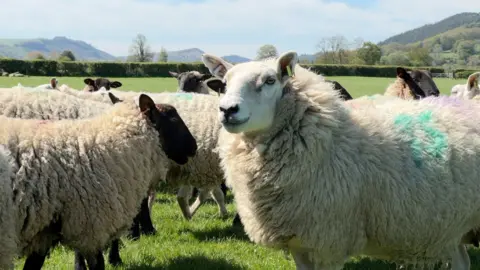
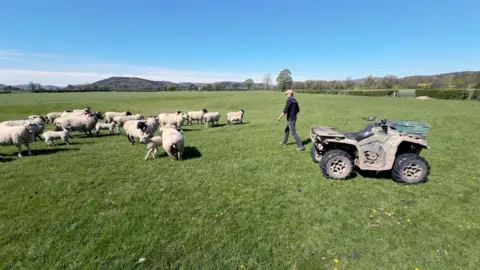
BBCA sheep farmer says repeated attacks on his flock have been "devastating", more than two months after the law was revised in an attempt to tackle the problem.
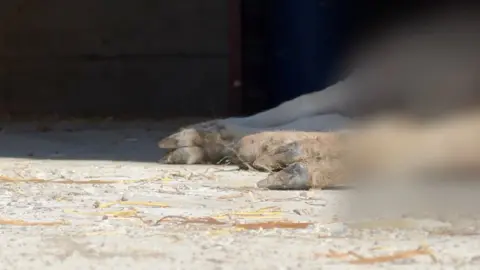
On the same morning the BBC arrived at his farm, Will Rogers discovered one of his sheep lying dead in a field between Herefordshire and Powys.
The injuries suggested an attack but, as is often the case, there was no clear answer as to what had caused it. For Rogers, who farms 650 acres (263 hectares), uncertainty is part of the pain.
"It's devastating," he said. "You tend to think about where the sheep are and how you could have done things differently. You put a bit of blame on yourself to start with.
"But you are angry… and you're looking for answers. You're looking to find out where this dog came from and who might be responsible."
That sense of frustration is not new but has built up over years for this Herefordshire farmer.
"When I was young we had dog attacks hardly at all," he said. "Now we would have one or two a year… they're becoming more of a problem.
"We had one about three weeks ago… we lost animals in that attack. We had one four months prior to that, and the year before we had two as well."
Even when sheep survive, stress alone can have lasting consequences, particularly during lambing season.
"A dog being in with a flock can have a knock-on effect," he said. "Animals that are in lamb can lose their young.
"You will lose numbers that should be born, and that impacts your bottom line for the year."
In March, the revised law covering England and Wales gave police greater powers to investigate attacks and also gave courts the ability to impose tougher penalties - including unlimited fines for owners if they are convicted.
The previous law, which dated back to 1953, "didn't actually serve a purpose", according to Rob Taylor, the National Police Chiefs' Council lead for livestock attacks.
"It hindered investigations and didn't give the protection to the farming community that is required.
"The new law… has completely revolutionised the way we can investigate, the powers we have and the way the courts can sentence as well."
 Rob Taylor
West Mercia Police, which polices Shropshire, Herefordshire and Worcestershire, said the changes allowed them to take firmer action.
"These powers are a significant step forward in tackling livestock worrying and supporting rural communities," a spokesperson said.
"Rural crime has a real impact on communities across the countryside, and these measures will help us take firmer action against those who fail to control their dogs and put animals and livelihoods at risk."
"Anything the police and the law can do to help us… is welcomed," Rogers said. "But it will come down to results."
A key part of that could be the use of DNA evidence, something now permitted under the new powers.
"Police being able to take DNA is going to help us to find the dog responsible," he said. "That's what we're all looking for.
"But who will be responsible for collecting it and how it's done? The results will matter."
For police, those practical challenges reflect the complexity of rural crime.
"These attacks often take place in remote locations where there are no witnesses and no CCTV," Taylor said.
"We need to use everything that we have… to actually link dogs to offences, where sometimes in the past we've not been able to do so."
But there are early signs the law has begun to change what is possible.
In Cambridgeshire, four alpacas were killed in April - a case Taylor described as "an absolutely tragic event".
But, unlike before the new law, officers were able to act, as alpacas are now included in the definition of livestock.
"The dogs have been seized and an investigation is under way," he said.
"Previously… that would not have been an offence. The police would have had no powers to deal with that."
However, wider police data is not yet available to show what overall effects the law change is having, and officers said it might take months before cases work their way through the courts and clearer trends emerge.
Meantime, the scale of livestock attacks has continued to rise.
Animals worth nearly £1.95m were severely injured or killed across the UK in 2025, according to rural insurer NFU Mutual.
Many cases, however, were thought to go unreported and despite common perceptions, police said most were not deliberate.
"People letting dogs loose on purpose… is very rare," Taylor said. "This is usually irresponsible dog ownership or people not having knowledge of how to look after their dogs in the countryside."
Back on his farm, Rogers said prevention was just as important as enforcement.
"The dogs that are usually responsible are local… they're roaming freely," he said, adding any dog had the potential to cause harm.
"You never know which dog is going to have it in them to attack," he warned.
"They need to take responsibility… keep them on a lead and stick to footpaths when they're on farmland."
Farmers do have legal rights to protect their animals - but Rogers hoped it never came to that.
"We don't want to have to take action," he said quietly. "We don't want to be the villain in our own communities".
Follow BBC Hereford & Worcester on BBC Sounds, Facebook, X and Instagram.
