Mum of twins who both had cancer praises research

 BBC
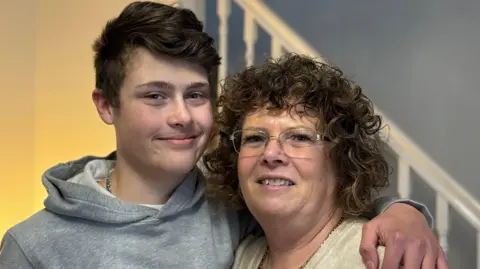
BBCA woman whose identical twin boys both endured cancer treatment, before one died at the age of 12, has welcomed cutting edge radiotherapy research.
Julie Parton's son Ben died from a brain tumour, but just two weeks after Ben's funeral, his brother Jack was diagnosed with leukaemia.
Julie and Jack, who is now cancer free, have been to see radiotherapy researchers at the University of Birmingham - one of only seven centres with equipment in the UK - which could improve outcomes for those with hard to treat tumours.
The mum and son said seeing the work going on - boosted by a £1m investment from Cancer Research UK and £5,000 they have raised - has given them hope.
 Family handout
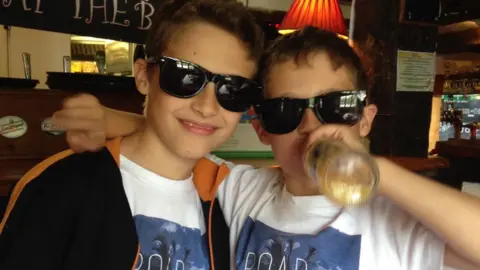
Born a minute apart, Jack and Ben were inseparable. Ben, who was an extrovert, was adored by his brother.
"He was the more outgoing, the more adventurous and you used to follow him, didn't you," Julie said, smiling at Jack at their home near near Cannock.
Jack recalled: "He was good fun, we'd play football in the street, go to the park together, do everything together."
 Family handout
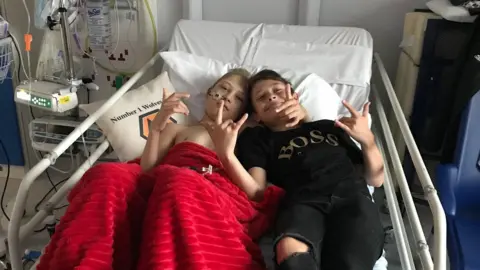
In 2019, when he was just 11, Ben was diagnosed with a glioblastoma - a rare brain tumour.
Despite surgery and radiotherapy he died eight months later. Just a fortnight after Ben's funeral, Jack was diagnosed with leukaemia.
"It was horrendous, just losing one child and then being told your only existing child's got another form of cancer, it was really upsetting. And I just said, [to the doctors], 'You can't let him die'."
"And they didn't," said Julie.
 Family handout
Jack endured more than three years of chemotherapy and immunotherapy.
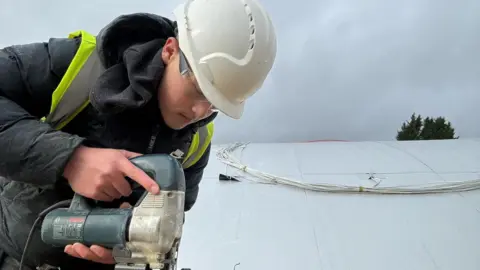
Now 17 and cancer free, he is an apprentice carpenter and is learning to drive.
Cancer Research UK has made the University of Birmingham part of a multimillion-pound UK-wide radiation research network called RadNet. Jack and his mum have visited scientists to find out more.
The university also has the UK's only neutron accelerator, allowing scientists to study groundbreaking developments in an alternative to radiotherapy that uses boron neutron capture therapy.
Scientists hope the therapy could in future give fresh hope to patients with aggressive tumours, like Ben had.
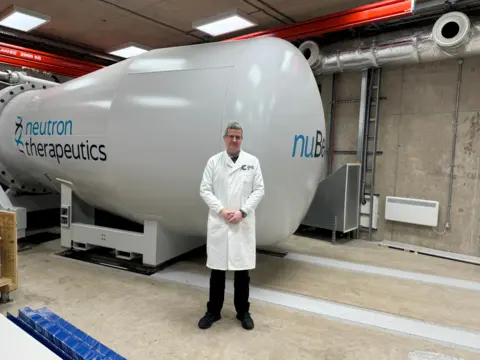
Prof Jason Parsons, chair of radiation biology at the university, explained: "This is a more effective cancer treatment for patients, particularly for brain tumours, for head and neck tumours, so it's a lot more effective than conventional radiotherapy, so it damages tumour cells in more detail.
"We're hoping through the research we are performing that in the next probably five to 10 years we'll be able to develop the research, which will then enable for this to be clinically approved and used in the UK."
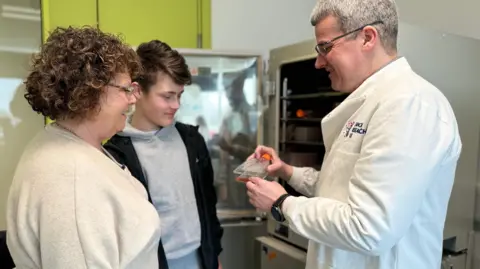
What Julie and Jack have seen has given them insight into how tumours like Ben's could be better treated in future.
"I want more therapies available because there weren't many options when he was alive, it was only a certain amount of things that could be done," Jack said.
"I know it's a long way off but it's a start, and it's a future," Julie added.
Julie donated Ben's tumour to scientists when it was removed.
"If it could help even just one child, I would be happy to donate anything," she said.
Jack and Julie have raised more than £5,000 to various organisations for research, something they are passionate about.
Follow BBC Birmingham on BBC Sounds, Facebook, X and Instagram.
