Who should be clearing up roadside rubbish?

 Getty Images
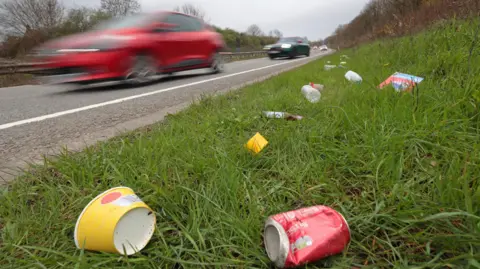
A row has erupted between a local council and the government over who should be responsible for clearing up rubbish dumped along a major route.
Vale of White Horse Council raised the issue of litter strewn alongside the A34 in Oxfordshire to the government, and questioned the current clean-up policy.
In response, the roads minister Simon Lightwood said there were no plans to change how rubbish along the country's A roads is tidied up.
That means the current situation will remain unchanged, with the council required to jump through hoops to clean up the mess.
Who should clean it up?
In simple terms, it depends on what the type of road is when it comes to who should tidy up roadside rubbish.
National Highways currently takes responsibility for clearing waste left on the side of motorways and some trunk roads - major, nationally significant A roads.
But rubbish along most trunk roads, for which National Highways are responsible for the roads themselves, is cleared up by local authorities.
This is the case with the A34, where litter clearance falls to the councils which cover the road's route from north of Oxford to Winchester.
Why don't councils just clean up the mess?
Many would question why, if it's their responsibilities, councils don't just clean the rubbish up regularly.
But under current rules, this is not possible.
Local authorities can only organise litter picking operations when the road is closed and the work is approved by National Highways.
For example, permission to tidy the A34 roadside is only granted when the road is closed for maintenance work.
This is because it is not adjudged to be safe for council workers or contractors to work next to the carriageway whilst it is open to traffic.
What should change?
Speaking at a full council meeting last week, Councillor Emily Smith said local residents "frequently" raised concerns about the amount of litter along the A34.
"Litter not only looks untidy but can also have a negative impact on people's mental health, wildlife and the local economy," she said.
Although the council "worked hard" to clear the rubbish, she said it often depended on multiple organisations "coordinating staff availability" during road closures - which often take place overnight and at short notice.
"This coordination must be repeated in every council area through which each National Highways trunk road passes, which is far from efficient."
Smith urged the council to call on the government to amend the law to make National Highways responsible for the rubbish - which they did in a letter to the roads minister.
What do the government say?
In his response to the council, Lightwood agreed that litter along roads was "an eyesore and environmentally damaging".
"Influencing public behaviour and discouraging littering from occurring in the first instance is important in delivering lasting improvements," he emphasised.
But in cases such as the A34, where the road is the responsibility of National Highways whilst litter clean-up falls to the local council, he said the two should "work closely".
"National Highways operate by carrying out routine assessments of their network and sharing its findings with relevant councils," he explained.
He said the current process, which links litter picks with road closures, "reduces disruption" to motorists and "avoids additional traffic management".
"National Highways also encourages local authorities to share their planned litter picking schedules so that joint working can be arranged."
Lightwood added that the government "does not intend" to change how litter is picked along main roads, such as the A34.
