Can the islands with more cars than people change their driving culture?

 BBC
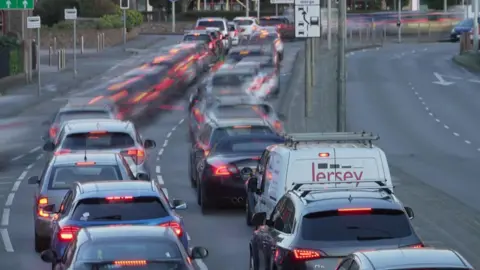
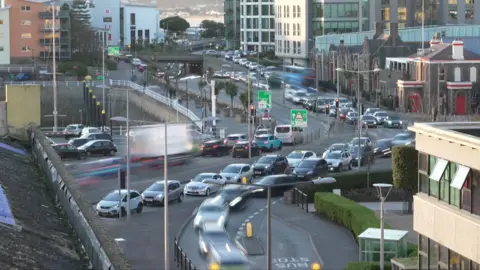
BBCIt is eight o'clock on a Monday and traffic is bumper to bumper as cars crawl towards Jersey's capital.
All but one of the roads into St Helier are single carriageway and commuters say short journeys are often arduous.
"On a really bad day it could take you up to an hour," says one woman, describing her three-mile commute as "crazy".
"Jersey's always going to have a problem though, I think, because everyone just likes their cars."
Both Jersey and Guernsey have some of the highest vehicle ownership rates in the world, with 1,234 and 1,402 registered vehicles per 1,000 people respectively.
In the UK, the number is about half that at 605.
Commuters in Jersey agree there are too many cars on the island - but most have still driven into town.
"It's just for pure convenience, getting places - especially when you have children," another woman says.
'A car-centric society'
Vehicle density is high on both islands with 3,032 vehicles per sq mile in Guernsey and 2,811 in Jersey.
But both governments suggest there are far fewer vehicles in regular use than the numbers suggest.
The size of the islands and the make-up of their roads also contributes to traffic and queues, according to both politicians and motorists.
Both places are small - roughly 9 miles (14.5km) long and about 5 miles (8km) wide - and Jersey's government claims the "narrow lanes framed by high verges, granite walls and closely situated residential properties" limit conventional safety improvement methods.
Meanwhile, drivers blame "too many different sorts of traffic lights and junctions", which often cause traffic to "back up".
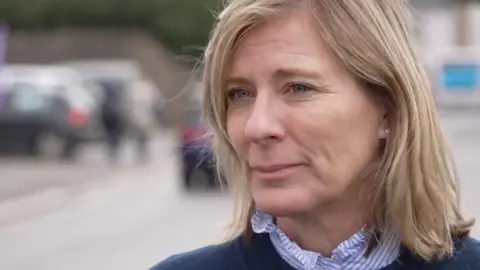
Tristen Dodd, Jersey's highways manager, suggests another contributing factor: Jersey is a "car-centric society", he says, where vehicles are a status symbol.
"Because of that most of our roads are at saturation point during peak traffic," he adds.
Joanna Dentskevich's son was seriously injured in a collision while cycling in 2020. He has since recovered but she now campaigns for better road safety.
"If you put all of those cars nose to tail on the road, it would take up virtually every single road mile Jersey has," she says.
Now a road safety campaigner, Dentskevich has pushed politicians to review protections for vulnerable road users.
Jersey's Collision and Casualty Reduction Plan has a target of cutting deaths and serious injuries by 50% over the next decade.
But Dentskevich is critical of its impact and wants to see stronger enforcement, such as officers trained in road traffic law visible on the road.
"I haven't seen much change," she says. "All too frequently you read or hear about collisions and incidents on the roads in Jersey."
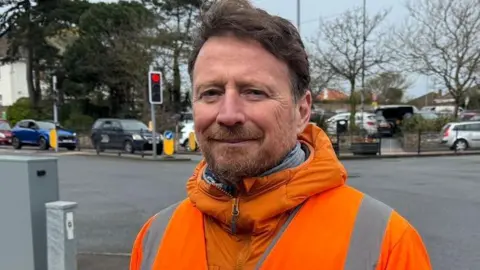
While like for like comparisons are difficult, figures show Jersey has a higher proportion of road traffic casualties than mainland Great Britain, despite lower speed limits and shorter journeys.
Government data covering 2019 to 2023 shows vulnerable road users accounted for 64% of all those injured in Jersey – higher than the 39% recorded across Great Britain in 2022.
Dentskevich argues a safer road network lies in coaxing people out of their cars and encouraging children to walk to school.
Kate Huntington from the Better Journeys Project, which encourages islanders to choose walking, cycling and buses, sold her car in 2019 and has used a cargo bike ever since, including for school runs.
She says it feels "liberating" to go door to door, park anywhere and avoid queues, and believes the "tide is turning" towards other forms of transport, particularly since Jersey's highway code began advising riders in 2022 to use the middle of the lane.
For other islanders though, driving remains the most convenient way to get around.
'People don't like change'
Alistair Mitchell from Cycle4Jersey, a group pushing for better cycling infrastructure, says the perception the roads are dangerous is a barrier to cycling.
He describes the morning traffic as "nuts", adding: "There has to be a better way of people getting around than people getting into their cars."
However, changing the patchwork of parish and state-owned roads is "complicated", he says, with politicians "wary" and "too scared of upsetting voters".
"We could do with a politician to come in and make brave and bold decisions," he adds.
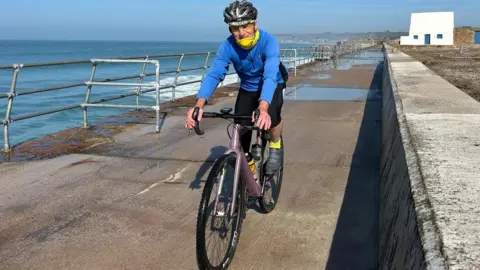 Alistair Mitchell
The Better Journeys Project points to a lack of car sharing.
It found an average of 79% of cars, over a four-year period, contained only one person at the busy Red Lion roundabout in St Peter Port during peak morning traffic.
Barrie Duerden, from the project, says the single-occupant trend is "really noticeable" and vehicle ownership is influenced by "cheap registration... and free parking".
People should "have the choice" to drive but they should also "pay the correct cost" for road use and for parking on "prime real estate", he adds.
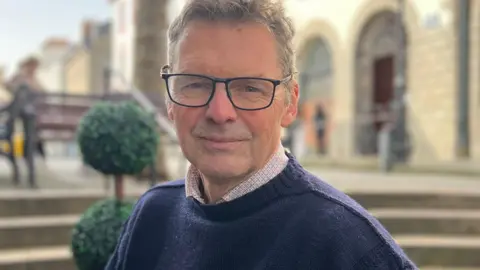
Guernsey deputy Adrian Gabriel says it is not about "telling people what they can and cannot do" but providing practical alternatives.
However, the president of the committee for the environment and infrastructure acknowledges concerns about road safety and congestion.
"Guernsey's Integrated Transport Strategy sets out a long‑term plan to reduce unnecessary car journeys, expand safe walking and cycling routes, and improve public transport," he adds.
Meanwhile, Jersey's government says while the island experiences some congestion at peak times, "we would not describe this as 'severe'" and commute times are "low" compared to most of the UK.
It also points to its Sustainable Transport Policy, which involves reallocating road space for cycling and walking, reviewing parking charges, supporting shared mobility and upgrading public transport.
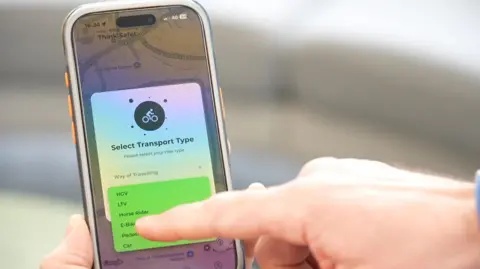
In the meantime, Will Tinney is developing a road safety app designed to alert road users to each other's presence.
Having lost his father in a crash when he was young, he hopes it will prevent other families going through the same thing.
Tinney likens the technology to a reversing sensor in that it beeps - prompting motorists to slow down or stop, and there are plans for a pilot on both islands.
"What we are trying to do with technology is kind of give more space, so as a car comes to a bend and there's a cyclist on the other side, ultimately the car and the cyclist will both get an alert that there's a threat," he explains.
Guernsey Deputy Ross Le Brun fears for the future if things stay as they are, adding: "If we continue as we are, not only is it going to get worse, people are going to get hurt."
But Dodd believes change is possible if politicians consider what the island could look like in the coming decades.
"Culture change is a long-term project and it requires statesmanship - that's thinking beyond the immediate political term and providing ongoing investment into things like cycle paths so that the island can change incrementally," he says.
In Guernsey, Duerden points to previous road changes that have made life better for islanders, including making streets one-way.
"People don't like change but they can get used to things, they can adapt and actually people often find that it's better after," he says.
Additional reporting by Robert Hall and Charlotte Cox
Follow BBC Guernsey on X and Facebook. Follow BBC Jersey on X and Facebook. Send your story ideas to channel.islands@bbc.co.uk.
