Quake survivor helps scientists prep for next big one

 BBC
BBCEleven years ago, a massive earthquake struck Nepal in Asia. More than 8,500 people died and many buildings were flattened.
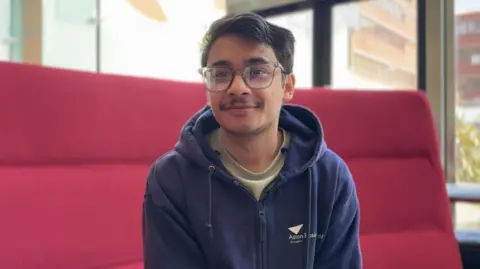
Amongst those who survived was a teenager now studying at Aston University in Birmingham.
Abhishek Prasad Chabagain is part of a team of scientists helping to prepare people in Nepal, and elsewhere, for the next big quake or disaster.
"I was 13 at the time," he told me. "I watched cartoons, I used to watch movies. I just thought someone came along and shook the earth and the whole planet was shaking."
Having survived the quake, Prasad Chabagain and his family then had to work out how to live amongst the rubble and the aftershocks.
The first few days, finding shelter and a bed were difficult. The family and much of their village ended up living in a mostly intact furniture factory, which did at least have plenty of beds.
But the stresses of ad hoc accommodation were huge. The men simply decided not to sleep so they could get the woman and children out into the open if the building started to collapse.
And even those with a bed found it hard to rest.
"Every time the ground shook we asked, 'is it time to run?'. And on top of that beds were side by side by side and often the snoring from other people would keep you awake," Prasad Chabagain said.
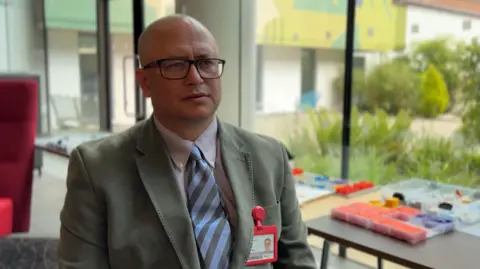
The problems of snoring post disaster may not have occurred to you, but this sort of issue, along with privacy, sanitation and safety, are what Dr Komal Raj Aryal, lecturer in crisis and disaster management at Aston Business School, is thinking about.
His team, including Prasad Chabagain, are part of a five-year project looking at better seismic monitoring of the Himalayas combined with the best ways to prepare the population for the worst and what comes after.
"We're thinking about how we design the shelter, the capacity of the shelter and how we strengthen the community to manage that shelter in a time of crisis," he said.
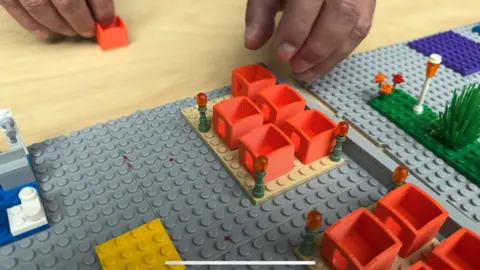
In the last quarter of a century expert thinking has really evolved when it comes to disaster recovery, but to get new and sometimes complex ideas across the team have taken tiny Lego models of potential post-disaster shelters and camps out into rural community.
There's a particular focus on listening to and educating women, as many of the men have moved away from these remote Nepalese villages to find work.
It will fall to the woman to keep their communities safe and then rebuild if the worst happens.
And Aryal believes another large earthquake is a certainty.
"I can see that something is coming. But it is our responsibility to help them prepare, and help them prepare a little bit differently that what we might have said in the last 25 years.
"But we have to save our future generations."
The project, funded by UK Research and Innovation (UKRI–NERC) and the Government of India's Ministry of Earth Sciences, will run until early 2030.
And these tiny Lego models will help people survive and rebuild when the next earthquake comes.
Follow BBC Birmingham on BBC Sounds, Facebook, X and Instagram.
