Lionesses changed game for girls but 'we're a forgotten generation'

 BBC
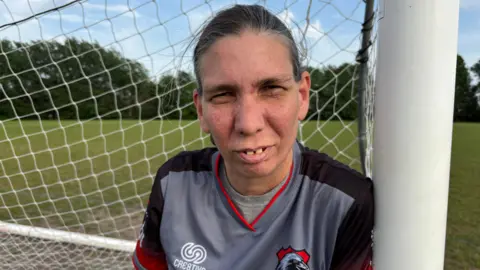
BBCA year after watching the Lionesses lift their 2025 Euros trophy, Gayle Parr says reflecting on the moment feels bittersweet, as it is a reminder of the opportunities she never had.
The 49-year-old loved football as a child but, she says, like many women her age, she was excluded from playing because of her gender.
The Lionesses' success has improved equal access to sports for girls in schools and created thousands of football teams as a result.
But Gayle, who has just started playing for a senior women's team, says she feels like she is part of a forgotten generation of women's football.
'Football's not for women'
Gayle was born in Nottingham in 1977. It was the year Star Wars premiered in cinemas, the twin Voyager space probes were launched, and just six years after the Football Association (FA) lifted its controversial 50-year ban on women's football.
The sport was rebuilding for women, but Gayle remembers the sexism that stopped her playing in a team.
She recalls people telling her "football's not for women" and that "they should be stereotypically in the kitchen doing the dinner".
In her 20s, Gayle played for a senior women's team but she says this stigma made her turn to other sports.
"There wasn't that support for women playing football, whereas badminton was seen for everybody," Gayle said.
As of last season, Nottinghamshire had 47 grassroots senior women's teams, compared to 244 senior men's teams.
Ravenshead Reds launched its first women's team in 2025 - 50 years after the club was set up.
Gayle joined the club and has not looked back.
"I still feel that same passion when I go on the pitch as I did when I was seven, eight, nine, kicking a ball about on the street.
"Girls aren't just on the sidelines watching their big brother, they're actually playing," she said.
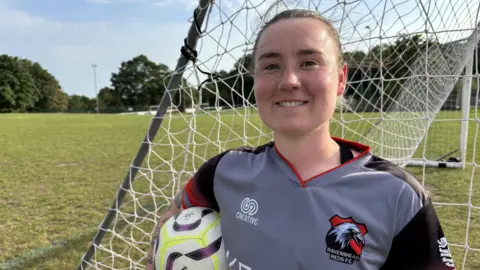
Teammate Megan Worley, born in Mansfield in 1998, says she is part of a generation where it was more acceptable for girls to play football.
"Getting into football for me was playing in the garden with my brother and then starting out for a team he used to play for," she said.
Megan said everything changed when she turned 12 because FA regulations at the time in 2012 meant she could no longer play in a mixed team with boys.
"Having my brother have ample teams, he used to play in Saturday and Sunday teams and then I wasn't able to find one... [it] felt disappointing," she added.
By the age of 18, she says she was still struggling to find a team.
Now part of a senior women's team for the first time, Megan hopes the next generation will not face the same barriers.
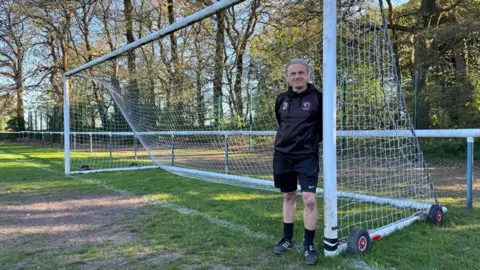
Kevin Pinner says when he launched the senior men's team at Ravenshead Reds in 2008, he never imagined he would be running women's teams too.
"We are very proud of that change," he added.
Despite the introduction of a girls' team a decade ago, he said a senior women's team was not possible due to lack of space at their ground and limited interest.
But he said the Lionesses' success in July 2025 changed everything.
With access to playing football for women limited to a Sunday, Kevin says there are still challenges.
''Because they're working, or they're studying, or trying to get jobs, it's making one day fit, whereas with boys it's totally different," he said.
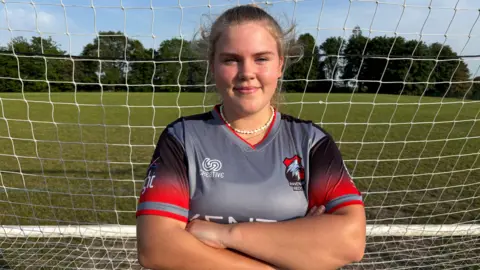
Eliza Creelman, born in Nottingham in 2007, is one of the few Ravenshead Reds players to progress into a senior team after joining at eight years old.
"I always keep coming back because I have so much fun," she said.
But Eliza says she has noticed that many girls her age are losing their place when they reach adulthood.
"A lot of people I know don't play. Especially when they turn 18 and their teams fold, and they have nowhere else to go," she said.
"You only hear good things about women's football, but they don't talk about how they are still struggling."
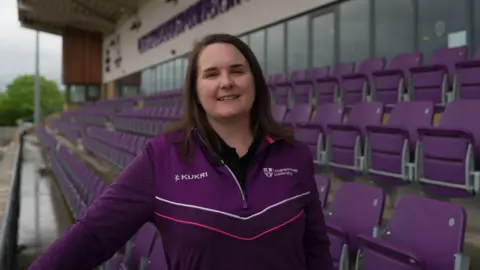
Dr Verity Postlethwaite, of Loughborough University, says adult women are still struggling to access football because recent investment has focused mainly on girls.
"The FA have just slightly fallen foul in being more targeted in getting their investment correct, not just for girls but for adults too," she added.
The FA declined to comment, but said female adult teams had increased by 95% in the past decade.
How big is the gap in access between women and girls?
Figures from the FA show that while opportunities in football have grown for girls, they remain lower for women over the age of 18.
Across the UK there are now four girls teams for every senior women's team, meaning that when they reach 18, most girls have nowhere to go.
A similar gap in access is seen in the male game, but there are far more male teams in general compared to female playing opportunities.
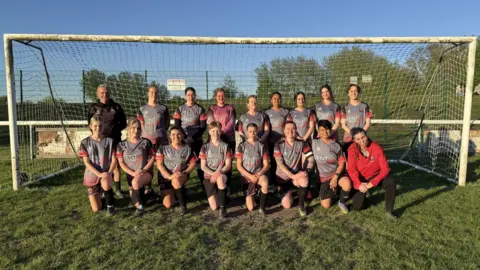
"If you've got people healthy and happy playing, they then contribute to the sport that benefits and then, hopefully, that cascades into society more broadly," Verity added.
With Brazil hosting the 2027 World Cup and England bidding for 2035, she believes "momentum is building" for women's football.
For women at Ravenshead Reds, this season is the first time players of different ages have been able to share a pitch.
"There's still a long way to go to make it a level playing field," Gayle said.
"But at least now every little girl's football dream is possible."
Additional reporting by Lauren Woodhead, BBC data unit
Listen to BBC Radio Nottingham on Sounds and follow BBC Nottingham on Facebook, on X, or on Instagram. Send your story ideas to eastmidsnews@bbc.co.uk or via WhatsApp on 0808 100 2210.
