'Tap room crucial to our survival,' says brewery

 BBC
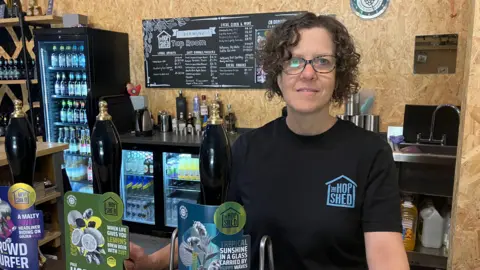
BBCThe owners of a brewery have admitted their business would not be sustainable without their tap room.
It comes following estimations from the beer industry that about two pubs closed a day in the first quarter of 2026.
The number of English breweries has fallen below 2,000 this year for the first time since 2018. Of the 1,965 remaining, 95 are in the process of administration, insolvency or liquidation.
Sarah Saleh, owner of The Hop Shed Brewery, in Suckley, Worcester, said: "Without the tap room we wouldn't still be here. I think the breweries that are closing are the ones without a direct outlet for their beers."
Saleh continued: "I know when we set up here, 10 years ago, I can think of two breweries locally that were set up but didn't have tap rooms, and they're now no longer here.
"It always amazes me that on a Friday night when the tap room is open, and we stand here in a barn in the middle of nowhere, and before you know it there's 200 people here.
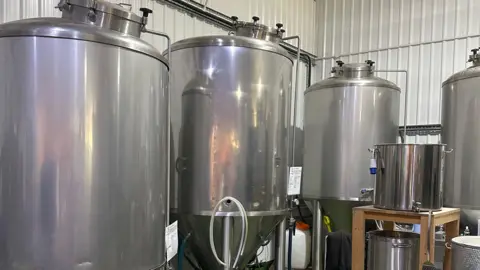
"They're enjoying food from local providers and enjoying the beer that's been brewed here on site.
"So the tap room really draws people in, which is fantastic."
Last year, in the West Midlands, nine companies were started up but 21 were dissolved - a loss of 12.
Tim Webb, from the Campaign for Real Ale, said the domination of big brands was another of the main issues.
"The big problem that breweries have got, and it is getting worse, is access to market," he said.
"The problem, which is really happening everywhere across Europe, is large brewery companies owning the draught lines in pubs."
Andy Slee, chief executive of the Society of Independent Brewers and Associates, supported Saleh's comments, adding many of its members were looking to diversify, with some opening taprooms.
"In order to survive, you just can't stay doing what you were doing before," he added.
"Although the beer market has been in consistent decline, demand for independent beer is relatively strong."
Follow BBC Hereford & Worcester on BBC Sounds, Facebook, X and Instagram.
