Shetland undersea tunnel cost estimated at £402m

 Estunlar.fo
The development and construction of an undersea tunnel between mainland Shetland and the island of Yell would cost £402m and take eight years to complete, it has been estimated.
The projections have been published by the engineering consultancy firm COWI which has been working alongside Shetland Islands Council (SIC) and fellow consultants Stantec.
Yell is the test case in a project comparing the cost of future ferry upgrades and investment in fixed links, due to concern over ageing infrastructure.
The initiative is at an early stage, with funding and a full business case still to be developed.
The 4.2 mile (6.8km) tunnel would be at a depth of 50m (165ft) below the seabed and include tolls to cover maintenance costs.
Andy Sloan, executive vice president of COWI, said the estimates were based on discussions with three international contractors.
"The capital cost investment is about £327m," he said.
"On top of that we need to add risk and contingency money of £50m and upfront costs of £25m."
 Getty Images
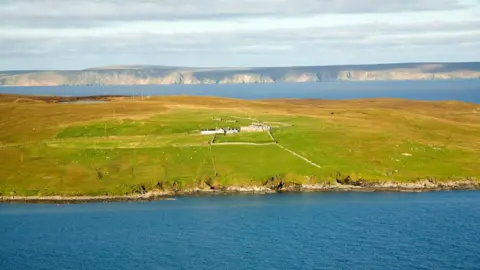
The Yell link has been described as a "base case" which could be replicated for tunnels to three other islands: Bressay, Unst and Whalsay.
"While it seems like a big number, in a Scotland or UK-wide context it's entirely reasonable", said Sloan.
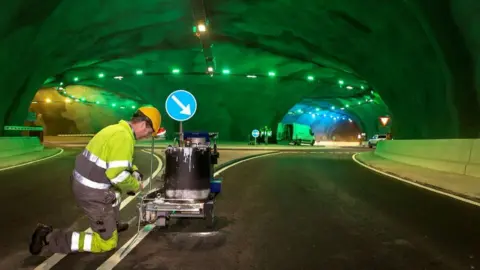
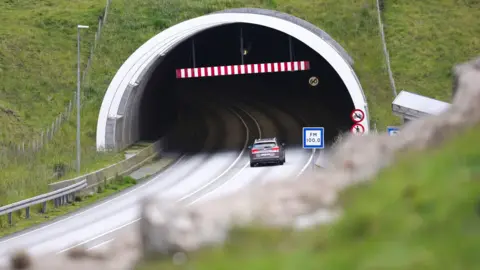
The Faroe Islands already have a network of tunnels linking them, four of them under the sea.
Proposed funding models include private investment, grant funding from the Scottish and UK governments, and local authority borrowing.
Neil Grant, a director with SIC, said both governments had shown interest, adding: "The Scottish government, in particular, has been supportive of the work to date."
However, he said "intense work" was required to reach the stage of a full business case.
COWI's tunnelling timeline allows three years for preliminary work and five years for construction.
The tunnel would be excavated from both ends and built with a sprayed concrete lining.
The company has stressed that engineering is not an issue but warns that funding is the "key constraint".
The campaign for fixed links has gained momentum because of fears about ageing infrastructure and depopulation in the far north.

The council said its nine island communities relied on an inter-island transport network that was "increasingly under strain" and "requiring substantial capital investment".
SIC warned that population retention was a "major challenge" in the islands considered for tunnels.
The council has commissioned the consultancy firm Stantec to oversee an outline business case.
COWI has been supporting the project with tunnelling expertise.
The reports will go before councillors on 30 June.
