What the elections tell us about the East of England

 Andrew Sinclair/BBC
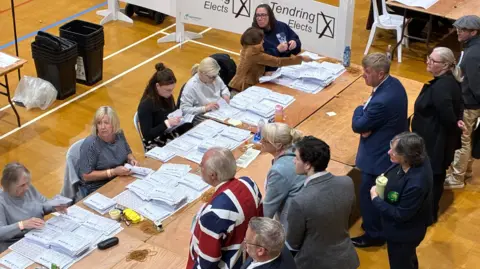
The votes have been counted, the hangovers are fading, and the excuses have been made.
Now it's time for our councillors to get to work: to choose their leaders, allocate responsibilities and start making decisions.
Some local elections produce very little change and are quickly forgotten.
But the elections of 2026 will be remembered for shaking up the status quo and changing the politics of the East of England, perhaps indefinitely.
The politics of the east has changed
 Alex Dunlop/BBC
For decades, the East of England was a bedrock of Conservatism. We had some of the largest parliamentary majorities - most of our councils were solidly blue. There was a small Labour presence, but mainly in rural areas.
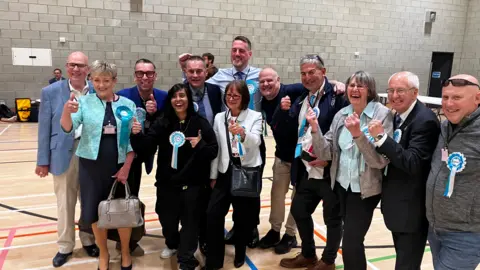
The general election two years ago showed that the region was changing, with Labour and the Liberal Democrats making big gains and the Greens and Reform UK winning seats.
The trend has continued this year with rocket boosters.
The Greens also made gains, including winning overall control of Norwich City Council, while the Liberal Democrats did particularly well in South Cambridgeshire and Huntingdonshire - both former Tory strongholds.
The Conservatives say that this was just a protest vote, which it may well have been, and claim that many of their voters will return to the fold in time for the general election - They might, but there is no guarantee.
What we can say for now is that this election has confirmed that the public is looking for something different and is happy to put its faith in what were once considered non-mainstream parties. They might be open to sticking with them - if they deliver.
More people are interested in politics
Turnout in local elections is normally around 30%. This year it was around 10-12% higher. A few places in Essex recorded 50% turnouts, and one ward in Norwich had 60%.
By our calculation, 90,000 more votes were cast in Essex this year than in 2021 when these seats were last up for grabs.
The surge in support for the smaller parties seems to be behind this.
Reform claims to have more than 260,000 members, the Greens boast more than 230,000 and say membership has tripled since Zack Polanski became leader.
The public appears to be showing more of an interest in who governs them.
We have a lot of inexperienced councillors
Being a councillor is an important job. You oversee a budget of millions of pounds, you are responsible for almost two hundred local services from bin collections to leisure centres, parks to social care. Many of them are services which people rely on.
But a lot of those who were elected last week, particularly those from Reform and the Greens, have never been councillors before, and most of them will have little idea about how a council is run.
Yet if they are in charge, they will now have to make difficult decisions about how these services will operate and how they are funded. If they are in opposition, they will be expected to scrutinise decisions and offer alternative solutions.
Council staff will be there to guide them, but the new councillors will need to understand the arguments and the processes. I have had conversations with several senior council officers who worry that their new councillors will be out of their depth and this could delay action or lead to bad decisions.
There will probably be more uncertainty
 Morgan Spence/BBC
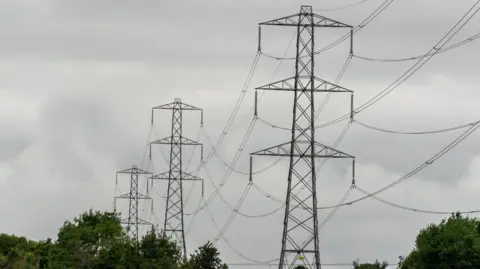
There has been a lot of upheaval since Labour came to power, with the new government making it clear that it wants to drive through large solar farm projects, new pylons, thousands of extra homes and Local Government Reorganisation (LGR).
Things were beginning to settle down: The planning law had been changed to make it easier to build large energy projects and homes. The year 2028 has been set for when Norfolk, Suffolk and the county of Essex will have directly elected mayors and when all existing councils in the three counties will be replaced with unitary authorities. Plans were being drawn up for a second wave of reorganisation, which will affect Cambridgeshire and Hertfordshire.
But Reform has promised legal action if elected to stop some of these energy projects; it also wants to try to stop LGR. If the courts get involved, the timetable could be easily disrupted.
And when it comes to LGR, the government wants to work with councils to finalise the details and ensure a smooth transition. That might be harder if the new council leaders are not on board.
There are some people in local government who have started telling me that they wonder if LGR and devolution will ever happen.
Politics seems to have become nastier
There are always claims of foul play in every election campaign, but this year, by common consent, it has become much worse.
There have been allegations, some of them proven to be true, about candidates saying inflammatory or insensitive things. There have been accusations of racism and stories of candidates refusing to take part in debates.
At the election count in Basildon, Labour supporters went home early when Reform started winning; two Green candidates turned their backs when a Reform win was announced in Southend.
There is a tradition in British politics that when an election is over, differences are buried and the winners acknowledged and respected.
Will this happen now that these elections are over?
Do you have a story suggestion? Contact us below.
Follow East of England news on X, Instagram and Facebook: BBC Beds, Herts & Bucks, BBC Cambridgeshire, BBC Essex, BBC Norfolk, BBC Northamptonshire or BBC Suffolk.
