Health minister apologises to patients over neurology failings

 BBC
BBCHealth Minister Robbie Butler has apologised for failings in the care of patients of former Belfast neurologist Michael Watt.
The apology follows the publication of a final review into the care of patients who had died.
Butler said meeting the families and loved ones of some of Watt's deceased patients had been an "unrivalled privilege".
He said they were still living with the "pain and trauma" of what had happened.
The minister said the review was "only the start of another process" to ensure the mistakes of the past were not repeated.
"It will have to deliver on the failures of the past and as minister I will make sure that that happens," he said.
 pacemaker
The Regulation and Quality Improvement Authority (RQIA) said its final review of all findings in relation to the consultant found harm was caused to some patients through delayed or misdiagnosis and inappropriate treatment.
Watt, who worked at the Royal Victoria Hospital (RVH) in Belfast, was at the centre of Northern Ireland's biggest-ever patient recall in 2018.
Thousands of people were re-examined amid concerns about the treatment they received from him.
He was struck off the medical register in 2023 after his professional performance was found to be unacceptably low.
The RQIA said its collective review provided powerful evidence of the devastating impact of poor clinical practice on patients and their families, underlining the need for patient safety and quality of care to remain central to professional and management practice.
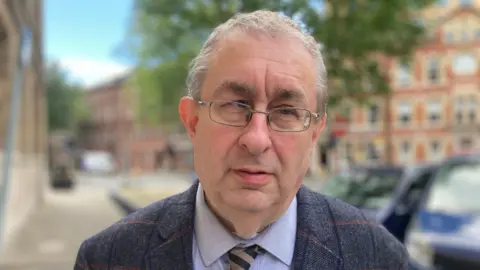
Colin Armstrong, whose mother Ruth was a patient of Watt, told BBC Radio Ulster's Evening Extra programme that he was not satisfied with the final report.
"These cases which have been examined… only come to 69 and that is only about 1-2% of the total number," he said.
"The one figure that we have for Michael Watt's deceased patients during the last 10 years of his practice is 3,557. That is for the health service patients alone and does not include the private patients from those 10 years.
"Nor does it include any of his patients from the other 11-12 years of his career."
Armstrong, whose mother died in 2001, said it was not acceptable morally or legally to leave out the examination of all other cases from the reviews.
"We need to know the very worst about Michael Watt's practice and we will not do so until all of these cases are examined," he said.
'Beyond sobering'
Briege Donaghy from the RQIA said it was only through the involvement of the families "that we got the full extent of the picture".
"It is beyond sobering. It is a devastating picture of the human impact that comes from poor practice by a clinician and poor oversight of those charged with the governance and assurance of the delivery of health and social care," she said.
"The impact for individuals would be best described by the families themselves, but I can tell you that we know that in this case there were multiple and ongoing evidence of poor diagnostic practice, lack of involvement of multi-disciplinary teams and impossible information for patients."
She said suspicions from family members about the care of their loved one were not listened to.
"It has taken for some, several decades, to get to the truth."
Donaghy said there was "a culture of dismissing and setting aside patients and families who raise concerns as being difficult, abrasive and denying people access to be heard".
The RQIA's first phase report was published in November 2022 and examined the records of 44 deceased patients, while in a second phase a further 25 families came forward and those records were subsequently reviewed.
The Belfast Health Trust said on Thursday that it was wholly and unreservedly sorry to everyone who had been affected by the neurology recalls since May 2018.
It said its thoughts were with the families of those patients who had sadly passed away.
