'Our river is unsafe despite bathing status - but I'm optimistic'

 BBC/David MacMillan
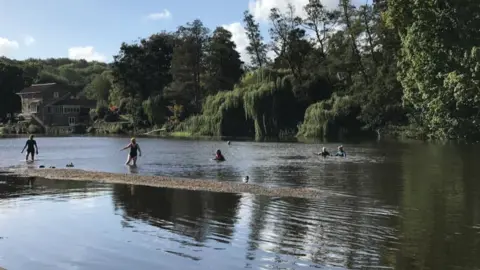
In May 2024, more than two years of campaigning paid off for the Nidd Action Group (NAG) in Knaresborough, North Yorkshire, after part of the town's river known as the Lido was given designated bathing status - but two years on, the water quality at the Lido officially remains "poor".
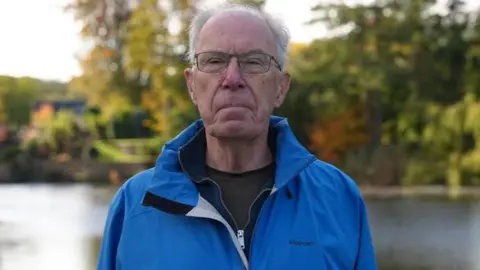
"We were almost expecting that nothing's changed," says David Clayden, the campaign's chair.
He says NAG members had not been looking forward to marking the second anniversary of the Lido gaining bathing status, as approved by government department Defra.
The designation means that the Environment Agency is required to carry out annual water quality testing and provide a rating.
"We knew it was going to be a long haul," Clayden explains.
"The experience elsewhere is that it takes a long time to get things into Yorkshire Water's - in this case - five-year plan."
Yorkshire Water says it is "disappointed" at the official rating of Poor, but the situation in Knaresborough is not uncommon.
At 12 of the 14 official river bathing sites in England, signs warn people not to swim because of poor water quality.
 Nidd Action Group
David says conversations with local Environment Agency and Yorkshire Water officials have been positive, but it is difficult to obtain information from "the people who are putting money in".
Overall, he is "slightly optimistic that things are under way to make improvements - but it won't be for a year or two".
"We know it's not perfect. It is actually a beautiful area, it's a beautiful river," he says.
"All is not bad, but it could be so much better and there doesn't seem to be a very clear plan to get it improved."
After a recent public meeting, the NAG is working with universities to carry out "extended good monitoring" of "modern threats".
"Pollution isn't all visible. There are concerns about pharmaceuticals and these 'forever chemicals' and microplastics," he adds.
 Yorkshire Water
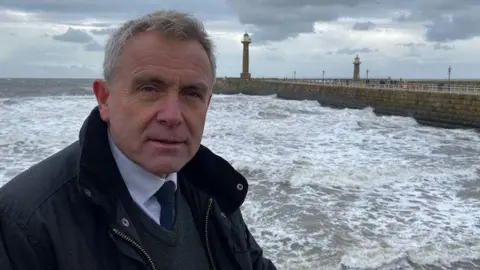
On Friday, Yorkshire Water announced the appointment of Sir Robert Goodwill as chair of the Yorkshire Bathing Water Partnership.
The partnership includes Yorkshire Water, the Environment Agency and campaign groups.
Sir Robert, who was the Conservative MP for Scarborough and Whitby from 2005 to 2024, says cleaner bathing water affects "people actually in the water or the tourism by not having a blue flag at your beach or your river".
The first river to become a designated bathing water site was the Wharfe in Ilkley, awarded the status in 2020 and still rated "poor".
"We need to be looking at where that pollution's coming from," Sir Robert says, adding that rivers differ from coastal spots as they do not have a "massive dilution factor".
Another concern was highlighted on a recent trip to Teesdale, County Durham, he adds.
"We saw cows drinking in the river and doing their business straight into the river, so there is work to do with agriculture to ensure cattle don't have to wade into the river to drink."
'Complex challenges'
More than £10m is being spent on storm overflows within thee miles (5km) of Knaresborough Lido, says Yorkshire Water bathing water manager Miles Cameron.
Three other projects are taking place further upstream, as part of a £1.5bn programme to reduce sewage discharges across Yorkshire.
"We're also currently under way with a £7.5m scheme to reduce the amount of phosphorous going into the River Nidd via treated wastewater at Knaresborough treatment works," he adds.
He says "many factors" impact water quality, including agricultural run-off, highway run-off, pollution from industry and privately-owned sewage systems.
"We work closely with the Nidd Action Group, the Dales to Vales River Network, and the Yorkshire Dales Rivers Trust and share plans for investment as soon as we can," he says.
"Together with the Yorkshire Dales Rivers Trust, we have put in place a dedicated agricultural advisor role.
"This role will work with local farmers and landowners to reduce run-off from fields into our rivers, while also helping to enhance biodiversity along river corridors."
A spokesperson for the Environment Agency said bathing water improvements were being tackled "head on" at Knaresborough Lido, "adapting to the complex water quality challenges rivers present".
"Our specialist teams have carried out extensive water quality investigations, which included continuous water quality monitoring and intensive half-hourly sampling to gain crucial insights," they said.
"We have analysed the samples to better understand the sources of bacteria, which will allow us to roll out appropriate interventions and bolster our important regulatory inspections of both key sewage sites and agricultural holdings within the Nidd catchment."
Listen to highlights from North Yorkshire on BBC Sounds, catch up with the latest episode of Look North.
