Former MI6 chief Sir Alex Younger dies aged 62

 BBC
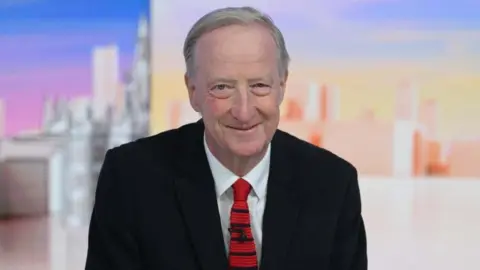
BBCSir Alex Younger, the former head of MI6, has died aged 62 after being treated for cancer.
Sir Alex, who led MI6 between 2014 and 2020, held a career in British intelligence that spanned almost three decades after joining the service in 1991.
A former British Army officer, he held postings in Europe and the Middle East and Afghanistan, before turning to commentating on global security.
In a 2016 speech, the former intelligence chief famously said fictional spy James Bond would not pass the agency's recruitment process. He later led recruitment calls to meet the "fourth generation espionage" needed to face evolving global threats.
Leading the tributes, Prime Minister Sir Keir Starmer said Sir Alex "led an exemplary life and career", adding "he will be remembered by the many ministers, colleagues, friends and family for his utmost dedication to British public life and protecting our nation."
In a post on X, the Prince of Wales said he was "saddened" to hear of the death of Sir Alex, who had "embodied the very best of what the Secret Intelligence Service stands for - integrity, courage and an unwavering commitment to protecting this country and its people".
"Britain has lost an exceptional public servant," Prince William said. "My thoughts are with Lady Younger and their family."
Former prime minister Theresa May, now Baroness May of Maidenhead, paid tribute on X, posting that she was: "Deeply saddened by the death of Sir Alex Younger - an extraordinary man and dedicated public servant.
"We worked closely when he was chief of MI6 and remained friends in the years since. The nation owes him a great debt of gratitude. My thoughts and prayers are with his family."
Blaise Metreweli, the current chief of MI6, said Sir Alex "embodied my service's values of integrity, courage, creativity and respect."
She added: "He made a lasting and distinctive contribution to our country and indeed to global security".
Sir Alex once spoke to his old university, St Andrews, about his first job in the western Balkans in the mid-1990s, paving the way for the prosecution of war criminals.
He later headed up counter-terrorism at MI6, with his role including preparations for the 2012 London Olympics.
In late 2014 he succeeded Sir John Sawers as the head of the Secret Intelligence Service, otherwise known as MI6.
At the time of his appointment he faced numerous challenges: frustrating any attack plans against the West by jihadists in the Middle East and elsewhere, monitoring and containing Iran's nuclear ambitions, and trying to second guess Russia's next moves in Ukraine.
 Reuters
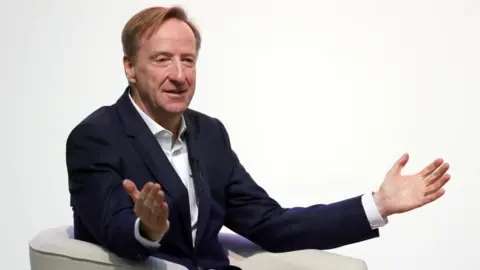
In 2016 he drew attention for his "conflicted" attitude towards James Bond, saying during a speech that the hero had "created a powerful brand for MI6" but "were Bond to apply to join MI6 now, he would have to change his ways".
The following year he revealed the real Q, the head of gadgetry in the Bond films, was a woman, in an effort to encourage more women to join the service.
During a speech at St Andrews University in 2018, Sir Alex made a pitch for a new generation of intelligence officers to "meet the threats of the hybrid age".
He said the modern intelligence agency not only had to grapple with the "persistent and evolving threat from terrorism" but "additional complexity of the threats posed by nation states" operating in grey areas, and a new era of technological demands.
Sir Alex's time as intelligence chief was also marred by personal tragedy.
In early 2019 his son Sam, 22, a student at the University of Edinburgh, was killed in a motor vehicle accident on a private estate in Stirlingshire, Scotland.
His term as MI6 head was due to end in 2019 but he was asked to stay on another year to steer the agency through Brexit, the Times reported at the time.
Younger's post-MI6 career included advising the private sector and commentating on timely security issues.
In February 2023 he told the BBC the UK needed to "wake up" to the security threats posed by China says after the US military shot down a Chinese spy balloon.
In December 2024 he told the BBC the world was living through a "much more dangerous time" than previous decades due to geopolitical complications that Britain wasn't used to and was no longer a "status quo actor".
He said the UK needed a "total change of mindset" to deal with the "chronic threat to our integrity and security, regardless of whether we're in a state of peace or war".
Earlier this year, Sir Alex also weighed into the ongoing Iran war, telling the Economist in an interview published in late March that Iran appeared to have the upper hand in the conflict.
"The reality is the US underestimated the task," he said at the time.
BBC Radio 4 Today presenter Nick Robinson became friends with Sir Alex.
Writing on X, Robinson said that Sir Alex had nicknamed his tumour "Putin" after the Russian president, when it was discovered.
"I was lucky enough to get to know Alex and call him my friend. I'm desperately sad to hear the news I've long feared was coming."
