Appeal sparks new leads in unsolved baby murder

 Kent Police
An image of a woman seen visiting the grave of a baby found dead in 1995 has led to 25 new leads in two weeks, according to a senior detective.
Police investigating Baby April's death released a computer-generated visualisation in September of a woman seen in distress at her grave three months previously.
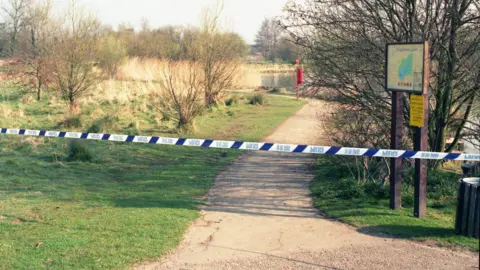
The newborn was found dead at Singleton Lake in Ashford, Kent on 3 April 1995, triggering a murder investigation. Detectives believe she died from asphyxiation.
Det Ch Insp Neil Kimber of Kent Police said investigators "had a really good response" to their renewed appeal.
He told BBC Radio Kent that he was "quite enthused by some" of the 25 lines of inquiry that had followed the release of the image.
"Any additional information that we can get will always assist us moving forward," he said.
Baby April was named after the month she was found. The child was thought to have been born between 25 March and 3 April 1995 and weighed 7lb.
Her body was found wrapped in a plastic bag. More than 30 years on, detectives are yet to establish who her parents were or her true identity.
The case has been reviewed multiple times, with the current review starting in 2025.
 Kent Police
"We're keen to establish exactly how that happened, why it happened and to get the answers really for Baby April," Kimber told the BBC.
"She's got no recourse to this at all."
Previous attempts to re-examine the case in 2011 using fresh DNA technology were unsuccessful, but Kimber said there were still "significant opportunities" for investigators to use DNA.
Kimber said there was "30 years of additional DNA information" on police systems since Baby April's death and there were "other familial types of DNA" detectives can look at.
He called for anybody with details who was weighing up whether they should contact officers to get in touch as any information "is going to be valuable".
"I would always say if it's causing you that concern, the best way to deal with that is come forward," Kimber said.
Follow BBC Kent on Facebook, on X, and on Instagram and listen to BBC Radio Kent on Sounds. Send your story ideas to southeasttoday@bbc.co.uk or WhatsApp us on 08081 002250.
