'I told police I’d been raped when I was 16 - they labelled me a trouble-maker'

 Charlie Orange
Charlie Orange was two weeks away from her 17th birthday when she was raped on a night out with friends in her hometown in Devon.
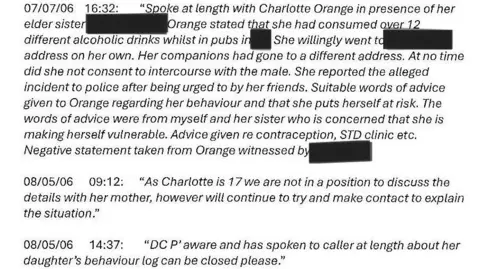
The next day she went to the police to report what had happened, only to instead be offered "words of advice" about how she herself had behaved.
"I was 16. This massive, traumatic event happened and I was made to believe it was my fault, by people I was supposed to trust," she remembers.
After 20 years of fighting for justice, the Independent Office for Police Conduct (IOPC) , the police watchdog, has agreed to investigate how officers treated her.
Warning: This story contains distressing details
It was in May 2006 when Orange, who has waived her right to anonymity, was out with her friends, drinking in pubs and bars in Devon.
While walking back to a friend's house, she got chatting to a man she said she knew in passing.
She became separated from her group and the man persuaded her that everyone was going to a party at his house.
Orange added: "I remember I kept saying to him: 'Like, where are my friends?'"
 Charlie Orange
She admitted that, by this point, she had had a lot to drink.
"I was kind of blacking in and out," Orange recalled.
"The next thing I know is, I woke up to him lying on top of me and I kind of had to pull myself out from underneath him.
"I remember arriving back at my friends and saying to them that I'd been raped."
Hours later, flanked by her older sister, she went to a police station to report what had happened.
But she said she was immediately made to feel like it was her fault.
"They were focused on the fact that I was in and out of consciousness, so that I couldn't physically say: 'Please, stop,'" she said.
"They focused on the fact that I didn't fight."
'I was dumbfounded'
Police notes showed officers questioned the teenager on how much she had had to drink, that she went "willingly" to the home and that, in the words of officers, "at no time did she not consent to intercourse".
Orange said they stressed that she was the one "who put myself in a vulnerable position".
She asked the police officers for a medical examination but was told she was too young, that it would be too painful for her and then, later, that it was too long after the alleged attack.
Officers did take her clothes for analysis.
"The next day, they dropped my clothes back to me in an evidence bag and told me that nothing else was happening. And that was it," Orange said.
"To them that was case closed. I was dumbfounded."
Officers never tested any of the clothing, and never spoke to her alleged attacker.
 Devon and Cornwall Police
Two years later, having moved away to college, the then 18-year-old was still struggling with what had happened.
"It was just horrendous. I was having flashbacks, I was having nightmares," she said. "Because the help wasn't there."
But she did find some support at a local youth centre and a volunteer there persuaded her to try reporting what happened to the police for a second time.
But Orange said the volunteer was told by police to drop it.
"They basically said to not listen to me, that I was a trouble-maker," she recalled.
"I just completely broke down. It absolutely broke everything in me. And, from that point on, I gave up."
- If you have been affected by the issues covered in this story, help and support is available via the BBC Action Line.
It was not the end of the fight for her though.
In 2020, now living in Warwickshire and after becoming a mum to a baby girl, she decided to make a formal complaint to police about how the officers had behaved following her two reports of the attack.
Instead, however, the force offered to reopen their inquiry.
"The [Devon and Cornwall Police call handler] asked me if I wanted to re-report and open an investigation, and so I said yes, because that is literally what I've been fighting for my whole life," Orange said.
This time she felt believed and supported through the process and, 20 years after it happened, the case went to trial.
"I had the most incredible detective chief inspector who has just been amazing from day one," she said.
"She gave me all the details for Safeline and they've been absolutely incredible. They've given me free counselling.
"It's kind of a whole world away from now to 20 years ago."
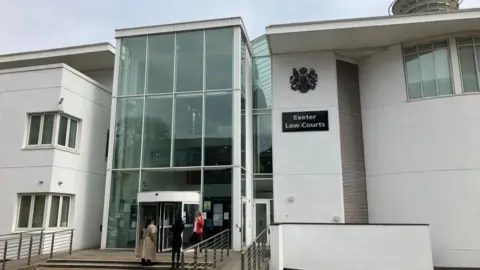
In April, Orange got her moment in court. She stood up and told the jury what had happened to her.
Her sister and friends were witnesses.
"It is one of the scariest experiences I've ever been through," she remembered.
"It was empowering and was cathartic, but it was also devastating, that I had to stand there and be completely vulnerable with complete strangers."
Devon and Cornwall Police gave evidence showing the rape had been reported at the time.
But the trial ended with a not guilty verdict.
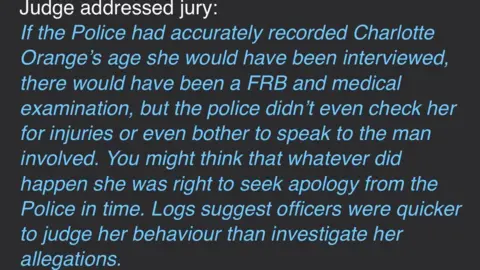
In his summing up, the judge was scathing of the force's behaviour saying: "Logs suggest officers were quicker to judge her behaviour than investigate her allegations."
 Charlotte Orange
The 37-year-old mother of two now wants an apology.
"Because they messed up, a whole chunk of my life was ruined," Orange said.
"When this happened, I was due to go to college. I had dreams and aspirations and it all just got torn away from me."
The IOPC is now investigating how Devon and Cornwall Police acted.
A spokesperson for the watchdog said the force had voluntarily referred itself to the IOPC in May.
"We are examining Devon and Cornwall Police's response to the complainant's report of rape in May 2006 and the decisions and actions of the officers involved, including whether police took appropriate action, following the rape allegation being made," they added.
In response, a spokesperson for Devon and Cornwall Police said the force was "continuously making significant and sustained improvements" in how it responded to reports of rape and serious sexual offences.
"We recognise that, in the past, some victims will have felt let down by inconsistent practices and a lack of support," they added.
"In response, we have fundamentally reformed the way cases are handled."
