What is the Ahmadi Religion of Peace and Light?

 Cheshire Police
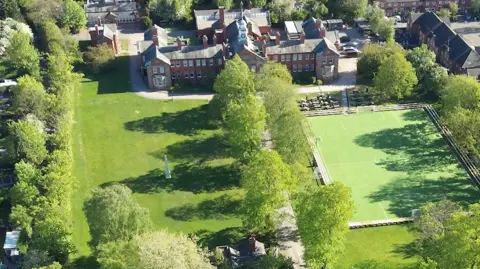
A religious group, the Ahmadi Religion of Peace and Light (AROPL), has hit the headlines this week following a police raid at its headquarters in north west England.
The BBC spoke to Dr Sarah Harvey, senior research officer at educational charity Inform, based at King's College London, to find out more about the group and its origins.
Although its followers say it is based in Islam, AROPL has been rejected by mainstream Muslim groups, with many considering them "blasphemous".
The group is also not to be confused with the Ahmadiyya Muslim Community, often known as Ahmadis, which was founded on the Asian subcontinent and has a big presence in the UK.
Although they shared some beliefs with Shia Islam, AROPL placed great importance on their founder, Abdullah Hashem, Harvey said.
Hashem revitalised the movement in about 2015, Harvey added, although the group had its roots in Iraq dating back to the late 1990s.
The main difference between the group and other Islamic groups around the world was their belief in Hashem as a saviour, she said.
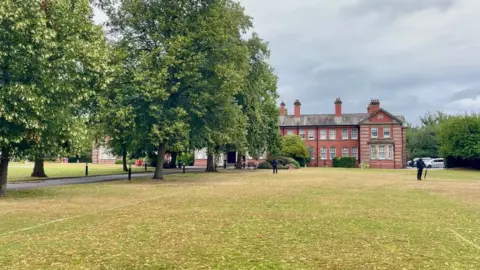
AROPL began in Egypt, moved to Germany and was later based in Sweden before it moved to Crewe in about 2021 when it purchased Webb House as its base, Harvey explained.
"The movement has travelled around a bit."
There were about 150 people based at Webb House and potentially about 150 others in the UK as well as "low thousands" elsewhere in the world.
"There are people dotted around the world, but [Crewe] is the main community," she said.
She said their style of communal living was seen in other religions around the world too, but was unusual in the UK.
She added she was not aware of other groups in the country as large as AROPL living communally.
"I would describe them as a minority movement within a minority, if you like," she said. "They have their own specific beliefs and practices."
Harvey said she felt the group would see themselves as part of a new religious movement that was "the only true religion for the current times that we're living in".
Although founders of AROPL had previously been followers of Shia Islam, in recent days Shia Muslim groups have wanted to make clear their rejection of AROPL beliefs and have distanced themselves from the group.
 Dr Sarah Harvey
According to the religion's website, "among the beliefs held by the followers of the faith is that we are living in the end times".
It adds a divine leader is appointed in every age by God.
"Adherents of this faith also believe in reincarnation and the return of the prophets, messengers and righteous ones," the website says, all beliefs that appear to diverge radically from mainstream Islam.
"Central to this faith lies the mission of establishing a divine, just state in which only God and his vicegerent rule, and eliminating evil, oppression, and tyranny."
Harvey said other differences with mainstream Islam included a less socially conservative attitude towards a halal diet and abstinence from alcohol as well as a more relaxed approach to Friday prayers.
"They faced a lot of persecution in Islamic majority countries around the world – places like Iran and Iraq – because their beliefs would be considered blasphemous," she said.
She said they had also protested in support of LGBT rights, which had "set them at odds" with other Islamic movements.
Read more Cheshire stories from the BBC and follow BBC Stoke & Staffordshire on BBC Sounds, Facebook, X and Instagram.
