Childhood trauma common theme in documentary - Frampton

 DoubleBand
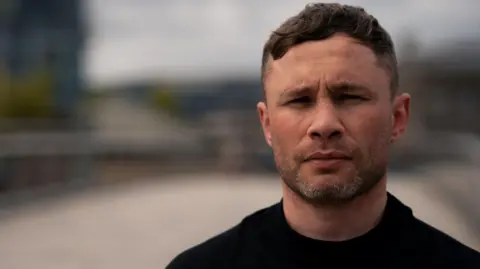
"I'm not saying without boxing, I would've been a tearaway or in and out of jail. But I know that because I did have boxing, it certainly helped steer me away from that," says former two-weight world champion Carl Frampton, reflecting on his recent dive into the world of probation.
He was speaking ahead of the release of a new documentary series which sees him go behind the scenes with the Probation Board for Northern Ireland.
Probation officers supervise more than 4,100 people who are subject to a range of court orders and licences at any given time.
For the series, Frampton spent time with officers and those on probation, as well as hearing the stories of victims of crimes.
"I just wanted to find out for myself what it's all about," he told BBC News NI.
It is the first time television cameras have been given this sort of access and the result is BBC NI programme Carl Frampton: On Probation.
Mental health issues
The former boxer previously presented Carl Frampton: Men in Crisis where he investigated why so many young men in Northern Ireland struggle with their mental health.
It's unsurprising that his new documentary also explores the issue.
"It sometimes affects the way they behave," he said, adding that the "vast majority" of the service users he spoke to "have had some sort of issues with their mental health".
While meeting service users, Frampton found many to be "friendly".
"I think the common denominator that I noticed anyway was trauma during childhood for the majority of them and having bad upbringings and maybe parents who were abusive and maybe abandonment issues or whatever.
"When you hear their story and you hear everything that's gone on in their lives as they were growing up, it kind of makes you feel sorry for them," he added.
"I felt a lot of sympathy for them.
"You're not really surprised that they have involvement in the judicial system afterwards as they grow up into adults."
 DoubleBand
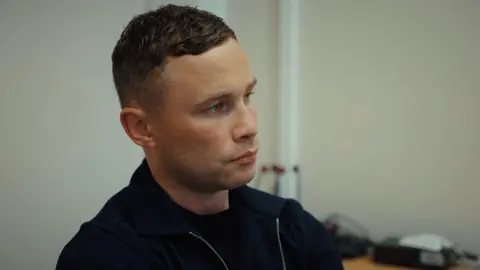
Working on the show highlighted the influence boxing had on him.
He said he came from a "rough area" in north Belfast with a lot of "bad influences around", but he was very lucky that he had good influences around him such as his parents and boxing coaches.
He said he thinks the documentary will "give people a bit more of an understanding actually what they do in the probation service, and what their aim is really".
Frampton added that probation was "obviously a lot cheaper" than a custodial sentence.
"So they're trying to change people's behaviour, try to get them on the straight and narrow and maybe get them back into work and just become a somewhat normal citizen."
Main object is 'rehabilitation'
 DoubleBand
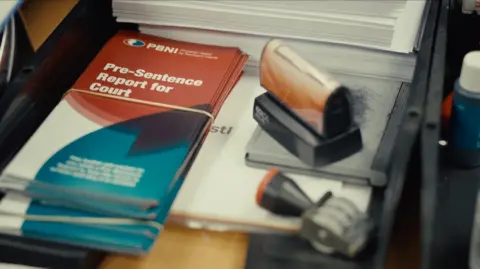
Frampton said he got to know "some of the service users and some of the probation officers".
"Something that I noticed was the relationship that the service user actually has with the probation officer," he said.
When there is a good relationship then the service user will "get the absolute most" out of it, according to Frampton.
"I just didn't really understand what a probation officer's role was. I thought they were maybe going to be kind of old battle axes and, cracking the whip all the time, but that wasn't the case."
"Obviously, if they stepped out of line, there was repercussions as well," Frampton added.
"But the main objective is to rehabilitate people, and that's what they're trying to do."
The mental health of the probation officers is also highlighted in the documentary.
"What they're having to deal with and the stories they're having to hear every time," explained Frampton.
 Getty Images
While his professional career was boxing, Frampton said he enjoys presenting.
"I'm not a reporter, I'm not a journalist, so I feel like I get a little bit more out of people, and they can maybe trust me a wee bit more and share more information a little bit freely, and I'm not gonna judge them.
"I just wanna hear their stories, so I'll keep doing it as long as they keep asking."
