Fears for my son's safety in mainstream school keep me awake at night

 John Fairhall/BBC
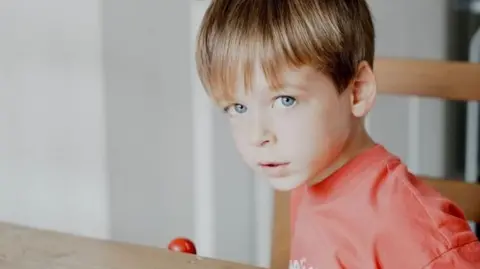
Freddie has no sense of danger and eats non-edible objects. He bangs his head and climbs. His mum, Natalie, says she needs eyes in the back of her head.
But there is no place at special school for him so the four-year-old from Essex will start in mainstream education in September.
Natalie says the thought of this is "keeping her awake at night" but the family must wait until 2028 to appeal against the decision.
Freddie is autistic, non-verbal and has an eating disorder called pica, which means he will eat non-food objects. He could also run away if not monitored by an adult.
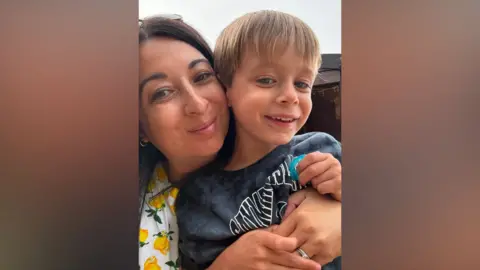
"Not knowing what the [school] day holds for him, it's just really frightening," says Natalie, who lives near Southend.
"It's something that I can't even bear to think about, and it literally keeps me awake at night because it is just so terrifying."
Freddie's Education, Health and Care Plan (EHCP) – a legally binding document that includes all details of the support a child will need during their education – took 40 weeks to complete. They must usually be completed in 20.
Natalie says while it did not specify that he needed a place at special school, the council had confirmed to her in an email that this would be best for him.
 John Fairhall/BBC
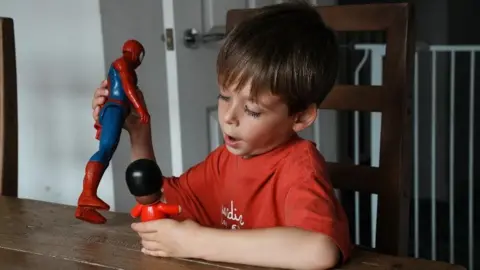
Natalie, a 36-year-old ex-teacher, has had to change her job because of Freddie's constant need for one-to-one care.
"If any door is open, any way of escaping, he will just run and he will eat stones regularly," she said.
"I'm having to get things out of his mouth that are not food. He climbs, he's a climber, so that can be very dangerous as well.
"When he gets upset, he headbangs, so he bangs his head off walls or the floor. So, I've had to completely change the way that I live day to day.
"I have to have eyes in the back of my head, basically, with Freddie and he's got no sense of danger; that comes from his autism. He's got no kind of reliable way of communicating because he's non-verbal.
"It's really just a desperate situation. I just feel a huge sense of frustration, sadness."
She has been told the earliest date a tribunal reviewing the decision can be held is January 2028.
 Submitted
Natalie says Freddie communicates with adults by taking them by the hand and leading them.
They are working on communication through devices like tablets.
She says his classroom will need a higher ratio of adults to children than mainstream schools can offer.
"He would need special therapies like speech therapy, occupational therapy – all of those things are not readily available in a mainstream school," Natalie says.
"It's all of the specialist training that the staff will have received."
She explains that "new behaviours can appear" and his issues could worsen if his needs are not met.
"[I've] seen this in the classroom time and time again," she says.
"He already has enough of a struggle day to day, I don't want to add to that. And I don't want it to be added to by this sort of situation we've been forced into."
 John Fairhall/BBC
Essex County Council said: "While we are unable to discuss individual cases, we are committed to working with schools and families so suitable placements can be secured for children.
"The pressures on the SEND (special educational needs and disabilities) system are recognised as a national challenge and improving our local SEND system remains our priority.
"To this end, we are working to offer different opportunities for families without compromising on quality."
Do you have a story suggestion for Essex? Contact us below.
Follow Essex news on BBC Sounds, Facebook, Instagram and X.
