Hospital's emergency care 'requires improvement'

 Getty Images
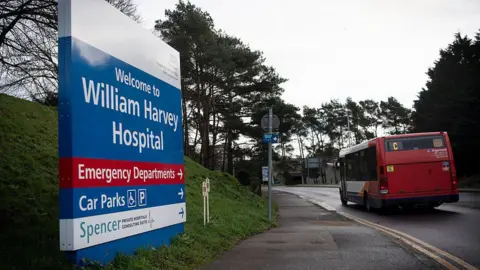
Emergency care at a Kent hospital "requires improvement" after some people were kept in corridors for more than 24 hours, a watchdog says.
The Care Quality Commission (CQC) had also given the same rating to urgent and emergency care at William Harvey Hospital in Ashford, Kent in 2021.
It said recent examples of privacy not being protected included an abdominal scan being carried out without a privacy screen, and an elderly person being left exposed below the waist until inspectors intervened.
Dr Des Holden, acting chief executive for East Kent Hospitals, says the trust now rarely cares for patients in corridors and is working on ending all waits for patients outside a cubicle or bed space.
The CQC re-rated urgent and emergency care overall as "requires improvement" with the categories of "caring", "effective" and "well-led" all being rated "good".
Amanda Williams, CQC deputy director of hospitals, secondary and specialist care for Kent, said staff were working under "sustained pressure" and noted some challenges were linked to response delays from other hospital teams.
Inspectors found about a quarter of specialist reviews were completed within an hour, but people waited an average of more than 27 hours to be admitted.
'Information of concern'
Williams said: "We recognise that in times of heightened pressure trusts will need to make difficult risk-based decisions to determine the safest place for people to be, but corridor care must not become normalised.
"Where a hospital does use a corridor or other temporary space, they must do everything possible to mitigate risk, keep people safe and ensure that their privacy and dignity is protected."
The CQC said it had carried out the inspection after it received "information of concern", and to follow up on the progress of improvements the trust was told to make following the last inspection.
Those improvements related to breaches in regulations covering safe care and treatment, staffing, dignity and respect, and premises and equipment, the watchdog said.
Inspectors found improvements had been made, but further action was still needed.
Williams said most patients were positive about how staff treated them and noted the trust's board had responded promptly to the CQC's original concerns by submitting a plan and putting immediate actions in place.
Staff also communicated effectively with children and provided a safe environment for people detained under the Mental Health Act, CQC inspectors found.
The trust said staff were "fully committed to continuing to improve".
"The CQC's report describes a positive safety culture within the department, and innovation driven by staff to improve patient care," Holden said.
"The inspection team rated the care urgent and emergency care staff give as 'good', which reflects staff delivering compassionate care in the difficult circumstances of the challenging winter period."
The trust must now provide the CQC with a new action plan outlining how it will address issues and continue improving, a spokesperson for the health watchdog said.
