Dad's 'guilt' after passing on genetic cancer risk

 BBC
BBC"It's not what you want to do as a parent. It's the last thing you want to do."
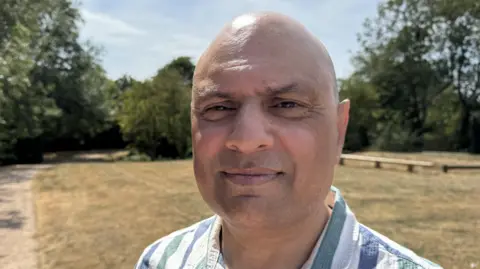
Harjit Singh Nijjer said when he discovered he had inherited a genetic condition he immediately began to worry about potentially passing it on to his son.
Harjit, of Market Harborough in Leicestershire, was 48 when he was diagnosed with bowel cancer in 2015.
After undergoing surgery and chemotherapy, he found out he had inherited Lynch syndrome - a condition that increases the risk of certain cancers, including bowel, ovarian and pancreatic.
"It's the guilt you carry," the 59-year-old said. "Things you'd want to pass on to your children - good looks, intelligence - but not something like this."
Harjit, a nurse, said his eldest son, William, had tested positive for Lynch syndrome, which affects an estimated one in 400 people in England.
Harjit and William have backed BBC Radio Derby's 'It Starts With You' campaign, which aims to get people talking about hereditary cancer risks.
The campaign is led by radio presenter Becky Measures, who had a preventative double mastectomy in 2006.
She was 24 at the time and became the youngest woman in Britain to undergo the procedure, following in the footsteps of her mum Wendy Watson.
The mother and daughter both carried the same BRCA1 gene mutation, meaning they had a significantly increased risk of developing breast cancer and ovarian cancer.
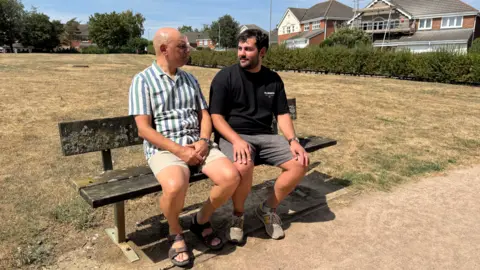
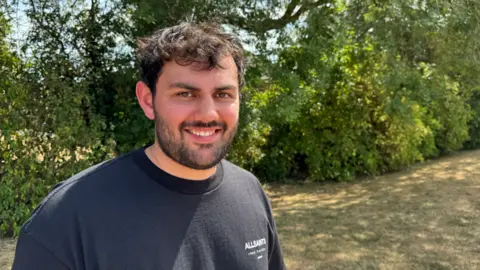
William, 26, said he wanted to find out if he had inherited the disease so he could "take control of the situation".
"Unfortunately, I tested positive for Lynch, but that's become a powerful tool for me," he added.
"I'm now able to plan preventative measures, like taking aspirin.
"I'm on the colonoscopy programme, so bi-annually I have a colonoscopy to make sure there's no polyps in my bowel. It's been really useful for me."
Harjit, who said he was now in remission, is encouraging others to understand their family's health history and talk about any hereditary cancer risks.
Around 1,100 bowel cancers are caused by Lynch syndrome each year in England, according to the NHS.
While it does not directly cause cancer, it does lead to genetic mutations which run in families and can make the disease more likely at a younger age.
According to the NHS, people diagnosed with Lynch syndrome usually have a family history of bowel cancer and other Lynch syndrome-related cancers.
Harjit said he was a young boy when his father died at the age of 62, in 1972.
He did not know of any cancer risk within his family and said not as much was known about Lynch syndrome then.
"It might explain why my father died much younger," he added.
"Family never talked about it. I'm sure culture played a part in it - but no, nothing.
"Had they, things could have changed."
Harjit said his mum sat with him when he received his own diagnosis of Lynch syndrome.
He said: "As much as my mum has pioneered everything, she broke down. She didn't want to have given this to me.
"However, you've got to understand from our perspective, it can't be helped.
"The knowledge now is what's so important."
 Julian Barwell
According to the NHS, Lynch syndrome is an autosomal dominant condition.
Each child and sibling of an affected individual has a 50% chance of inheriting the condition.
The NHS can carry out genetic tests to investigate whether Lynch syndrome runs in someone's family.
Lynch syndrome affects around 175,000 people, but only 5% are aware they are living with it.
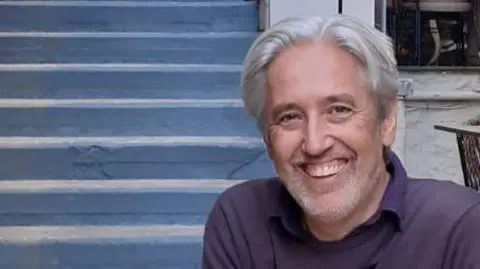
Professor Julian Barwell, consultant in clinical genetics at the University Hospitals of Leicester NHS Trust, said: "It's important for people to be able to have conversations about cancer running in their families.
"There are so many things that we can do now to help support and protect families and keep them together for longer.
"But it starts with you having that conversation and taking that first step."
Barwell, who is also an Honorary Professor in genomic medicine at the University of Leicester, added: "There are groups looking to develop vaccines against Lynch syndrome tumours.
"We are hopeful within the next generation, we will be able to offer vaccines to people with Lynch syndrome, to reduce the risk of them actually developing a tumour in the first place."
William said if people can have "those open and honest conversations you can actually make a difference to your future by doing so".
Harjit added: "It's really, really important that we should talk. We are here because we have Lynch syndrome and we want to make a difference.
"If it changes the lives of one person - saves a family - then I think that's key at the end of the day, so [we are] happy to share our story."
Listen to BBC Radio Leicester on Sounds and follow BBC Leicester on Facebook, on X, or on Instagram. Send your story ideas to eastmidsnews@bbc.co.uk or via WhatsApp on 0808 100 2210.
