Wealthy widow in England's biggest witch trial remembered

 Suffolk Archives
In the 1600s, Margery Chimney Wyeth was one of tens of people in Suffolk accused of being a witch.
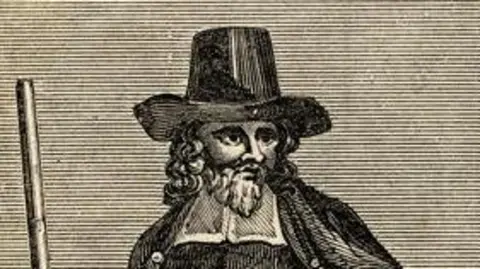
In 1645, she was blamed for the killing of two children by Suffolk's own and self-appointed Witchfinder General Matthew Hopkins.
She was sent to the Bury St Edmunds Assizes - the largest witch trial in English history - and while many of the other accused were often poor or on the fringes of society, she was instead relatively wealthy.
Her story has formed part of a new witchcraft exhibition at The Hold in Ipswich and Emily Shepperson, the exhibitions and interpretation officer for Suffolk Archives, said Wyeth was an example of an independent woman coming under scrutiny.
Wyeth had been living in Framlingham when her father died in 1625, and he left her a cottage, a collection of furniture and £10, making her a wealthy woman for the time.
"She was quite an articulate woman, but she did go to trial," Shepperson explained.
"Matthew Hopkins gave evidence at her case when it went to the Bury St Edmunds Assizes, but we don't know what happened to her at the end."
 Suffolk Archives
Wyeth defended herself, stating the Devil had tempted her to serve him, but she had refused.
Shepperson said it was believed she was not executed after her trial, but it was likely the community still ostracised her.
"That's a really interesting example of somebody who was actually quite an independent woman still coming under that scrutiny," Shepperson added.
 Suffolk Archives
The Bury St Edmunds Assizes took place on 26 August 1645 and about 150 of the accused were rounded up from across Suffolk.
On the first day, 16 women and two men were sentenced to death by hanging.
The second day of the trial was then interrupted by troops involved in the English Civil war, leaving many of the accused still awaiting trial.
Official records from the next trial did not survive, but there were some reports of mass executions of 60 or 70 people.
Shepperson said the exhibition, called Witches: Suffolk's Dark Legacy, highlighted that many of the accused were "everyday normal people".
"A lot of these people were just going about their everyday lives when they were targeted, accused and sometimes they hadn't got any connection to what we might see as a magical practice at all," she said.
 Alice Cunningham/BBC
Another woman accused was Ellen Driver, also from Framlingham, who was left poor when her husband died in 1641.
She was accused of witchcraft shortly after his death, and under torture she confessed to having two imps and that she had also married and had two children with the Devil.
But in reality she had had her two children with her husband early in their marriage.
The outcome of her trial is also unknown, but she might have survived as a widower was listed as receiving charity in the town the following year on records.
The exhibition runs from 16 October to 21 February and includes loans from the British Library, including Hopkin's own A Discovery of Witches pamphlet that outlined his methods and justifications for his actions.
Shepperson said the exhibition would also look at how views on witches have changed over time and that people still even identify as witches today, with deep connections to concepts such as feminism or environmentalism.
Do you have a story suggestion for Suffolk? Contact us below.
Follow Suffolk news on BBC Sounds, Facebook, Instagram and X.
