E-scooters - the rules, risks and repercussions

 Iryna Melnyk/Getty Images
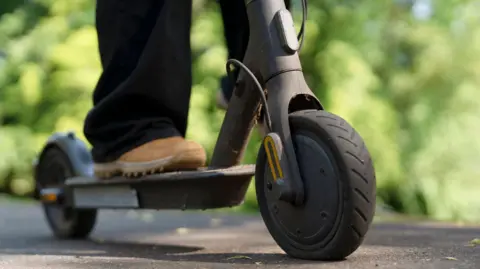
Stormont politicians are trying to crack down on the illegal use of e-scooters and other small off-road vehicles because of rising safety concerns and injury figures.
Under the current law, e-scooters and most other small off-road motorised vehicles should never be used on public land anywhere in Northern Ireland.
This means they cannot be used on public roads, in public parks or on pavements.
Despite this, they have become a regular sight in many local towns and cities - so what can - or should - be done about them?
What is an e-scooter?
 CHUNYIP WONG/Getty Images
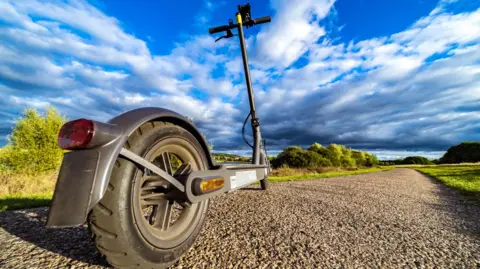
An e-scooter is an electrically-powered vehicle consisting of a narrow foot platform mounted on wheels, attached to a long, narrow steering column with handlebars.
Users travel by standing on the platform, known as a deck, and are propelled forward by an electric motor which is powered by a rechargeable battery.
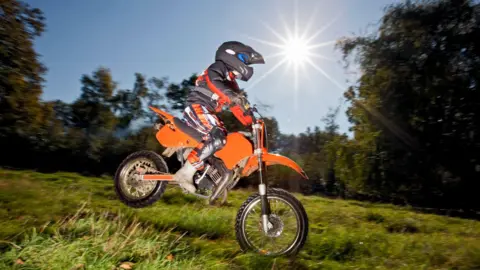
As such, they differ from other seated lightweight vehicles such as scrambler bikes, mini motos or quads - but for all of them, the same off-road restrictions apply.
What are the dangers?

E-scooters can reach considerable speeds, depending on the model, and collisions have resulted in serious injuries and a number of deaths across the UK and Ireland.
Earlier this week, a senior doctor said more than 120 children were treated by the Belfast Health Trust for e-scooter or e-bike injuries over the past two years.
Dr Gail Davison, a paediatric emergency medicine consultant at the Royal Belfast Hospital, said those injured in the past year were mostly boys aged from 10 to 12.
"I've been treating children with major head injuries," she said, adding that less than 10% of the patients were wearing helmets.
What does the law say about e-scooters?
Owning, buying or selling an e-scooter is not illegal in Northern Ireland but they can only be used on private land and only if the landowner gives their permission.
"It's illegal to use them in a public place," said Belfast-based solicitor Tony Caher.
Speaking to the BBC's Nolan Show this week, he cited farmers as an example of landowners who can legally use, or permit the use, of e-scooters on their own land.
"Or if you're fortunate enough to have a very large garden or estate - provided the public don't have access - then they can be used legally," he added.
The Police Service of Northern Ireland stated last year that "there is no specific offence" for using an e-scooter on public roads in Northern Ireland.
However, officers can enforce other rules in relation to e-scooters, such as having no vehicle excise duty (usually referred to as car tax or road tax) or insurance, which the user is unlikely to have for an off-road vehicle.
What about scramblers and quads?
 Cavan Images/Getty Images
Only vehicles which "comply with motor vehicle use and construction regulations" can be used on public roads in Northern Ireland, according to Caher.
This means that other lightweight vehicles such as scrambler bikes, mini moto bikes and quad bikes are also restricted to off-road use on privately-owned land.
The PSNI advises that in order to use public roads, motorists and motorised vehicles must comply with a list of requirements, including:
- A driving licence from age 16
- At least third party motorist's insurance for road use
- The payment of annual road tax
- A number plate displayed on the vehicle
- Registration with the Driver & Vehicle Agency Northern Ireland
- Working lights, reflectors and rear markings on the vehicle
"E-scooters, scramblers, go-peds, buzz boards, quads and mini-motos do not generally comply with construction and use legislation and vehicle standards so are therefore, restricted to off- road use only", the PSNI website states.
Is there an exception for some e-bikes?
 Sandu Herta/Getty Images
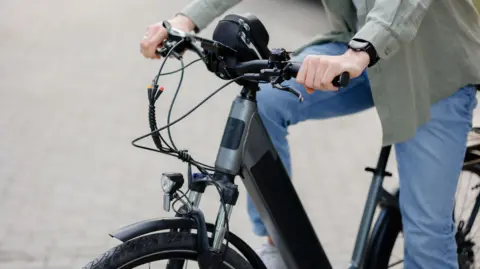
Yes - the rules of the road are different for certain types of e-bikes which are classed as "electrically assisted pedal cycles" (EAPCs).
Provided that the rider is 14 years of age or older, these e-bikes are classed as pedal cycles and as such can be used on public roads without either a licence, tax, or DVLNI registration.
An EAPC must be fitted with pedals to propel it forward, helped by an electric motor.
They only provide electric assistance up to a maximum of 15.5mph, through an electric motor with a power output that must not exceed 250watts.
The Department for Infrastructure also advises that EAPC riders should consider the need for insurance that covers areas such as damage, theft or personal injury and liability.
What can the police do?
Justice Minister Naomi Long told Stormont last month that the PSNI can seize e-scooters and other off-road vehicles "where they are being used to create nuisance".
But she explained that while the PSNI "has powers of seizure, it must, on the first occasion, issue a warning".
"Having to have contact with those who are doing it for a second time creates genuine problems in being able to nip the activity in the bud."
The minister praised a recent cross-party effort to make it easier for PSNI seizures to take place "at the first contact".
The change was proposed as an amendment to the wide-ranging Justice Bill which is still making its way through Stormont, but Long said the e-scooter amendment "thankfully was passed and will become law".
How many e-scooters and scramblers are seized?
At the Policing Board last month, Alliance MLA Nuala McAllister asked about the number of PSNI seizures over the past three years.
- 2024 - 4 scooters were seized
- 2025 - 25 scooters were seized
- 2026 - 22 scooters have been seized (in the financial year to date)
These figures covered seizures of e-scooters, e-scramblers, and e-bikes but excluded EAPCs and combustion engine bikes.
What are the rules elsewhere?
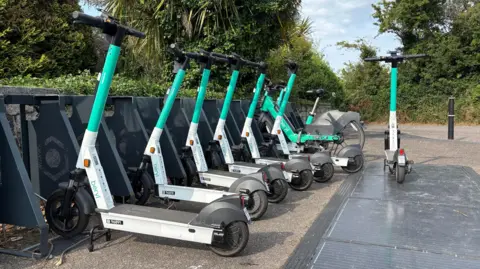
E-scooters have some advantages - the lightweight design and rechargeable power source means they are a greener form of transport than petrol or diesel vehicles.
The UK government is involved in a number of trials in England , externalin which members of the public can use rental e-scooters on public roads and cycle lanes.
However, they cannot be used to travel on motorways or pavements, and riders must hold a provisional or full UK driving licence.
In the Republic of Ireland, the use of e-scooters on public roads was legalised in May 2024, external for users aged 16 or over.
The vehicles do not need to be registered, taxed or insured and the user does not need a driving licence.
However, the vehicles must be in a roadworthy condition and cannot be used on motorways, footpaths or pedestrian zones.
There are no rental e-scooter trials in Northern Ireland.
This article was amended to clarify the rules around electrically assisted pedal cycles on 21 July 2025.
