Woman rescues flock of ducks after pond dries up

 Lucyl Harrison
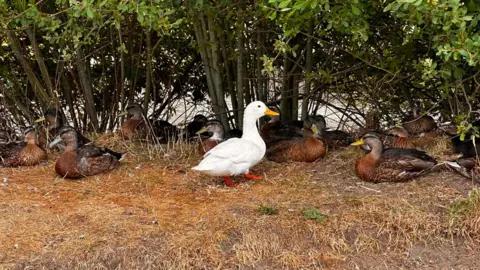
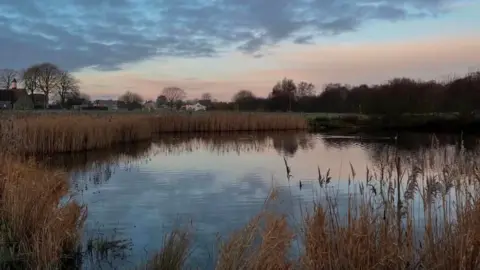
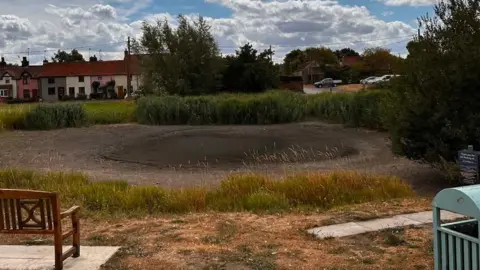
A woman is pulling out all the stops to keep a 50-strong flock of ducks hydrated after a village pond dried up in the baking summer heat.
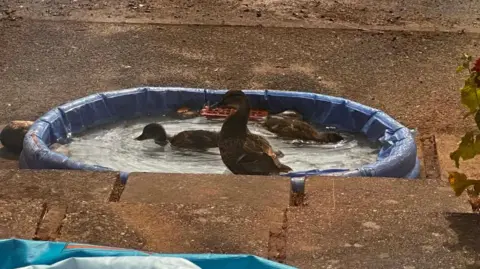
Lucyl Harrison, 32, from Hempton near Fakenham in Norfolk, currently has two small paddling pools, a swimming pool, four dog bowls, two oven dishes, three big trays and three shallow trays filled with water in her back garden for the parched birds.
She said the ducks had become reliant on villagers' help and wait outside her patio door at 06:00 BST, for breakfast, a bath and a drink.
"The reason I'm doing it is I just can't watch the ducks go thirsty or dehydrate... I just saw the ducks and thought there must be something I can do," she said.
On Wednesday, the Environment Agency declared a drought across more than half of England - including East Anglia.
However, Harrison said water levels in the pond had started to diminish weeks ago.
 Lucyl Harrison
 Lucyl Harrison
More stories on hot weather:
Harrison said the ducks had been in search of shade, including under cars and bushes, and had been "panting" and struggling.
"I first started out by using household oven dishes, but realistically there's 50 ducks — I just knew it wouldn't be enough so I kept on adding what I could, saucepans and buckets.
"Other people have given me trays and someone even gave me a 10ft swimming pool."
She said she was greeted by the ducks every morning.
"They stand at the edge of the patio now at 06:00 BST in the morning waiting so I have to get out [of bed], set my alarm and I'm out there filling buckets of water."
From 11 July, Anglian Water have introduced a temporary use ban - but customers are exempt from this if it is needed for animal welfare.
 Lucyl Harrison
Before the hot weather, Harrison said the pond and surrounding greenery was "bountiful" and was home to ducklings and baby moorhens.
Rebecca Machin, scientific and policy officer at the RSPCA, said: "It's not surprising that ducks are searching for cooler places to shelter.
"While ducks are well-adapted to life outdoors, prolonged dry conditions can make life more challenging, by not only reducing the ponds they rely on, but also food sources.
"Providing a shallow container of clean, fresh water for drinking and bathing, making sure to change the water every day to help reduce the risk of spreading disease, including avian influenza."
Do you have a story suggestion for Norfolk? Contact us below.
Follow Norfolk news on BBC Sounds, Facebook, Instagram and X.
