Drought leaves sports clubs 'praying for rain'

 BBC
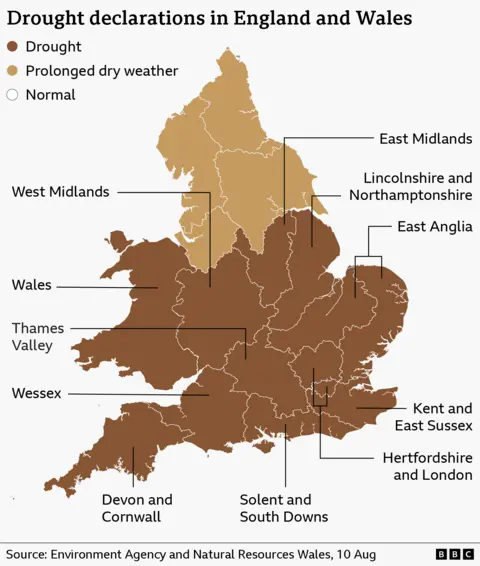
BBCPeriods of drought and prolonged hot, dry weather has had a major effect on sports clubs across south-west England, who are feeling the strain.
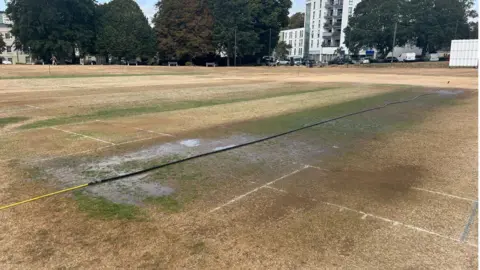
The unprecedented weather has left some grass pitches extremely dry and hard for clubs with little to no irrigation, with many dependent on meaningful rainfall for recovery.
A hosepipe ban was put in force on 9 August across Devon, Cornwall and the Isles of Scilly as the conditions put "significant pressure" on the regions water supplies.
South West Water said sports pitches and surfaces were "exempt from hosepipe bans where watering is necessary", so long as it took place outside peak hours of 08:00-10:00 BST and 17:00-21:00 BST.

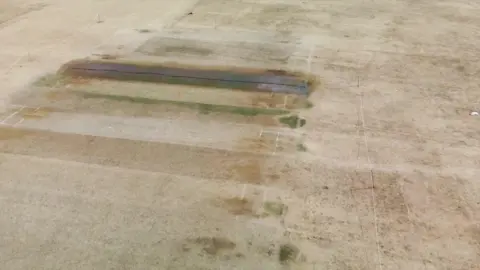
Bill Martin, chairman and assistant groundsman at Plymouth Cricket Club, said he had "never seen the pitch so dry".
He said this summer has been particularly difficult as a groundsman because "it had been a summer of two halves".
He said the first six weeks it was "very very wet" but since then it had been two months without significant rain.
"We've got one tap and one hose, so the real challenge has been getting water on to the surface, particularly the playing wickets.
He said without water, the ground became very dry and the grass disappeared and turned to dust, which was both difficult to play and dangerous.
"Cricket is a fine weather sport, so we've not had interruptions, we've not lost any games and we've been able to play a lot of cricket in the sunshine which has been great, but in terms of actually looking after the ground and preparing decent pitches to play on, it makes it very hard work."
"Unusually for cricketers we have been praying for rain."
 Plymouth Cricket Club
The Rugby Football Union (RFU) announced the start of the community rugby season had been delayed until 21 September because of concerns about player welfare and pitch conditions. While the Football Association issued guidance which said there was "no blanket suspension of football on dry grass pitches" but the priority was to keep "football playing safely".
Lynton Football Club made the decision to postpone their opening fixture of the season.
In a post on social media the club said three players had suffered "serious injuries", with two "undoubtedly" because of the hard surfaces and would not risk any further injuries on a "rock hard almost concrete like pitch".

Nick Rich from Saltash Rugby Football Club said he had "never seen the pitch as parched as it is at the moment".
"It's rock solid out there. If you turned the tables and it was frozen in winter, you would not play a game of rugby on it."
He said the decision to delay the season was a good thing for both rugby and safety but did mean there was a delay in revenue for the club.
Just 15 months ago the club reseeded the pitch at great cost.
He said further reseeding took place earlier this summer and they had "waited for rain so the grass seed would germinate and we haven't had it yet".
"There's been some watering going on but clearly nowhere enough and we've put thousands of gallons on it."

It is a similar story at Ivybridge Bowls Club who have "struggled to keep up" with the amount of watering required during the high temperatures.
Malcolm Johnson, club captain and groundsman, said the club's watering system was small and the green should be watered at least four times a day to keep it growing, but was unable to do that because of the hosepipe restrictions imposed.
"We've got to a point now where we have to leave it as it is and are going to have to start from scratch again in the spring."
A small amount of rain caused a game to be called off on Wednesday because the water was not draining away quickly enough.
Johnson said "the surface is that hard that it is not being absorbed - we would like to spike it, we've got all the machinery to do that but it's just too hard".
