Parties back Metrocentre scheme but raise concerns

 LDA Design
Flood risks, costs and damage to wildlife habitats have been highlighted as potential problems with a scheme to build thousands of new homes.
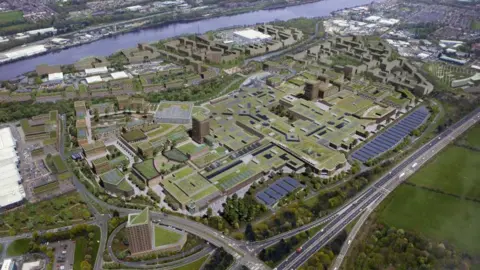
The MetroGreen development could see up to 4,500 homes built on land around the Metrocentre shopping centre in Gateshead.
The scheme is a collaboration between the shopping centre and the Labour-led council, but the local elections could see a power shift at town hall making candidate views on the project vital for its future.
Labour, which controls the council, said MetroGreen was a "serious priority" and a chance to transform brownfield land into a "sustainable urban community".
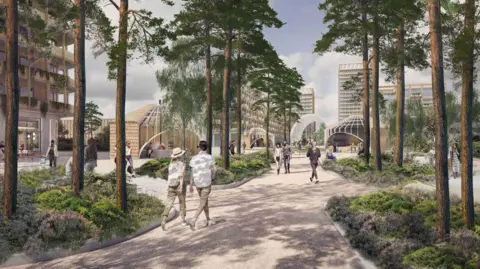
"New neighbourhoods will boost our local and regional economy, and with the Metrocentre at the heart of the community, local residents will not only benefit from a sustainable wooded community, but also employment, training and skills opportunities," a party spokesperson said.
Under the MetroGreen scheme - also known as Metro Riverside - about 990 homes will initially be built around the shopping centre by 2030, with an additional 3,500 going up by 2045.
The development plans also include offices, leisure facilities and services such as doctors' clinics.
 LDA Design
Last week, Gateshead Council voted to send its MetroGreen Area Action Plan to the government, which will appoint an independent inspector to oversee the proposal.
The project will initially be led by the public sector and candidates elected on 7 May could play important roles in approving or rejecting specific plans for the scheme when they come before its Planning and Development Committee.
The rival political parties all said they would back the scheme "in principle" but each had their own issues they wished to see addressed.
Conservative candidate Barry Flux said he supported the scheme but wanted to see a full masterplan for the project.
He also said he wanted housing development in Gateshead to focus on the Chandless Estate area in the town centre.
The Green Party candidate for the Dunston, Teams and Riverside ward, Andrew Jay, said he agreed Gateshead needed more homes but he was not convinced the current plans would "deliver long‑term environmental sustainability, social equity and health benefits" for residents.
He said development along the River Tyne could harm wildlife habitats and protected species, and the cost of maintaining planned flood defences was unclear.
"More fundamentally, there is a lack of certainty around the timely provision of social infrastructure, including nurseries, local shops and every day services," he said.
 Gavin Forster Photography
Ron Beadle, leader of the Liberal Democrats in Gateshead, said he was "not naive about the complexity of the scheme and the challenge of getting developers on board".
"What is clear is that Gateshead has been losing population and part of addressing that is encouraging sustainable housing developments," he said.
A Reform UK spokesman said the party would back any development which would increase leisure facilities or bring tourism to the area.
"However, before committing to any plans we would like to see an in-depth feasibility study with a cost benefit analysis and any other alternative options," he said.
Metrocentre chairman Martin Healy previously said the development would tackle a "chronic lack of government investment" in north-east England.
He said the Metro Riverside had been designed around the "20-min concept" - meaning essential services such as shops and schools would all be based within walking distance of residents.
