The ancient fruit Britain forgot about

 Jane Steward
Thousands of years ago, humans were eating a particular fruit that has almost completely disappeared from our diets.
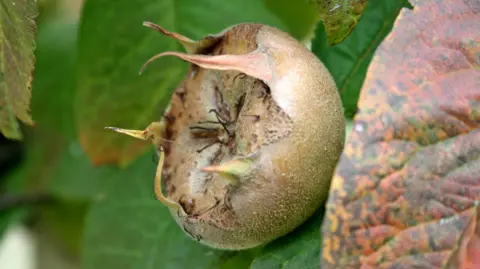
Our ancestors were once well acquainted with the medlar, but today you would be hard-pressed to find it in your local supermarket.
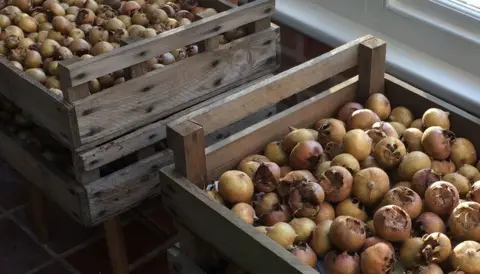
It was still being eaten as recently as the early 20th century, but its demise has been put down to numerous reasons, including its unappetising brown colour.
But one woman is attempting to revive the nation's love for the medlar and help re-introduce it into our diets.
 Jane Steward
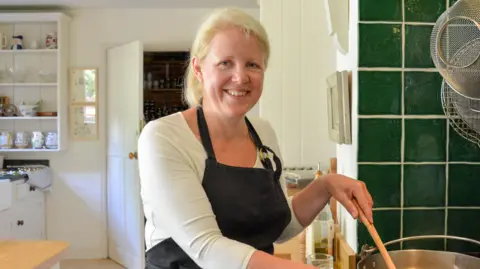
Jane Steward, 66, is originally from London and a committed medlar enthusiast.
She is one of the very few people dedicated to growing the fruit in her orchard in Eastgate, Norfolk, not too far from Norwich.
Steward first came across the plant about 18 years ago when she met her husband David, who is originally from Ipswich.
David's grandparents had lived in Wherstead close to Ipswich, and his grandmother cleaned a nearby big home where they had a medlar tree.
She was given permission to take the medlars, which she made jelly from.
"David was passionately devoted to his grandparents," Steward explained.
"When they died, his father William brought him a medlar tree in memory of his grandparents."
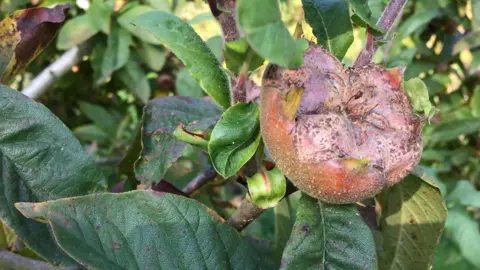
When they moved to Norfolk in 2012, the tree was dug up and taken with them before Steward became obsessed with the fruit and created her own dedicated orchard with 115 trees in 2016.
 Jane Steward
But the medlar has been around for thousands of years.
According to the Royal Horticultural Society, it is believed medlars could have been cultivated up to 3,000 years ago in parts of southwest Asia and southeastern Europe.
Steward, who has done her own substantial research, added that it was likely the fruit came to the UK via the Romans, who had a "very sophisticated palate".
"Something about these fruits attracted human interest."
She added: "It is possible [the Romans] tucked some of their favourite medlar fruits in their tunic pockets, rather like their favourite sweets."
Over hundreds of years, humans continued to enjoy the fruit, which Steward said had a "slightly applesauce taste with a hint of citrus".
They were as common as apples and pears, and even up until fairly recently people were still enjoying them.
But by the end of the 1950s, they had disappeared.
 Jane Steward
Steward said the brown colour of the fruit was just one reason why it had possibly vanished from our fruit bowls.
"We have been hardwired as a human species, particularly over the last 100, 120 years, to regard brown fruit as suspect," she explained.
"Where do we start our relationship with food? With our eyes.
"We're attracted to the glossy beauty of a Granny Smith [apple] or a Cox's Orange Pippin [apple], or a beautiful pear or lovely peaches."
She adds that a medlar also cannot be eaten until it has completely grown.
After that it has to be left to ripen and go through a process called "bletting", where it shifts from being hard to soft and sweet.
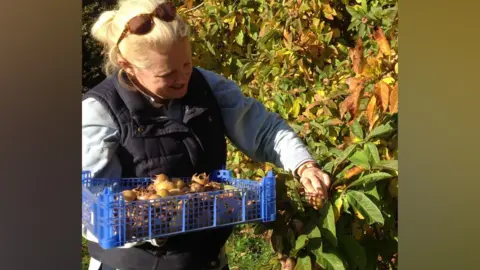
She said in a world where we had created a "mindset of instant gratification", it meant patience was required with the fruit, and while relatively easy to grow, it had to be picked from late October to November when the weather can turn.
 Jane Steward
Steward wants to see the medlar revived and gives talks about the fruit to educate people.
She has even released her own book on cooking and growing the medlar.
"I would regard my work as done when there's no more need for me to make a jar of medlar jelly because everybody is happy knowing what to do with their medlars... the medlar does need a little bit of help."
She added: "You've got something healthy that doesn't look terribly attractive, and if the visual appearance of these is troubling, just as I say to people, close your eyes."
Do you have a story suggestion for Suffolk? Contact us below.
Follow Suffolk news on BBC Sounds, Facebook, Instagram and X.
