Referendum on assisted dying 'right way to go'

 BBC
BBCSome people in Douglas have welcomed calls for a referendum on legalising assisted dying on the Isle of Man.
The Isle of Man Medical Society (IOMMS) has renewed calls for a public vote, despite legislation being passed in March 2025.
While it passed through the branches of Tynwald, the Assisted Dying Bill 2023 has stalled after the UK's Ministry of Justice requested changes to be made before Royal Assent is granted.
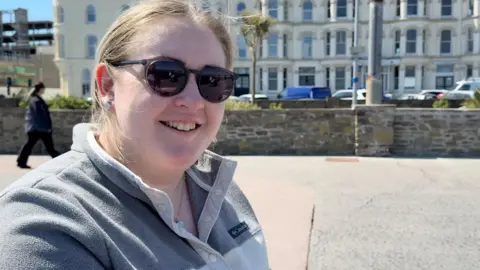
Kirk Michael resident Melanie Harris said: "If you really want to know what the people want then a referendum is the right way to go."
She said that while she supported assisted dying, if a referendum would "solve the problem" then "we should go for it".
The bill would give terminally ill adults on the island, with a prognosis of less than 12 months to live, the right to choose to die.
Visitor Trish Roberts said she felt it was important for governments to "respect what the people think" and was also in favour of the new laws.
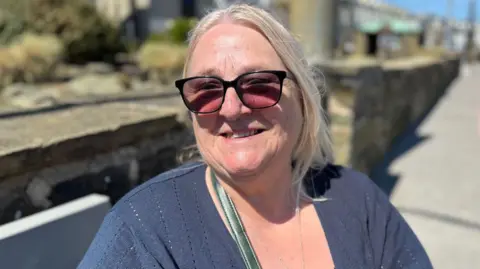
She added that if terminally ill people wanted "help to take their own life, then I think it's up to the person".
Ken Georgeson agreed that a referendum would be the fairest way forward.
He said: "It shouldn't be a small committee of people, however experienced they are in health issues.
"It should lie with the people".
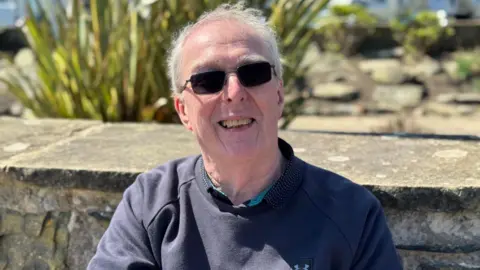
"A democratic society should always go that way," he added.
The medical society is made up of about 150 doctors across the island.
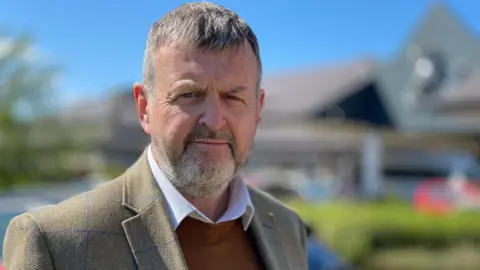
The IOMMS president, GP Martin Rankin, said the organisation believed there remained "a lack of democratic mandate" for the existing legislation.
'Democratic choice'
He said holding a referendum alongside the next general election would allow the issue to be settled directly by voters.
"This issue is very divisive and opinions of the public are polarised," he said.
Rankin also argued that, if the public supported assisted dying, any future legislation should return as a government bill rather than a private member's bill to allow for "proper scrutiny".
He also raised concerns about the impact the legislation could have on vulnerable patients and healthcare services.
"The whole thing is extremely prone to abuse," he said, citing fears some patients could feel pressure linked to care costs or becoming a burden on family members.
But campaigner Sue Biggerstaff, who has been fighting for the law change since 2022, when her husband, Simon, who had motor neurone disease (MND), died, said: "What my husband went through, nobody should go through.
"He was in agony, begging for it to stop for two weeks… nobody should be in that position."
The IOMMS has called for a referendum to take place alongside September's general election, which would ultimately be a decision of Tynwald.
But as the legislation is a private member's bill, both the chief minister and Isle of Man Government have declined to comment at this time.
Rankin added that research carried out by the society found 74% of responding doctors on the island opposed the legislation, while 34% had considered leaving the island if it became law.
"If that happens the impact on health care on the island will be devastating," he said.
The cost of holding a referendum in September would be estimated at £30,000, he added, calling it the "price of actually giving people the democratic choice".
Politicians are to continue considering the bill in the June sitting of Tynwald.
Read more stories from the Isle of Man on the BBC, watch BBC North West Tonight on BBC iPlayer and follow BBC Isle of Man on Facebook and X.
